
In the middle of Palma: Wild chase with a stolen car — What remains of the sense of security?
In the middle of Palma: Wild chase with a stolen car — What remains of the sense of security?
In the early hours, a stolen car with three young occupants led the National Police on a high-speed chase through Palma. Arrests ended in Son Castelló and on the Carretera de Sóller. A reality check on what the city should do about it.
In the middle of Palma: Wild chase with a stolen car — What remains of the sense of security?
Key question: Why do nighttime car thefts and frantic escapes repeatedly end up in residential and commercial neighborhoods, and what specifically has to change?
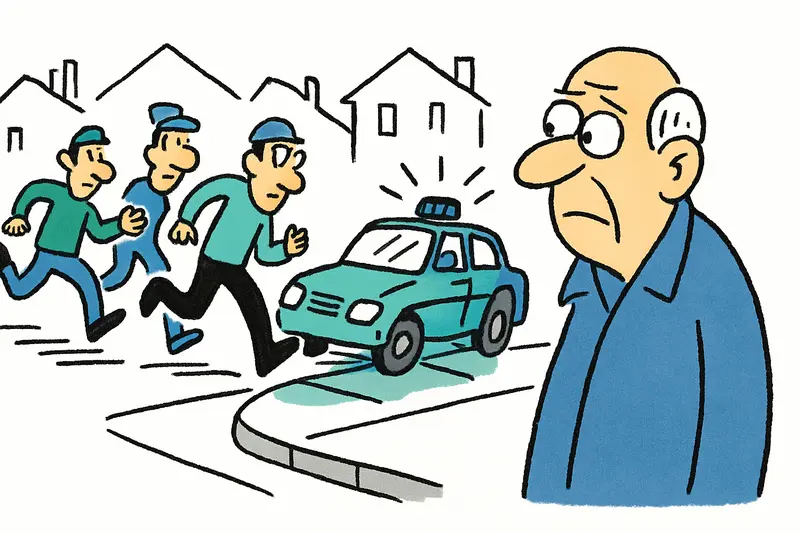
In the early hours, patrols of the National Police noticed a vehicle traveling at excessive speed in the center of Palma. Three young men of Algerian nationality were inside; according to investigators, the car had been stolen the previous Sunday. What followed was a flight across districts and industrial areas — via the ring road (Via de Cintura), through the Son Castelló area to General Riera and finally on foot along the Carretera de Sóller. After several operations, the three were arrested Juveniles arrested: Palma car-theft series raises questions about prevention.
Briefly: in a collision with the curb the vehicle suffered damage to the front wheel; the occupants left the car with the engine running. During the subsequent investigation, the police secured tools in the trunk — a pair of scissors and a metal hammer — and a mobile phone without a SIM card was found on one of the arrestees. Some personal items belonging to the owner were missing from the car.
Critical analysis
The consequence of this chain of events is clear: a high risk to uninvolved road users, pedestrians and residents. The perpetrators ignored traffic rules and made abrupt maneuvers — not only on side streets but all the way onto the Via de Cintura. Such chases hit Palma where delivery vans start up in the morning, pupils walk to school and commuters head to work. Sirens and screeching tires in an otherwise quiet morning hour — that temporarily destroys the feeling of normality. Incidents around Son Castelló have drawn particular attention; see Fatal crash at Son Castelló: More than an accident on the road to Sóller.
The police work was successful afterward: the men were taken into custody one after the other — one in the dry riverbed of the industrial area, another while trying to cross a street, the third while climbing over a fence to access a medical center. Nevertheless, the question remains whether prevention and rapid response need to be more closely integrated in everyday operations so that escapes are less likely to escalate. Similar rapid responses in Palma have been documented in other cases, for example in Pickpocketing at Bellver: Chase Ends at Traffic Light – How Safe Is Palma Really?.
What is missing from the public discourse
The public often celebrates the arrests — rightly so. But hardly anyone talks about the in-between steps: forensic evidence collection, the routes stolen vehicles take from theft to seizure, or the role of technical measures such as remotely disabling stolen vehicles. The debate about so-called fencing networks and how easily stolen vehicles can be transported across island borders is also neglected. And then there is youth prevention. When young people repeatedly become involved in violent crime or vehicle theft, there are often no accessible alternatives in the early morning hours when the streets are still quiet.
Everyday scene from Palma
Imagine the Carretera de Sóller on a clear morning: market stalls are being set up, the smell of freshly brewed coffee rises from a bar, cyclists rush by. Suddenly sirens, a dull crash, voices. An older man who just bought his newspaper nearby stops and shakes his head. A mother with a pram holds her child closer. These small, concrete moments show: the consequences of a pursuit are not just statistics, they are felt in everyday life.
Concrete solutions
1) Better networking of patrols: coordinated, zone-based patrols in risk areas like Son Castelló and along the Via de Cintura can block escape routes more quickly. 2) Technical measures: more comprehensive camera and license plate recognition at key access roads to the city, coupled with immediate transmission to response units. 3) Prevention against vehicle theft: information campaigns for vehicle owners — visible locks, alarm systems and advice on safely storing valuables. 4) Inter-municipal cooperation: when routes run across municipal boundaries, the alarm chain must work without delay; joint operational protocols help reduce response times. 5) Youth work on site: targeted programs in problem neighborhoods and better accessibility of social services in the early evening and night hours to offer young people alternatives to street life.
Pointed conclusion
The arrest of the three men is a success for the police. But the recurring images of stolen cars racing through the city reveal a larger problem: lack of prevention, gaps in technical infrastructure and insufficient focus on youth and social work. Palma needs less reflection after the fact and more preventive measures — so that the next morning sounds like coffee, market and bicycles instead of sirens and screeching tires.
Frequently asked questions
Why do stolen cars in Palma often end up in dangerous police chases?
Is it common for car thefts in Mallorca to happen at night?
What should I do if I see a stolen car driving fast in Palma?
How can car owners in Mallorca reduce the risk of theft?
Why does Son Castelló in Palma come up so often in crime and traffic incidents?
What is the Via de Cintura in Palma used for?
What can police find in a stolen car after an arrest in Mallorca?
How does a police chase affect everyday life in central Palma?
Similar News

Ryanair Flight Diverted to Barcelona: An In-Flight Emergency and the Questions That Follow
A Ryanair jet from Pisa to Málaga landed in Barcelona after a passenger became acutely ill. Why these cases need more at...
Alarm in Port de Pollença: What now for the polluted bay?
Hundreds of people protested on the beach of Port de Pollença. The environmental organization Arrels Marines demands a p...

Micaela Schäfer: Between Playa de Palma and a Berlin Law Firm — New Calm, an Old Tomcat and Solid Finances
The party artist from the Ballermann scene appears surprisingly down-to-earth: a new relationship with a Berlin lawyer, ...
At Playa de Palma: Fire in Residential Building – six people rescued on the roof, what is missing in prevention?
In the evening a fire broke out on the first floor of a five‑storey building on Calle Trasimé. Six residents fled to the...
New License Requirement for Mini-Boats in Mallorca: Protection Measure or Tourism Brake?
From October 1 renters of small recreational boats in the Balearics must present a boating license. Critical questions r...
More to explore
Discover more interesting content

Boat Tour with BBQ along Es Trenc Beach
Private transfer from Mallorca Airport (PMI) to Pollensa
