
Paraglider Crash at Mirador de Sa Torre: A Rescue Drama and the Open Question of Safety
Paraglider Crash at Mirador de Sa Torre: A Rescue Drama and the Open Question of Safety
A 46-year-old paraglider crashed into rocky terrain near Sa Torre in the afternoon. A helicopter, Samu 061 and police transported him to Son Espases hospital. A look at causes, rescue routes and what is often lacking in Mallorca.
Paraglider Crash at Mirador de Sa Torre: A Rescue Drama and the Open Question of Safety
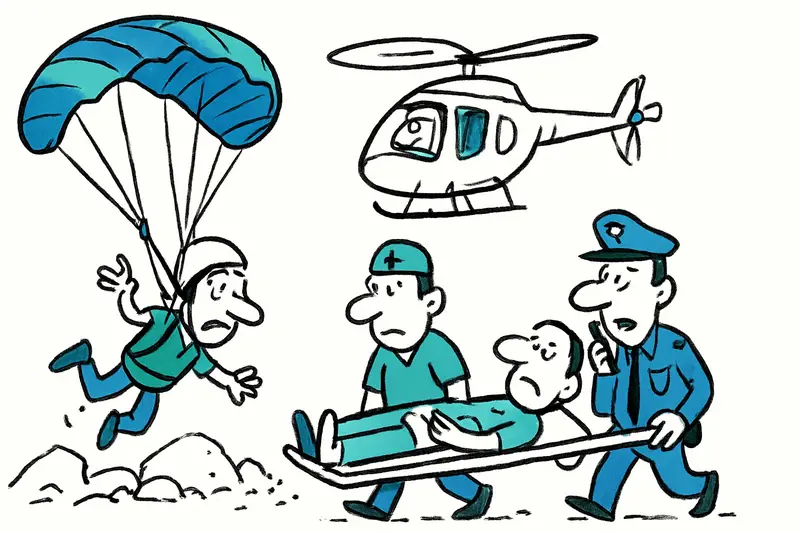
On Sunday afternoon at around 3:50 PM, a paraglider pilot ran into trouble during his landing approach in the area of the Mirador de Sa Torre near Llucmajor. The 46-year-old man fell into rugged rocky terrain and was subsequently retrieved by emergency personnel by helicopter. Paramedics from the Balearic emergency service Samu 061 treated him on site; when found the patient was conscious but only partially responsive. After stabilization, a rescue helicopter flew the injured man to the University Hospital Son Espases; the injuries were classified as minor.
Key question
How safe are take-off and landing zones for paragliders in Mallorca — and what would need to improve immediately so that a comparable rescue is less often necessary?
Critical analysis
The rescue proceeded quickly and professionally: emergency number 112, firefighting helicopter, Samu 061, police and Guardia Civil official website – the coordination apparently saved the man from worse. Nevertheless, questions remain. Why did the pilot lose control at low altitude? Was the landing site itself problematic, did the topography cause sudden wind shifts or thermal gusts, or was there a technical malfunction? Some rescue operations on Mallorca show patterns: difficult terrain, hazards that become visible only late, and often limited options for a safe landing near popular viewpoints, as discussed in From Mountain to Hospital: What the Rescues at Puig de Galatzó and Torrent de Pareis Reveal About Mallorca's Hiking Tourism.
What is missing from public discourse
The emergency chain is often discussed, less so prevention. It is too seldom made transparent which guidelines apply to take-off and landing zones, whether there are local warning systems for wind shifts, and how well recreational pilots are informed about current terrain hazards; clearer reference to AESA safety regulations for recreational aviation would help frame the debate. The question of training and the frequency of safety checks on equipment is also rarely discussed in casual conversation on Mallorca.
An everyday scene from Llucmajor
At the Mirador de Sa Torre, a mild December afternoon often brings a mix of walkers, photographers and visitors from Palma who briefly enjoy the view out to the harbor and city. You hear footsteps on the dry clay soil, distant car horns from the MA-19, and the sound of the sea in the distance. A few minutes before the emergency call, a local resident saw a canopy flutter unusually. Such observations then lead to a 112 call, and soon the rotors are humming above the ridge – a scene that recurs in this region, as in Heatstroke in the Torrent de Pareis: Rescue Raises Questions About the Safety of Hiking Groups.
Concrete solutions
- Clear marking and mapping of safe landing zones: authorities, municipalities and air sports clubs should jointly review which areas are suitable for landing approaches and make these publicly available. - Local warnings for pilots: a simple system with current wind and turbulence notices via an app or posted at the mirador could reduce accidents. - Regular safety checks and transparent maintenance records for equipment: flight schools and clubs should enforce documented inspections and make this information more accessible. - Raising visitor awareness: people visiting the viewpoint should know that take-offs and landings may occur there; signs with guidance for bystanders would be useful. - Joint training exercises with rescue services: coordinated drills between mountain rescue, fire services and aviation groups improve procedures in hard-to-reach terrain.
Conclusion
The operation at Sa Torre shows that rescue chains on Mallorca work, similar to the account of a multi-hour helicopter recovery, Dramatic Helicopter Rescue at Puig Major: Lessons from an Afternoon in the Tramuntana. But: prevention is better than rescue. If municipalities, air sports associations and emergency services cooperate more concretely, risk locations can be identified earlier and accidents possibly avoided. For the injured person now, one can only hope that it remains a scar and a good rehabilitation — and that the island learns something from such an operation.
Frequently asked questions
How safe is paragliding in Mallorca?
What should I know before paragliding near Llucmajor?
Why do paragliding accidents often happen during landing?
What weather conditions are risky for paragliding in Mallorca?
What happens in a mountain rescue after a paragliding crash in Mallorca?
Is Mirador de Sa Torre in Mallorca a difficult place for a landing approach?
What safety improvements could reduce paragliding accidents in Mallorca?
Should visitors at Mallorca viewpoints expect paragliders nearby?
Similar News
After Being Admitted to Hospital Again: Heinz Hoenig and the Questions We Should Ask in Mallorca
Long-time Mallorca resident Heinz Hoenig was admitted to hospital again. A clear “what next?” is missing from the covera...
Yellow Alert: Is Mallorca Prepared for the Next Rain Band?
Aemet has issued a yellow alert for the south, southwest and the island's interior. Thunderstorms and heavy rain are for...
Kegel brothers trial postponed: Why Mallorca must wait for a verdict
The trial of 13 German holidaymakers will not begin until May 2028. The long wait raises questions — for victims, defend...
Chaos on Palma's Runway: Why the Summer at the Airport Was So Disrupted
This summer laid bare where Palma airport is faltering: only just over half of departures were on time and seven percent...
Cocaine Offer on Ham Street: Why the Open Trade Should Ring Alarm Bells
In the middle of Pare Bartomeu Salvà a tourist was offered a packet of cocaine as part of a sunglasses deal. A short int...
More to explore
Discover more interesting content

Can Cap de Bou

Townhouse Lleo 72
