
As if she were still there: Why a parking permit in Palma continued to be used after death
As if she were still there: Why a parking permit in Palma continued to be used after death
A 68-year-old parked in Coll d’en Rebassa using the disabled parking permit of his already deceased mother-in-law. Inspections uncovered the misuse — but the debate goes deeper.
As if she were still there: Why a parking permit in Palma continued to be used after death
Key question: How can the city prevent person-bound permits from being misused after death?
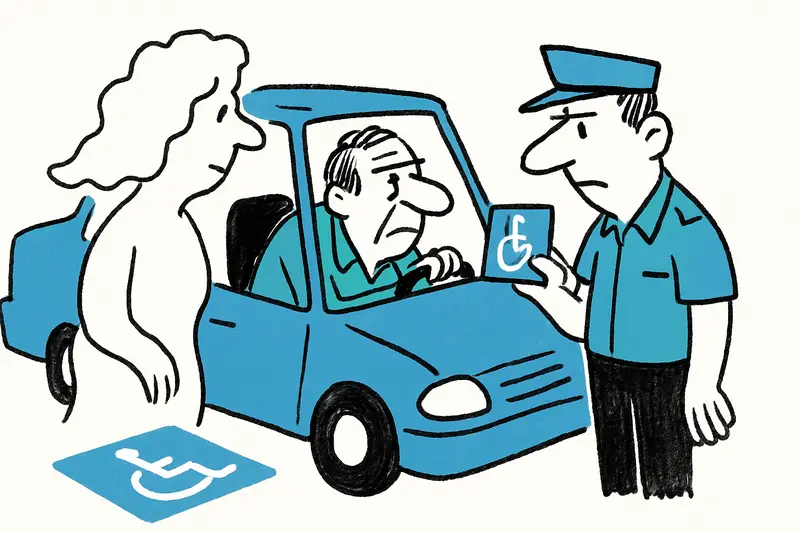
In broad daylight, amid the clatter of shopping carts and the smell of fresh coffee in front of a shopping centre in Coll d’en Rebassa, a car stopped in a marked disabled parking space. The local police were routinely checking the spaces and came across a parking permit that was formally still valid – but the entitled holder had long since died. The woman died on 10 June 2025, and the permit would officially have expired only in August 2027. The driver, a 68-year-old relative, was reported. He faces a fine starting at 200 euros, and proceedings under the Balearic Accessibility Act are underway, which allow for harsher sanctions of up to 6,000 euros.
Critical analysis: At first glance the case seems clear: a person-bound permit must not be used by third parties. But the story reveals several weaknesses: authorities issue permits with expiry dates without ensuring the visibility of the actual status; relatives apparently do not always know they must return the card; and inspections are spot checks rather than comprehensive. This is especially relevant as Palma makes parking digital: No more ORA stickers – opportunities and risks outlines.
What is missing from the public discourse: The debate usually focuses on individual cases and penalties. Rarely does it address the root causes: How are relatives informed when someone dies? How quickly are administrative records cross-checked? Are there simple return mechanisms? And: What role does the technical design of the card (photo, QR code, digital link) play in preventing misuse? The move away from blue stickers raises questions discussed in No more blue stickers: Palma opts for digital parking permits – Are the city and seniors ready?. Without these questions the debate stays at threats of punishment – while parking spaces for people with mobility impairments remain scarce.
Everyday scene from Palma: Anyone walking Passeig Mallorca in the morning regularly sees cars in front of supermarkets, elderly residents doing their shopping or young parents stopping briefly. An empty, correctly used disabled parking space can be vital for a woman with a walker or for a transport service. At the same time, I repeatedly see notes and cards on dashboards in parking garages and shopping areas that nobody really checks. The impression is: for many people it is a big surprise when a check does take place.
Concrete solutions (not all new, but practicable): 1) Mandatory notification and easy return: In the event of death, relatives should be actively informed about the requirement to return permits; municipal administrations could introduce standardized information sheets and short deadlines. Similar administrative digitalisation is already underway: Palma: Anwohner-Parkausweise ab heute online verlängern – blaues ORA-Ticket verschwindet. 2) Technical update: Permits with a visible photo plus a QR code that shows current status from a central registry when scanned would make misuse more difficult. 3) Networking of registration registers and permit administration: Faster cross-checks between the registry office, vehicle registration authorities and permit registry, ideally automated. 4) Visible notices at parking spaces: Signs that clearly state the permit is person-bound and expires upon death, together with a phone number for returns. 5) Preventive public information: Short campaigns on radio and local buses explaining the obligations – many people do not act out of malice but out of ignorance. 6) Focused checks: Regular but also random inspections where demand is highest – shopping centres, hospitals, large residential areas.
Legal perspective: The warning issued to the 68-year-old and the initiated proceedings are appropriate tools to deter misuse. Nevertheless, penalties should not be the only measure; enforcement examples such as a 72-year-old woman in Palma caught with alleged forged disabled parking permit illustrate the system's response. If administration digitalises its processes and relatives are better informed, the cycle of errors can often be prevented before a fine becomes necessary.
Pointed conclusion: Disabled parking spaces are a scarce resource for the people who really need them. Whoever continues to use permits after the holder's death – intentionally or out of ignorance – takes away those spaces from others. The solution lies less in tougher penalties than in clearer procedures, more technology and a little more mutual consideration in Palma's parking areas.
Frequently asked questions
Can a disabled parking permit in Mallorca be used after the holder has died?
What happens if you use someone else’s disabled parking permit in Palma?
How much is the fine for parking in a disabled space with a misused permit in Mallorca?
What should relatives in Mallorca do with a disabled parking permit after someone dies?
Are disabled parking permits in Palma going digital?
Why are disabled parking spaces in Palma so strictly protected?
Where are disabled parking checks most likely to happen in Mallorca?
What kind of changes could help prevent misuse of parking permits in Palma?
Similar News
Palma, Palma de Mallorca, Palma‑Mallorca: What is it really about?
The debate over the city's name is more than grammar: it concerns identity, law and branding policy. A sober reality che...
Warning to Bathers: Nipping Fish in Cala Major and Other Coves — a Reality Check
In Cala Major and several beaches around Mallorca, bathers report painful “nips”. Who are the animals, why are they gett...

Rental Car Theft in El Arenal: What This Incident Reveals About Our Gaps
A teenager steals a running rental car in El Arenal, flees on foot, climbs over walls and is caught by the Guardia Civil...

Red Rope in Palma's Library: What Helps Against Selfie Tourism — and What's Missing
Palma's city library cordoned off an area with a red rope to keep selfie tourism away from reading and working activitie...

Fort San Carlos: Museum, Harbor Dispute — and a Conflict That Demands Answers
The military museum at Fort San Carlos sits right on Palma's harbor, with unexpectedly quiet rooms filled with cannons a...
More to explore
Discover more interesting content

Can Cap de Bou

Townhouse Lleo 72
