
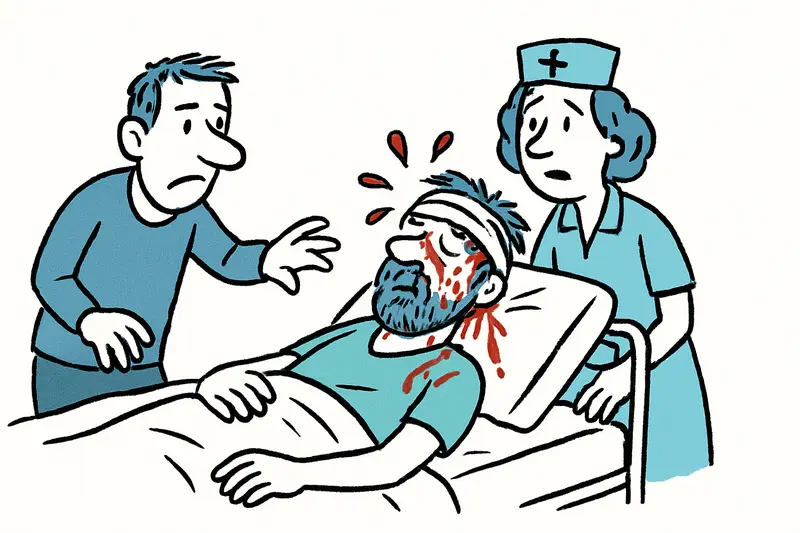
When they defended two women — and ended up blood-soaked in hospital
When they defended two women — and ended up blood-soaked in hospital
On Palma's nightlife promenade an intervention against sexist harassment escalated: two young men were seriously injured, a glass bottle was used. Five people were arrested. A reality check: why could this happen — and what needs to change?
When they defended two women — and ended up blood-soaked in hospital
Key question: Why did a relatively harmless intervention on Palma's Paseo Marítimo escalate so violently — and what is missing in our everyday and safety culture?
The facts are short and brutal: in early October several men attacked two young men on the Paseo Marítimo who had defended two women against sexist comments. During the attack a glass bottle was apparently used as a weapon; both victims suffered head injuries and later had to be treated in hospital. According to witness statements, the National Police arrested five suspected participants; investigators say they are three Spaniards, a man from Guinea and a Nigerian. An expensive mobile phone was taken from one of the attacked men.
The incident raises questions that go beyond this single case. Many factors come together here: loud nights, alcohol, a crowd that quickly takes sides — or looks away — and the narrowness of promenades where there is little room for conflict. Anyone who walks the Paseo at night knows the mix of music from bars, motorcycle noise and the salty smell of the sea. It is in exactly this soundscape that small provocations can grow into major incidents.
Critical analysis: the escalation was not an accident. When a dispute within minutes turns from verbal remarks into serious bodily harm, it reveals failures on multiple levels: prevention in nightlife culture, early de-escalation on site, and rapid help from bystanders. Police and emergency services apparently responded quickly after the emergency call — but the brutality of the act was evident beforehand.
What rarely appears in public debate is the perspective of those affected immediately after the incident. Not only criminal consequences matter. The injured need medical, psychological and legal support; the women who were the reason for the intervention remain witnesses — often without accompaniment. In addition, there is a lack of serious debate about places where assaults are common: which bars, which streets, which times are hotspots?
Another blind spot is the role of witnesses. Many eyes see, few act. On loud nights people are reluctant to intervene — out of fear of being injured themselves or of bureaucratic hurdles when they have to give testimony. We need to discuss how to create safe, simple ways to call for help and give witness statements without putting helpers at risk.
Concrete solutions can be formulated relatively pragmatically. First: more visible presence at night in sensitive locations — not as batons, but as a de-escalation resource. Second: cooperation with bars and restaurants for responsible alcohol service and clear codes of conduct regarding harassing behavior. Third: expansion and better signage of emergency call points and apps that guide and document incidents quickly.
Fourth: first-aid and de-escalation courses for employees in the night economy as well as short tutorials for residents and visitors — showing what safe help looks like, how to secure witness recordings correctly and hand them over to the police. Fifth: more multilingual victim support; on an island with an international audience information and assistance must be available in several languages.
Some technical measures can complement these steps: targeted lighting at critical spots, selective expansion of cameras along public promenades and standardized procedures for police and emergency services so that the injured are treated faster and evidence is secured. It is important that technology does not replace community — surveillance must not become the only answer.
An everyday scene to put this into context: it is shortly after midnight, benches on the Paseo are still occupied, an ice cream seller is packing up, voices mix with a guitar melody from a bar. Someone yells, a beer glass clinks, people look — and within moments a verbal attack becomes a scuffle. Those few minutes decide whether a situation remains peaceful or spirals out of control.
What we need now is less outrage in headlines and more systematic action. Prosecution is important; but it must not be the only response. Prevention, victim aftercare and a public climate in which intervening is neither dangerous nor a nuisance are equally important.
Conclusion: the incident on the Paseo Marítimo reflects a nightlife culture that can become violent at its edges. Those responsible — politicians, police, the hospitality industry and civil society — must agree on practical steps: clear prevention rules, low-threshold reporting channels and real aftercare for victims. Otherwise promenades that invite strolling by day will become places at night where helping is itself dangerous.
Frequently asked questions
What happened on Palma's Paseo Marítimo that raised safety concerns?
How can Mallorca's nightlife areas be safer without harming the atmosphere?
What steps can bars and restaurants in Mallorca take to prevent harassment and violence?
What should bystanders or witnesses do during a nighttime incident in Mallorca?
Are there resources for victims after such incidents in Mallorca?
Can technology help improve safety on Mallorca's promenades?
What is being done to prevent violence in Mallorca's nightlife culture?
What practical tips can visitors and residents use to stay safer on Mallorca’s promenades at night?
Similar News
Thief takes salon security — and even steals the camera
In Palma a man stole the tip jar and the surveillance camera from a massage salon. A neighbor filmed the act and handed ...
From Workshop to Luxury Villa: What a €19.5 Million House Reveals About Palma's Market
A historic town house on Carrer de la Pelleteria was converted into a 1,000-sq m residence and is on the market for €19....
FC Germania Mallorca: Why does the lead always slip away in stoppage time?
After the 1-2 at C.A. Pal ne da Tesa questions arise: are these coincidences, a shortage of personnel, or a deeper probl...
Hidden War Bunkers in Palma: Remember, Preserve, Reveal?
Beneath Palma's paving lie remnants of a forgotten shelter system from the Civil War. Consolidation, ethics and tourism ...
Death in the Gorge: Key Questions on the Safety of Rallies on the Ma-10
A Porsche plunged into a ravine during the 550 Challenge near Mortitx. Who bears responsibility, what safety gaps were r...
More to explore
Discover more interesting content

Can Cap de Bou

Townhouse Lleo 72
