
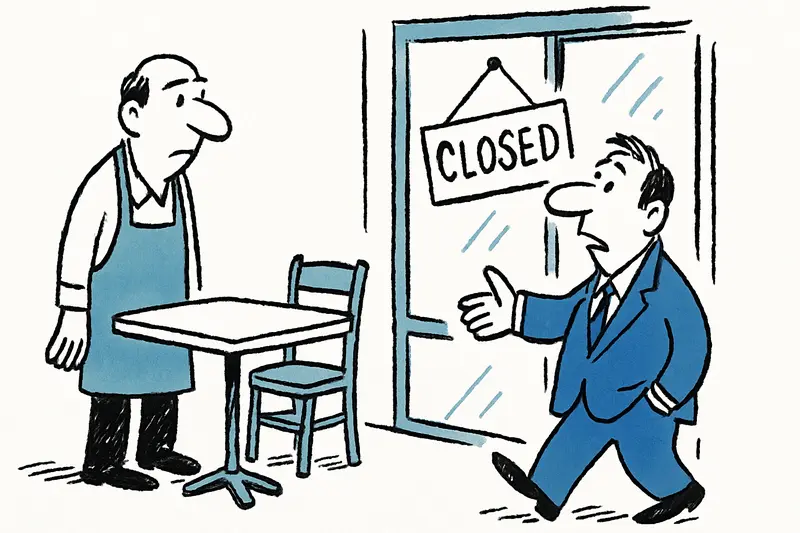
Why More and More Venues on the Paseo Marítimo Are Closing
Why More and More Venues on the Paseo Marítimo Are Closing
The new promenade shines – but many bars and restaurants are struggling with rising rents, fewer parking spaces and changed customer flows. A critical assessment and concrete proposals from everyday life in Palma.
Why More and More Venues on the Paseo Marítimo Are Closing
Key question: Can the freshly renovated waterfront promenade regain its nightlife — or has the redesign destroyed the business model?
When I walk along the Paseo Marítimo in the early evening, I no longer hear as many clattering plates as before. Instead, there are a few isolated voices, footsteps on the new pavement and the distant honk of a taxi vainly searching for a parking space. The promenade is modern, the lighting flattering, as noted in Paseo Marítimo: More boulevard, more questions — will Palma make the new waterfront part of everyday life?, but where are the people who used to jump out of their cars to duck into a bar?
The sober answer can be read in numbers and examples: rent demands for new contracts are rising sharply, operators face increasing fixed costs, and the redesign has eliminated around 1,200 parking spaces, a detail highlighted in Paseo Marítimo in Palma: Attractive from Afar, Overgrown Corners and Too Few Parking Spaces. For businesses that relied on spontaneous visits and easy accessibility, this is a heavy blow. Sales and takeover offers are accumulating: long-standing addresses are up for sale or transfer, from a former cult venue with a seven-figure asking price to a small pizzeria offered for a few hundred thousand euros.
The problem is more complex than a single factor. The COVID years depleted capital, long construction periods drove away customers, and nightlife has shifted geographically — to neighborhoods with better parking like Santa Catalina or to industrial areas with cheaper conditions. At the same time, the clientele has changed: cruise passengers often pass the promenade without stopping, and many residents resist noise and excesses — a theme explored in Who is Palma's new waterfront boulevard really for?. All of this leads to lower footfall, especially in the evenings.
A particularly clear case is a large dinner-show concept with high fixed costs that, according to internal calculations, needs to remain open for several months each year to be economically viable. Palma's strong seasonality and the changed accessibility make this model dangerous. On the other hand, a small pizzeria next to the auditorium proves that success is possible when the offering, cost structure and location fit: cultural events there regularly fill the tables.
What is often missing in the public debate is the memory work: the Paseo Marítimo was for decades a place of quick encounters. Many business models relied less on loyal regulars than on passers-by. Once physical accessibility disappears, that fragile balance collapses. There is also a lack of an honest inventory of rental contracts: many date from earlier years and are now being renewed at current market prices, which eats into profits. This is not theory, it is accounting practice.
An everyday scene makes this clear: it is Saturday, 7 p.m., a group of working people leave work in the center and think of a spontaneous pizza by the sea. They drive to the Marítimo, find no parking, circle around and end up in Santa Catalina. The pizzeria on the Paseo remains empty, even though the weather is mild and the promenade looks beautiful. These small decisions add up.
So what can be done? Here are six concrete approaches that are not miracle cures but could show quick results: first, flexible rental models during transition periods, where municipal or private actors smooth out rent increases; second, a parking strategy with shuttle services from the outskirts and evening parking for restaurant guests; third, time-limited support programs for newly opened businesses to cushion start-up losses; fourth, coordinated events outside the high season to draw crowds (concerts, cruise-ship berth activities, cultural partnerships with the auditorium); fifth, partnership agreements with cruise companies to extend stops or route visits via the promenade; sixth, a municipal night protection model that regulates noise while providing clear, practicable opening hours for businesses.
These measures do not require a magic wand, but political and economic coordination. Unions, the real estate sector, the city administration, resident representatives and restaurateurs would need to sit at the same table instead of debating in separate camps. Smaller steps include pop-up concepts in vacant premises or shared use of bar areas between restaurateurs to reduce fixed costs.
My pointed conclusion: the new promenade has given Palma a design calling card, as discussed in Paseo Marítimo: Palma's new promenade — Opening in mid-November, the real test comes afterwards, but architecture does not replace accessibility or viable business models. The Paseo Marítimo is not a lost place, it is a testing ground. Anyone who wants to succeed here must respect the location: lower start-up costs, realistic rent structures and a mobility plan that brings customers back to the table. Until then, more signs reading 'Se traspasa' will shape the picture — and that would be a waste of more than just concrete and light.
Frequently asked questions
Why are more restaurants and bars closing on Palma's Paseo Marítimo?
Has the new Paseo Marítimo in Mallorca made parking more difficult?
Is the Paseo Marítimo in Palma still a good place for nightlife?
What kind of business model works best on Mallorca’s Paseo Marítimo now?
Should tourists visiting Palma still walk along the Paseo Marítimo in the evening?
Why did nightlife move from the Paseo Marítimo to Santa Catalina in Palma?
What can Palma do to help businesses on the Paseo Marítimo survive?
Is a small restaurant still viable on the Paseo Marítimo in Mallorca?
Similar News

Mistaken identity with fatal consequences: Brutal assault in S'Aranjassa — what's missing in the follow-up?
At S'Aranjassa a visitor to a finca was tied up, beaten and thrown out of a van. Three men have been arrested, including...

High heel slips, car accelerates: accident on Camí de Son Hugo
A woman lost a high-heeled shoe on the forecourt of the sports facility at Camí de Son Hugo. The car accelerated, mounte...

Phone Scam: How Two Hotel Employees at Playa de Palma Lost Thousands of Euros
One morning in September, two reception employees at Playa de Palma were pressured by alleged alarm-company staff — in t...

When the Wallet Becomes a Danger: Attack in Peguera and Lessons for Mallorca
In Peguera, two women are said to have stolen the wallet from a 75-year-old German couple. When the victim intervened, t...
Plata stays Plata: Young people take over, Llonguets remain
A small bar on Carrer de l'Argenteria will continue: Tolo Serra hands the place over to young Mallorcans at the end of t...
More to explore
Discover more interesting content

Can Cap de Bou

Townhouse Lleo 72
