
Son Forteza pedestrian bridge temporarily closed: repair or rebuild?
The Son Forteza pedestrian bridge in Palma has been urgently closed. An expert report will determine whether repairs are worthwhile or a complete rebuild is necessary. What this means for commuters, parents with strollers and residents — and which solutions make sense now.
Son Forteza pedestrian bridge: Temporarily closed — and many questions remain
Early this morning, barrier tape blocked the access points and signs warned people to be careful: the Son Forteza bridge over the railway tracks in Palma has been closed as of today, Pedestrian Bridge at Son Forteza Closed: Safety Over Convenience – And Now?. The city justified the measure with a routine inspection that revealed significant damage to the wooden decking and the ramps. In recent weeks there have also been increased acts of vandalism.
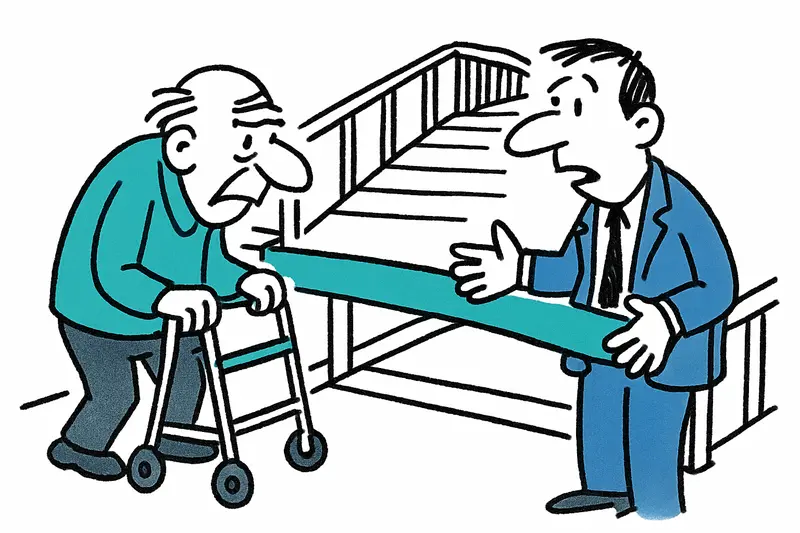
Anyone who stood nearby and listened to the trains could sense the seriousness: the creaking of the wood, the rush of the trains, people pausing for a moment. An elderly woman with a walker turned back and dryly said she had long felt uneasy crossing it. Such observations are not new, but now they have immediate consequences.
What the closure means in practice
Safety before convenience: The city explicitly asks that the barriers be respected. Pedestrians must now use the Jacinto Verdaguer level crossing — for fit people this is only a few minutes' detour, but for parents with strollers or people with limited mobility it can be a real problem. During peak times the crossing could see queues.
Everyday life at the site: In the morning commuters, students and delivery workers rush by. When lights flicker, the surface becomes slippery in rain and the bridge appears uneven, uncertainty grows. Residents also report that lighting fails more often in some places — a factor that increases the perception of danger in poor visibility.
Repair or rebuild — the central question
The city has commissioned an expert report to clarify whether targeted repairs are sufficient or whether a rebuild would be more cost-effective and sustainable in the long term. Such assessments require material tests, structural calculations and cost–benefit analyses. Realistically: weeks to months before a reliable decision is available; related local debates are discussed in Ring Road: New Pedestrian Bridges — Safety or Hasty Decision?.
A repair approach would mean replacing damaged planks, stabilizing ramps, installing non-slip surfaces and strengthening measures to prevent further destruction. That is faster and cheaper in the short term. A rebuild, on the other hand, would involve longer planning and construction times but potentially lower maintenance and better accessibility — if properly planned.
Aspects that are seldom mentioned
Less in the spotlight are questions of responsibility and the choice of materials. Who is exactly responsible for maintenance — the city, the rail operator or a third party? How resilient are the timbers used against salty air, temperature fluctuations and vandalism? And not least: how accessible is the bridge really if ramps, handrails or lighting fail?
Another topic: preventive maintenance. Many damages do not occur overnight. Regular, documented inspections and a clear maintenance plan could make such closures less frequent. The involvement of the neighborhood is also often little discussed — people who use the route regularly have a good eye for early defects.
Concrete steps that make sense now
Short term: Temporary measures such as provisional steel plates on particularly worn spots, quick repairs to handrails and an immediate lighting check help to keep the situation manageable. Mobile surveillance or a stronger presence of municipal police can deter vandalism.
Medium to long term: For a renovation, weather-resistant, non-slip surfaces and corrosion-free fastenings should be chosen. For a new build, consider durable materials (e.g. composite materials or specially treated timbers) as well as continuous accessibility and energy-saving LED lighting; discussions about design priorities versus aesthetics are explored in New pedestrian bridges over Palma's ring road: Safe or just prettier steel?. A realistic maintenance plan and clear responsibilities are important.
Financial and organizational options: The city can reallocate budget funds in the short term, consider grants or explore public-private partnerships. Transparency about the timeline and citizen participation in the planning process would build trust.
Neighborhood and outlook
On the plaza residents spoke of inconvenience, students feel unsettled, commuters accept detours. But there is no panic — rather the expectation that the city will act quickly and sensibly. The key question remains: is patchwork enough or is now the time for a sustainable solution?
For the coming weeks this means: respect the barriers, use alternative routes and allow a few extra minutes. And it is now up to the city, alongside the expert report, to communicate clearly: who will bear the costs, how long will it take, and how will it be ensured that the bridge does not become a problem again in a few years? We will stay on top of the story and follow the debate — between the creak of old boards and the sound of rushing trains, this is a small but very tangible field of politics in the middle of Palma.
Frequently asked questions
Why is the Son Forteza pedestrian bridge in Palma closed?
How long will the Son Forteza bridge closure in Mallorca last?
What is the best alternative route while the Son Forteza bridge is closed?
Is it safe to cross the Son Forteza pedestrian bridge in Palma right now?
Will Palma repair the Son Forteza bridge or rebuild it?
What makes pedestrian bridges in Palma more vulnerable to damage?
What should people with strollers or limited mobility know about the Son Forteza closure?
What could a new pedestrian bridge in Palma improve compared with a repair?
Similar News

Release after bloody attack in Palma: Why the court's decision raises questions
An 18-year-old who allegedly inflicted a serious neck injury on a man at Plaza Gomila using a wristwatch wrapped around ...
Kidnappings in Inca: Three young men forced into car trunks and abused in the forest – a reality check
In Inca, three 18-year-old men were forced into car trunks by masked assailants at the Plaça des Bestiar, taken to a for...
Spreading Massification: The Brake That Still Has Much Work to Do
Marga Prohens announces limits on volume tourism. The measures sound harsh — but are they enough to save everyday life, ...
Through the Keyhole onto the Party Yacht: How Daniela Katzenberger Is Planning Her 40th on Mallorca
Daniela Katzenberger turns 40 and wants to celebrate it on the island — likely with a boat, cake and her mother. A relax...
By Boat Instead of the Road: Palma's Water Bus — a Reality Check
The 'Bus Nàutic' launches in two stages — but questions remain over interim operations, fares and environmental requirem...
More to explore
Discover more interesting content

Can Cap de Bou

Townhouse Lleo 72
