
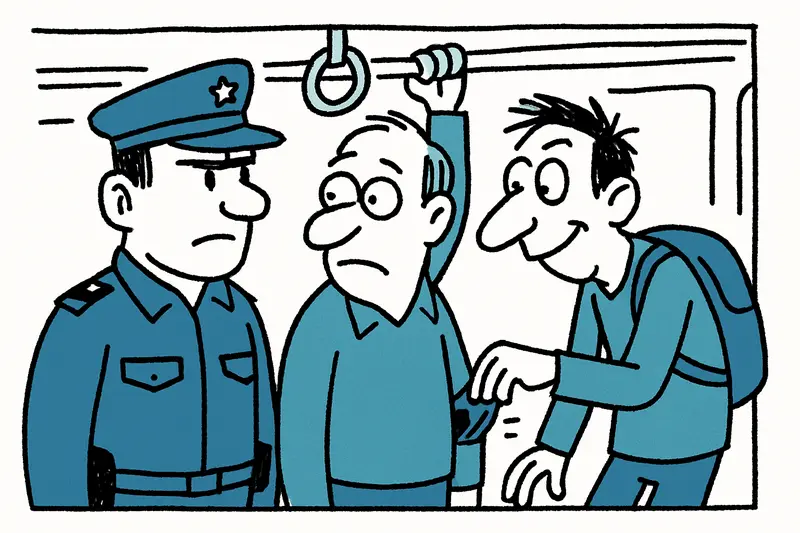
Too many pickpockets: Police now patrol in Palma buses — is that enough?
Too many pickpockets: Police now patrol in Palma buses — is that enough?
Mayor Jaime Martínez announces patrols in EMT buses: uniformed and plainclothes officers on selected lines, new "Agentes Cívicos" and more cameras. A reality check: How effective are the measures, what's missing and what alternatives exist?
Too many pickpockets: Police now patrol in Palma buses — is that enough?
A reality check on the new measure by Mayor Jaime Martínez
Mayor Jaime Martínez has announced that local police will in future also patrol EMT city buses. Planned are both uniformed patrols and plainclothes officers on a selection of lines and during specific time windows. In addition, "Agentes Cívicos" are to be introduced to inform, raise awareness and maintain direct contact with the population. Investments in video surveillance have already been named for Son Castelló, Pere Garau and Nou Llevant.
Key question: Are targeted bus patrols and more cameras enough to sustainably reduce pickpocketing in Palma?
Critical analysis: Visible police presence has an immediate effect — most thieves avoid direct contact with uniforms. Plainclothes officers, in turn, can catch offenders in the act, as happened when three off-duty police stopped a handbag robbery in Palma's Old Town. Both strategies have their value, but they are no panacea. Without accompanying measures there is a risk of displacement: mobile misconduct may simply move to other neighborhoods or other means of transport, as seen in a pickpocket chase at Bellver Castle. There is also often a lack of clear success measurement: which lines and which times really have an impact? Without transparent data it remains unclear whether resources are being concentrated in the right places.
What is missing in the public debate: concrete figures and timelines. It has been said there will be "a selection of lines and time windows", apparently with a view to heavily affected routes like the Ballermann lines and the buses to Illetes. But citizens and passengers have a right to know how success will be measured, which reporting channels exist and how victims will be supported. Also hardly discussed is how the measures are coordinated with the judiciary, courts and public prosecutor so that arrests actually lead to tangible consequences, as discussed in Palma takes stock: Arrests made — is that enough to make beaches safer?.
Everyday scene from Palma: On a Tuesday morning on Passeig Mallorca you can see the bustle. A city bus stops, the doors open, tourists with backpacks get on, an older woman pushes her rollator. The driver's voice announces the stop. In the background the subtle hum of zipper sounds, a group of young people talking loudly. This is exactly where the challenge begins: in this togetherness, within seconds window situations occur in which phones and wallets are at risk, a scenario also captured when a passerby at the Mercat de l'Olivar apparently prevented a pickpocketing.
Concrete proposals: 1) Transparent performance metrics: City Hall and EMT should regularly publish on which lines and in which time periods operations took place, how many reports there were before/after and how many complaints led to convictions. 2) Prevention at the source: clearly visible notices in buses, pictograms at stops, short announcements in several languages about pickpocketing and how to protect yourself. 3) Training for driving staff: drivers and inspectors often see incidents first; a clear reporting protocol and secure communication channels help to react quickly. 4) Victim support and reporting channels: immediate help at the nearest kiosk or a QR-code-based report in the bus could make it easier to record incidents promptly. 5) Neighborhood work instead of pure repression: social programs in hotspots, extended checks against gang structures and offers for young people reduce incentives for petty crime. 6) Cooperation with the tourism sector: hotels, landlords and rental companies can contribute with flyers and info screens.
A word on video surveillance: Cameras in Son Castelló, Pere Garau and Nou Llevant are a step. Cameras help with investigations but raise questions about data protection, maintenance and analysis. Cameras without staff to quickly review footage and react remain mere documentation tools.
Conclusion: The idea of deploying police in buses and introducing civilian "Agentes Cívicos" is correct — as part of a package. Those who expect only uniformed presence or more cameras overlook the complex causes of pickpocketing. The city needs clear targets, transparency, better reporting channels and linkage with prevention programs. Otherwise controls remain superficial solutions that at best shift the problem. And meanwhile commuters' nerves rise: a loud horn, a hurried door, an uneasy feeling in the stomach at Plaça d'Espanya — that's everyday life for many. That must be reduced, not only visibly but measurably.
Frequently asked questions
What is the weather like in Mallorca in late October and early November?
Can you still swim in Mallorca in autumn?
What should I pack for Mallorca in the off-season?
Is Mallorca still good for a beach holiday outside summer?
What can you do in Mallorca if the weather turns cooler?
Is Alcúdia a good place to stay in Mallorca in autumn?
What is Palma like to visit in late autumn?
How reliable is the weather in Mallorca in autumn?
Similar News

Magaluf: Watchtower Alarm – Lifeguards Pull Unconscious Beachgoer from the Water
After a drama in the late afternoon, two lifeguards at Magaluf beach rescued an unconscious 44-year-old man. He was stab...

Turquoise in the City: How dangerous is the color play of the Sa Riera?
The Sa Riera in Palma suddenly turned turquoise — a pretty motif, but behind the effect lies a discharge of saline waste...

Jeckliner at Sunnesching: Cologne spirit sets sail from Palma
In September 2027 the Mein Schiff 2 briefly becomes a floating carnival stage: four days with Cologne bands, comedy and ...
Finally Home: Mike and Leyla Heiter Buy Villa with Sea View in Mallorca
The reality TV couple Mike and Leyla Heiter have bought a house in Mallorca with a roof terrace and sea view. An Instagr...
Arrest after series in Palma: Who protects apartments from repeat offenders?
The National Police arrested a man in Palma who investigators say may have broken into several apartments. In one incide...
More to explore
Discover more interesting content

Can Cap de Bou

Townhouse Lleo 72
