
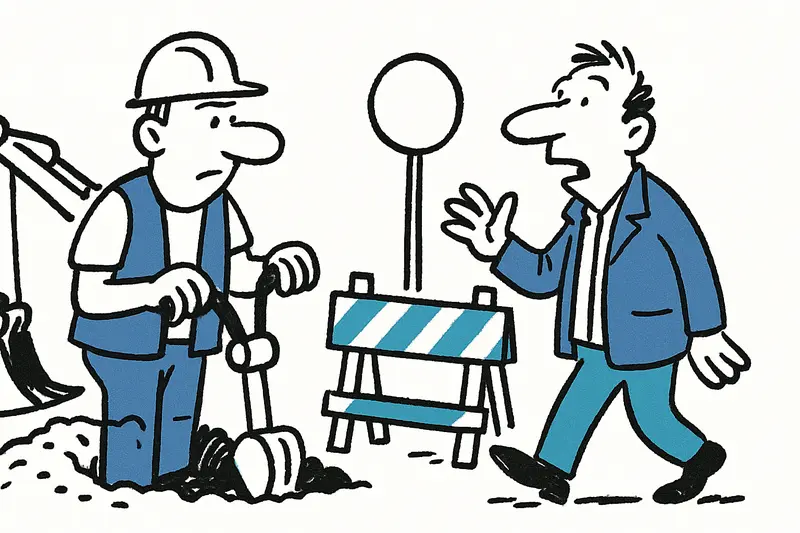
Plaça del Mercat: More space for pedestrians, new pipes below – construction starts in November
Plaça del Mercat: More space for pedestrians, new pipes below – construction starts in November
The Plaça del Mercat and adjacent streets in Palma will be redesigned: From November, around 11,560 m² will be allocated for pedestrians, and underground pipes and the sewer system will be renewed. Cost: about €4.4 million.
Plaça del Mercat: More space for pedestrians, new pipes below – construction starts in November
Ring around the old market culture: wider sidewalks, new lighting, water mains replaced
If you stroll across the Plaça del Mercat: More Space — but at What Cost for Residents and Market Traders? in the morning, you know the scene: market stalls, the rattle of rolling suitcases, conversations at the bakery and motorcycles that have made their home at the edge. In a few months craftsmen and excavators will provide a different soundscape – and not just for a few weeks, but as part of a larger redesign of the area a few meters below the Plaça Mayor.
The city administration has concluded a cooperation agreement with the municipal utility that governs the work. An investment volume of around €4.4 million is planned for a project area of approximately 11,560 square metres. Plaça Mercat: 20 Months of Construction — Renovation Under Review In addition to the Plaça del Mercat, this includes the shopping street Carrer Unió, a stretch of Carrer de la Riera up to the Rambla and the Plaça Weyler.
Below ground the focus is mainly technical: sewer and stormwater lines are to be separated and old pipes replaced. Emaya will be responsible in particular for renewing the drinking water network. The aim is to make the wastewater system more efficient and reduce future blockages and flood risks.
Above ground, changes you will immediately notice are planned. The Plaça del Mercat is to become largely a pedestrian zone, and the sidewalks on Carrer Unió will be widened. The road surface and public lighting will be renewed, seating and other street furniture replaced – more space to pause between a market stall and a café, and fewer motorcycles parked directly on the square.
The city also plans to limit the maximum speed in the area to 20 km/h. Existing needs will remain taken into account: parking spaces for people with reduced mobility, loading zones, areas for separate waste collection and reserved parking for authorities and courts are part of the plans. Accessible public transport stops and taxi ranks are also to be preserved.
The start date is scheduled for November. The city administration emphasises that this timing has been coordinated with the businesses affected. That seems sensible: many shops in the side streets rely on passing trade, and a well-coordinated work plan can mitigate the impact during the construction phase.
For residents and shop owners the measure brings hope for more reliable infrastructure underfoot and better public space above. Imagine: fewer potholes, evenly lit paths on winter evenings and fixed benches where you can briefly set down your shopping before moving on. Especially for parents with prams or older people, greater accessibility can make a real difference.
A look at everyday life shows how the improvements could feel. The little ice-cream shop on the corner, the grocer with fresh olives, bicycles that now often park on the pavement — all of that will be reorganised. Once the seating groups are in place, office workers who habitually grumble in the morning will probably drink their coffee outside more often. And tourists strolling from the Passeig del Born will be presented with a calmer, more orderly square.
Of course, the question arises how the construction works will be organised so that deliveries to shops remain possible and pedestrians do not constantly have to take detours. A concrete tip from the neighbourhood would be a phased work programme: first renew the underground pipes in sections, then redesign the surface one axis at a time. Flexible delivery windows and clearly signposted temporary pedestrian routes would also make daily life easier during the works, a concern reflected in Renovation of the Plaza del Mercat: Between Refurbishment and Fear for Survival.
In the end, the Plaça del Mercat should not become a museum piece, but a lively place: a square that brings together market life, short breaks and through traffic in a friendlier balance. If everything goes to plan, autumn will not only be the season of chestnut stalls, but also the start of a calmer, better-connected centre of Palma.
What remains to be observed: How transparently the timetable is communicated to traders, how Emaya coordinates the renewal of the drinking water mains with the street works, and whether the new quality of stay is already noticeable in the first season after completion.
Frequently asked questions
What is changing at Plaça del Mercat in Palma?
When will the construction work at Plaça del Mercat start?
Will Plaça del Mercat in Mallorca become pedestrian-only?
What underground works are planned at Plaça del Mercat and Carrer Unió?
What changes are planned on Carrer Unió in Palma?
How might the works at Plaça del Mercat affect shops and deliveries in Palma?
What will parking and access look like around Plaça del Mercat in Palma?
Why is Palma redesigning the Plaça del Mercat area?
Similar News
When the Wallet Becomes a Danger: Attack in Peguera and Lessons for Mallorca
In Peguera, two women are said to have stolen the wallet from a 75-year-old German couple. When the victim intervened, t...
Plata stays Plata: Young people take over, Llonguets remain
A small bar on Carrer de l'Argenteria will continue: Tolo Serra hands the place over to young Mallorcans at the end of t...
Unnoticed in the Luggage Compartment: How a Boy Traveled More Than 100 Kilometers in a Team Bus
A minor traveled in the undercarriage of a team bus for more than 100 kilometers until his cries for help were heard. A ...

Cap Vermell Grand: Second Michelin Key – a Gift for the East
The Cap Vermell Grand in Capdepera has been awarded its second Michelin key. For the region this elevates the luxury off...
Eurowings lets four aircraft carry names – a friendly idea that also reaches Mallorca
Eurowings is launching a campaign: four Airbus A320s are to carry the first names of people who help others in everyday ...
More to explore
Discover more interesting content

Can Cap de Bou

Townhouse Lleo 72
