
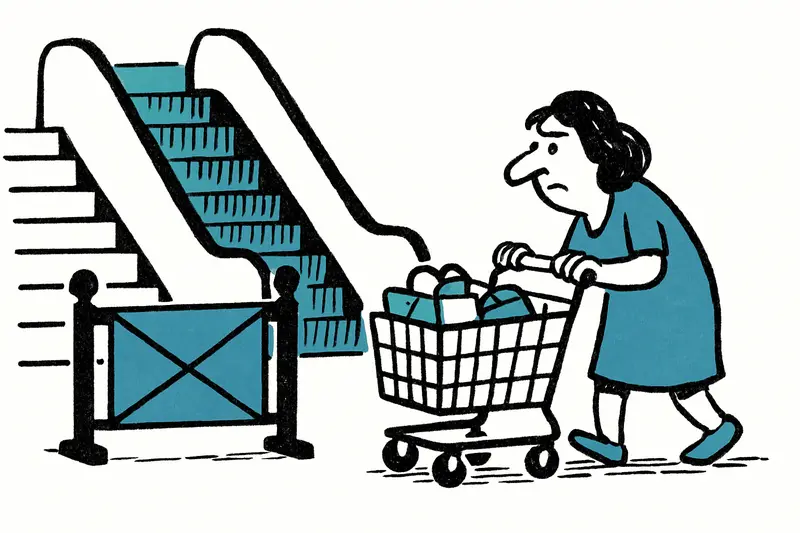
Plaça Major — the sad heart of an overlooked city centre
Plaça Major lies in the middle of Palma — central, noisy and yet neglected. Between locked shops, broken escalators and sporadic cleaning there is a deficit of trust. Small, immediately actionable steps could revive the square.
Plaça Major: central, loud — and surprisingly neglected
Just a stone's throw from the cathedral, between the Rambla and the old town alleys, lies Plaza Mayor: el triste corazón de un centro incomprendido. Early in the morning, around nine, a shopping trolley rattles down the steps, the Seu strikes the hour somewhere in the background, delivery vans park with engines running, and an elderly woman pulls her walker over a closed-off ramp. The scene is as familiar as it is unsettling: a place where the city meets — and where many things are wrong.
The guiding question
Why is such a central square allowed to fall into disrepair when it has so much potential? The answer is not simple: political changes, fragmented responsibilities and the temptation to wait for Plaça Mercat: 20 Months of Construction — Renovation Under Review all play a part. But often it is not the grand visions that keep a square alive, but the small, everyday decisions.
What lies beneath the surface
Beneath and on Plaça Major lie stories of former shopping arcades that once pulsed with life. Today shutters hang down, some shop windows are covered in dust, and cardboard boxes gather in corners. The car park above the square is functional but does not feel inviting: graffiti on the walls, faded fluorescent lights and sparse cleaning leave a sense of neglect that deepens in the evening hours.
It is not a purely aesthetic problem. Broken escalators, defective lifts and infrequent cleaning cycles push Plaça out of the city's rhythm. Regulars at the corner café, street vendors, Saturday market visitors — all of the social fabric suffers when basic maintenance is lacking. And that has consequences: vacancies deter people, visitors stay away, and new businesses hesitate to settle in.
Aspects that are often overlooked
In meetings and committees, large visualizations and masterplans dominate. What is rarely discussed: maintenance contracts, the role of private owners, coordination between the municipality and operators, or the night shift of cleaning staff. Small things decide more here than big renderings.
Less discussed is the psychological effect of neglect. A boarded-up shop window sends a message: it is no longer worth being here. This loss of confidence is contagious. It makes traders leave, visitors avoid the place, and investors hesitate. It is less a lack of architecture than a deficit in a culture of care.
Pragmatic steps that have immediate effect
Instead of waiting for a distant complete overhaul, Plaça needs a priority list of quickly implementable and measurable measures. Some proposals that take weeks to months rather than years:
1. Immediate technical measures: repair escalators and lifts, renew lighting, regular cleaning with defined time windows. Visible, reliable measures strengthen users' trust.
2. Promote interim uses: temporarily allocate vacancies to local artists, pop-up bookshops, workshops or school projects. A weekly market, a small exhibition or a workbench immediately enliven the space.
3. Incentives for small businesses: short-term rent reductions, flexible lease terms and help with permits bring traders back. Often a small budget for repairs is enough to make a shopfront attractive again.
4. Accessible routing: clear signage to the Rambla and the cathedral, functioning ramps and a reliable lift for older people and parents with prams.
5. Pilot projects with metrics: a three- to six-month trial with street music, evening lighting and local market spaces. Success is measured not by feeling but by visitor numbers, traders' sales and feedback from the neighbourhood.
Fewer big words, more small fixes
Political visions have their place, but between planning and implementation lies daily maintenance. A culture of care in which owners, operating companies and the city administration keep clear responsibilities and deadlines would work wonders. A clean lift, working escalators or a temporary bookshop are not utopias — they are sensible, practical steps.
A place with potential — if you want it
Plaça Major has everything: location, architecture and a colourful mix of tourists, traders and residents. What is missing is the willingness to take responsibility step by step. With a pragmatic maintenance plan, guided interim uses and simple incentives for small traders, the currently sad centre could soon become a lively meeting place again.
Until then, Plaça Major remains a quiet testament to missed opportunities — but also a place that could quickly gain quality of life through a few targeted moves. Maybe it really takes fewer big words and more oil for the escalator.
Frequently asked questions
Why does Plaça Major in Palma feel neglected despite being so central?
Is Plaça Major in Palma worth visiting right now?
What is the best time of day to go to Plaça Major in Palma?
What problems make Plaça Major feel difficult for visitors and locals?
How could Plaça Major in Palma be improved without a full renovation?
Are the shops and vacant units around Plaça Major in Palma empty because of neglect?
How does Plaça Major connect to the cathedral and the Rambla in Palma?
What would make Plaça Major in Mallorca feel safer and more welcoming?
Similar News

Afterwiesn at Pinos: MM invites to two Bavarian-Mallorcan evenings
Two evenings, Bavarian verve and Mallorcan hospitality: On October 16 and 17 the Pinos restaurant in Sol de Mallorca wil...
When Oil Becomes a Luxury: A Reality Check on Rising Food Prices in Mallorca
On Mallorca staple foods have become drastically more expensive over five years. Who pays the price? A critical look at ...
When a Hammer Comes Out of the Glove Compartment: Violence After a Traffic Dispute in Bons Aires
A midday traffic dispute in Bons Aires escalated: a man pulled a hammer from his car and injured another driver in the l...
Realtor on Set: Marcel Remus in Front of the ZDF Camera in Mallorca
Well-known real estate agent Marcel Remus appears for the first time as an actor in a ZDF feature film; filming is curre...
When the Ovens Go Cold: Why Palma's Small Pizzeria Closes After 35 Years
An affordable pizzeria in Palma has closed after 35 years. Not because of financial problems, but because the strain on ...
More to explore
Discover more interesting content

Can Cap de Bou

Townhouse Lleo 72
