
When the Plane Jolts: Why We Should Talk about Turbulence Differently
When the Plane Jolts: Why We Should Talk about Turbulence Differently
Turbulence is uncomfortable — but rarely dangerous. Still, public debate lacks practical information and clear rules. A view from Palma: key question, everyday scenes, analysis and concrete proposals for safer flying.
When the Plane Jolts: Why We Should Talk about Turbulence Differently
Key question: How can we ensure that air travelers stay calmer onboard while also reducing real safety risks from turbulence?
At Palma airport: trolleys rumble across the floor, the coffee aromas from Passeig Mallorca mix with the murmur of announcements, and the elderly lady next to me at the gate looks a little nervous as she watches the planes taking off. Many who check in here do not think about meteorology — until the seat suddenly jolts and the seatbelt signs light up. Then a small inconvenience quickly becomes stress.
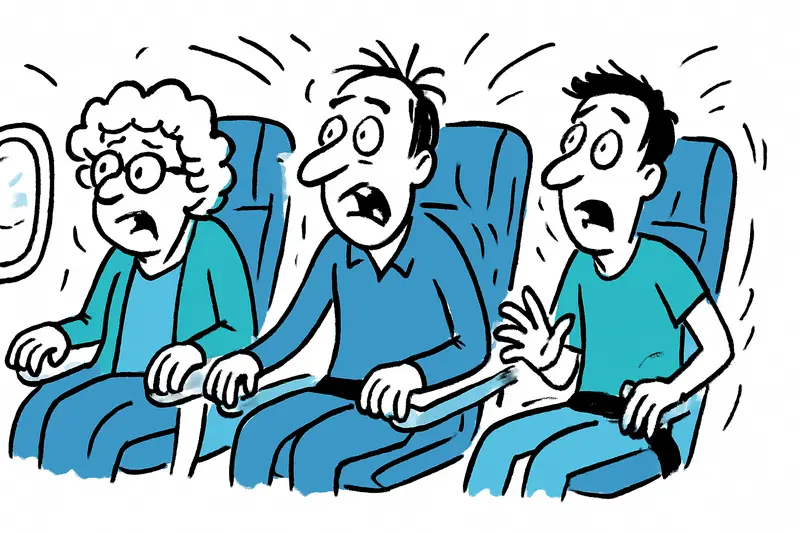
Turbulence is a meteorological phenomenon: rising or shifting air masses, cloud formations and thermal currents cause an aircraft to sway briefly. On short- and medium-haul flights, especially during the day, they are more frequent because the sun heats the air near the ground more strongly. That does not automatically mean danger for the aircraft: modern airplanes and crews are designed for this. For passengers, however, risks arise inside the cabin — unbuckled people, loose carry-on items and panic reactions.
The public debate often focuses on the image of a 'crashing plane' or on technical explanations. What is missing: clear, practical guidance before and during the flight; transparent communication from airlines; and locally available services for fear of flying. Instead, much is left to general appeals: “Please fasten your seatbelt” and “please remain calm” — phrases that are necessary but not sufficient.
Critical points that are rarely discussed: first, enforcement of the seatbelt rule. In Palma as elsewhere you repeatedly see people getting up to retrieve things from the overhead bin even though the light is blinking. Second, securing carry-on luggage: overhead bins are often overfilled and small items lie loose in the aisle, sometimes provoking incidents such as the Gate 14 carry-on dispute at Palma airport. Third, comprehensible information for passengers before the flight: many do not know that night and early-morning hours tend to be calmer or that middle seats feel less movement.
Everyday observations suggest simple, effective solutions. Airlines could give short, clear guidance at the gate: why the light comes on, where it’s best to sit, and how to stow luggage properly. At Palma airport, well-visible information boards with practical tips would help — not long texts, but pictograms and short sentences. Cabin crew can pay more attention to the seatbelt rule and assist with stowing items; that reduces loose objects in the aisle.
On a technical level, improvements are possible without passengers noticing: flight plan optimization, route adjustments when convection areas are forecast, and the exchange of real-time weather data between airports and airlines. Apps and websites already provide forecasts for turbulent stretches; it would make sense for airlines to integrate these data into their booking or check-in processes and proactively inform passengers, for example when stronger thermal activity is expected.
For people with a fear of flying, local services are often lacking: courses in emotion regulation, short techniques for managing height and breathing, or contact points in Palma that point to quick help before departure. Such offers could be cooperations between the airport authority, tourism agencies and private initiatives.
The legal side also deserves more attention: when passengers are injured by turbulence — as in the widely reported case when two flight attendants were injured during the landing approach to Palma — procedures for reporting, initial medical care and compensation are not always transparent. Clear instructions on boarding passes or on airlines' websites could help: who do I contact if something happens? What steps follow after an injury caused by falling luggage?
Conclusion: Turbulence is part of flying, and the aircraft itself is rarely the problem. What we urgently need in Palma and elsewhere is less scaremongering and more pragmatism: clear, visible information on the ground and in the cabin, consistently secured carry-on rules, better-integrated weather data in booking processes and local services for fear of flying. Anyone who briefly enjoys the evening mood on Passeig Mallorca before departure can do a lot with a simple ritual: put shoes on, check the compartment, test the seatbelt — small habits that make bigger turbulence more bearable for everyone on board.
Frequently asked questions
When is the best time to visit Mallorca for outdoor activities?
Can you swim in Mallorca year round or are there safer seasons?
What should I pack for a Mallorca trip?
What are the best ways to get around Mallorca?
What are must-do experiences in Mallorca?
Is Mallorca safe for travelers and how about health concerns?
What foods should I try in Mallorca?
How far in advance should I plan activities in Mallorca?
Similar News

Up to €9,000 Fine in Inca: Why Wet Wipes Can Blow Up the Sewers — and What We Should Really Do
The municipality of Inca warns of blockages caused by wet wipes — fines of €300 to €9,000 are possible. A reality check:...

World Cup Trophy in Palma: Two Days Up Close
The World Cup trophy is coming to Palma at the end of October: two days on display at City Hall, and on 31 October photo...

End of October: Can you still swim in the sea in Mallorca?
The late-autumn sun still warms the air and the sea has retained its summer heat—many people don't pack away their swimw...
Years of abuse in Costa de la Calma – Neighbor calls Guardia Civil
In a villa in Costa de la Calma a neighbor alerted the Guardia Civil: a 19-year-old woman reported years of violence by ...

Schauinsland Takes Over Management of the Morito in Cala Millor – a Reality Check
From March 2027 the German tour operator Schauinsland will manage the Morito hotel in Cala Millor. The Batle Erikson fam...
More to explore
Discover more interesting content

Can Cap de Bou

Townhouse Lleo 72
