
Playa de Muro: Seconds That Saved a Life — and What We Must Learn
At Playa de Muro, rapid assistance from a holidaymaker saved a life. The rescue shows courage — and how much beach safety can still be improved.
Playa de Muro: Seconds That Saved a Life — and What We Must Learn
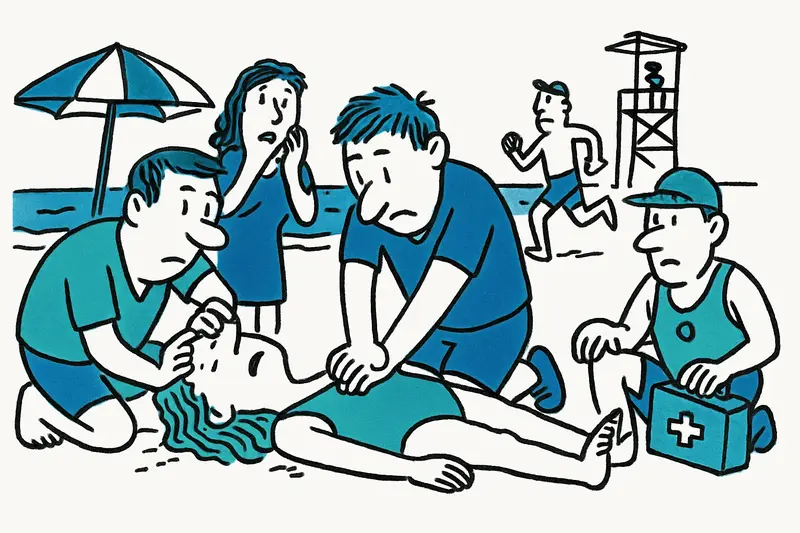
It was one of those hot afternoons at Playa de Muro: the sea turquoise, the sand pale, a saxophone playing somewhere at the beach bar, and the heat settling like a blanket over the sunbeds. At around 13:50 a 72-year-old German holidaymaker collapsed while leaving the water. People ran over, pulled her out of the shallow shoreline — and quickly realised: something very serious had happened.
How Minutes Determined the Outcome
What followed was not a calm protocol but a hectic chain reaction: tourists who had just been lying on their towels jumped in to help. A lifeguard on his tower radioed colleagues. On site there was no clear pulse and breathing was abnormal — the seconds stretched out. Without hesitation, bystanders and rescue personnel started chest compressions and ventilation. After a few minutes a pulse could be felt again, oxygen was given, and shortly afterwards the ambulance of service 061 arrived. The woman was stabilised and taken to the nearest hospital.
The result seems like a small miracle but is medically explicable: after about four to six minutes without adequate blood circulation irreversible brain damage can occur. Those who start quickly therefore have the best chances. In this case it was the combination of brave first responders, experienced lifeguards and swift emergency care that saved the life.
The Central Question the Rescue Poses
Beyond the applause remains a sober question: would it have ended as well without this rapid intervention? Probably not. And that makes the situation clear: luck must not be the only safety we rely on at our beaches. Minutes decide — this is not a metaphor but a harsh reality.
Aspects Often Overlooked in Discussions
The incident not only inspires confidence, it also exposes weak spots: recent local tragedies such as Fatal Rescue Attempt in Son Bauló: What Must Change on Our Beaches and regional incidents like When the Surf Strikes: Deaths in Tenerife – What Mallorca Must Learn show what can go wrong. Are AEDs — automated external defibrillators — really available at all beach access points? How well trained are seasonal staff such as rental operators, waiters or vendors? And what if beaches are quieter outside the high season and fewer rescue personnel are on duty?
Another point: language barriers. Playa de Muro is international; in a panic it helps little if no one understands the instructions. Equally important are visible emergency infos: where is the rescue centre, which numbers to call — 112 across Europe, 061 for the ambulance in Spain — and who provides initial care in the first critical minutes? Past cases such as Port de Sóller: Family meal ends in death — what is missing on our beaches? highlight the need for clear information.
Concrete Proposals — So That Not Only Luck Decides
More AEDs at beach entrances: Clearly visible, secured cabinets with multilingual quick instructions. Modern, solar-powered cabinets protect the devices from heat and sand.
QR codes and pictograms on every beach information board: A quick scan leads to a 60-second video with life-saving measures in several languages. In stressful situations clear images are often better than long explanations.
Short trainings for seasonal staff: Not everyone has to become a paramedic, but a state-supported, compact first aid course before the season for rental operators, waiters and vendors would greatly increase the overall preparedness.
Public campaign and volunteer network: Local initiatives can train residents and frequent visitors as first responders. A registered network makes it easier to coordinate qualified helpers quickly when minutes count.
More lifeguard posts during peak times: Temporary towers or additional observers at busy sections — especially on weekends and public holidays — could close gaps in surveillance.
What Everyone on the Beach Can Do Immediately
Recognise, act, stay with the person — that is the simple formula. If someone is unconscious and not breathing normally: call for help (112), begin chest compressions and send someone to fetch an AED if available. Do not hesitate to continue chest compressions — even if it is exhausting. Afterwards: direct the arriving rescuers, report your observations briefly and clearly so professional teams immediately know what happened.
An Appeal from Playa de Muro
It is right to thank the helpers — that day people on the sunbeds, lifeguards and paramedics achieved something great together. But the applause must not be the only outcome. If, after the rescue at the beach bar, the conversation leads to concrete commitments — a first aid course, better signage, more AEDs — then the hectic rescue did more than save a life: it created an opportunity to make our beaches safer.
The saxophone may move on, the palms rustle — but the lesson remains: preparation saves lives. And that is good for Mallorca.
Frequently asked questions
What should I do if someone collapses on a beach in Mallorca?
How important is quick CPR after a drowning or collapse in Mallorca?
Are AEDs available on Mallorca beaches?
Is Playa de Muro safe for swimming?
What emergency number should I call on a Mallorca beach?
What should I pack for a beach day in Mallorca if I want to stay safe?
What should seasonal beach staff in Mallorca know about first aid?
How can language barriers affect beach emergencies in Mallorca?
Similar News
Injured captain, big plans: Germania Mallorca before the away match in Consell
The newly founded FC Germania Mallorca travels to Consell on Saturday. Captain Bastian Müller is out injured, but coach ...
Palma, Palma de Mallorca, Palma‑Mallorca: What is it really about?
The debate over the city's name is more than grammar: it concerns identity, law and branding policy. A sober reality che...
Warning to Bathers: Nipping Fish in Cala Major and Other Coves — a Reality Check
In Cala Major and several beaches around Mallorca, bathers report painful “nips”. Who are the animals, why are they gett...

Rental Car Theft in El Arenal: What This Incident Reveals About Our Gaps
A teenager steals a running rental car in El Arenal, flees on foot, climbs over walls and is caught by the Guardia Civil...

Red Rope in Palma's Library: What Helps Against Selfie Tourism — and What's Missing
Palma's city library cordoned off an area with a red rope to keep selfie tourism away from reading and working activitie...
More to explore
Discover more interesting content

Can Cap de Bou

Townhouse Lleo 72
