
Playa de Palma: Life-saving at Balneario 11 – Lifeguards Act Quickly
Playa de Palma: Life-saving at Balneario 11 – Lifeguards Act Quickly
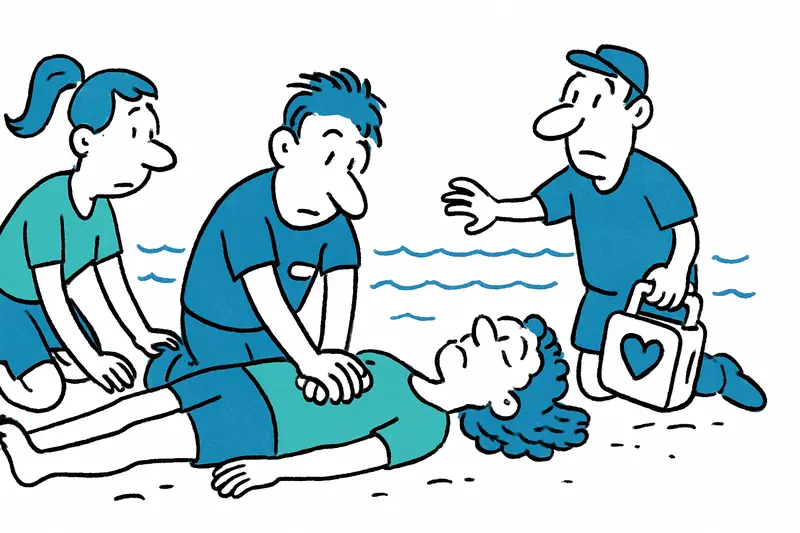
A German holidaymaker suffered cardiac arrest at Playa de Palma. Lifeguards resuscitated her on the beach; emergency services took over further care.
Playa de Palma: Life-saving at Balneario 11 – Lifeguards Act Quickly
"Good training, quick hands": How a group of lifeguards brought a holidaymaker back to life after a cardiac arrest
It was one of those late afternoons at Playa de Palma when the promenade was still buzzing: children with buckets, the clatter of parasol poles, the sound of the surf. Around 3:45 p.m. the routine calm on the section at Balneario 11 suddenly turned into an incident site. A German holidaymaker of about 70 experienced an acute emergency while bathing and lost consciousness.
The lifeguards who were on duty that afternoon noticed the woman in the water and quickly pulled her to the shore. Once on site the helpers found that the woman was no longer breathing and had no circulation. Without hesitation they began cardiopulmonary resuscitation. Such situations require routine: stable side position, airway check, strong chest compressions and, if available, the use of a defibrillator.
After a few minutes the body responded again; a pulse could be detected. Emergency medical personnel from SAMU 061, who arrived shortly afterwards, took over treatment. Further measures were taken on the beach, the patient was stabilized and ultimately intubated before she was transported to a hospital about 40 minutes after the incident. The national police opened an investigation to clarify the exact circumstances of the bathing incident.
These operations show how crucial the chain of help: observe, raise the alarm, secure, resuscitate and hand over to specialist care, as in Playa de Muro: Seconds That Saved a Life — and What We Must Learn. Witnesses on site said that the rapid resuscitation by the lifeguards probably made the difference. This applies to every public beach on the island: whoever acts first creates the prerequisite for survival.
The scene at Balneario 11 also illustrates what Mallorca achieves in terms of beach rescue; readers have compared this to Playa de Palma: Death at Balneario 2 – How good is Mallorca's help for people in need?. During the summer months trained teams are on duty at the busiest sections, with stations, towers, rescue boats and medical equipment. This infrastructure is not a given; it is the result of years of organization, training and investment – and of an awareness aimed at protecting beachgoers.
What can you do yourself? Some simple rules significantly increase safety: swim in supervised areas, do not swim alone, pay attention to warning flags, consider medications and pre-existing conditions before swimming and wear a medical ID. Even more important: basic first aid knowledge and especially cardiopulmonary resuscitation (CPR) are valuable; tragic cases are detailed in Dead Tourist at Playa de Palma: An Accident Raises Many Questions. In Mallorca there are regular courses that are often short, practical and suitable for laypeople.
The incident is sobering, but it is also part of everyday island life in which neighbors, holidaymakers and emergency services work together. The quick response at Balneario 11 is a reminder that civic courage and professional training go hand in hand. For the island this means: we have a network that works in critical moments – and that is a message that can reassure both visitors and locals.
At the same time it is a small appeal: learn simple rescue techniques, remember the emergency number 061 and look out for the red-and-white lifeguard towers on your next beach walk. You never know when your hands will be needed – and sometimes they are the decisive factor in giving someone a second chance.
Frequently asked questions
What should I do if someone has a cardiac emergency on a Mallorca beach?
Are Mallorca's beaches supervised by lifeguards during the busy season?
How can visitors stay safe while swimming in Mallorca?
How can I learn CPR quickly in Mallorca?
What happened at Balneario 11 on Playa de Palma, and how did lifeguards respond?
What makes Balneario 11 a strong example of Mallorca’s beach safety approach?
What emergency numbers or contacts should visitors know on Mallorca beaches?
How does Mallorca support its lifeguard services and beach safety overall?
Similar News
Dizziness at the Wheel: When the Access Road to Sa Calobra Becomes a Nightmare
A trip to the gorge of Sa Calobra ended in panic for a holidaymaker: not the sea, but the hairpin roads of the Tramuntan...
Four Years for the Hammer Blow in Sa Pobla: Is the Sentence Enough?
A dispute over €50 ends fatally: How could it come to this, and does the sentence answer the questions behind the act? A...
Cala Bona: New residents' parking — who really benefits?
The municipality of Son Servera has completed a parking lot with 50 spaces (plus two disabled spaces) behind the Hotel C...
Defy off Mallorca: A beautiful facade on the high seas?
The 94-meter superyacht "Defy" of US billionaire Ken Griffin lies off the coast — luxury, technology and questions: Who ...
When Fruit Becomes a Luxury: Why Prices in Mallorca Are Rising So Painfully
Figures from the INE show: Fresh food in the Balearic Islands has become significantly more expensive year-on-year. What...
More to explore
Discover more interesting content

Can Cap de Bou

Townhouse Lleo 72
