
Between Net and Wall: How an Empty Tennis Club Became the Last Address for Around 20 People
A former tennis club in Port d'Alcúdia has housed around twenty people for years. Who is responsible — and which solutions are missing from the debate?
Between Net and Wall: How an Empty Tennis Club Became the Last Address for Around 20 People
In the north of Mallorca, an abandoned club site has turned into provisional housing. The situation exposes gaps in the law, social assistance and the housing market.
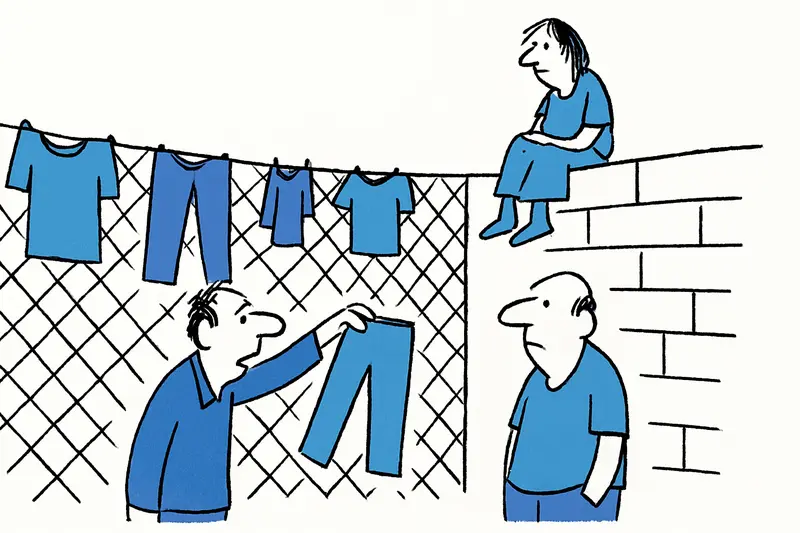
The Carretera that runs from Alcúdia towards Artà is, on a mild morning, as busy as ever: tour buses honk, seagulls cry over the containers by the coast, and the smell of fresh coffee comes from a small supermarket. Behind a weathered wall, barely visible to passing drivers, lies the grounds of a former tennis club. Where balls once flew over the net, wet shirts and trousers now hang, the fences serving as improvised clotheslines.
On site, a group of an estimated twenty people has lived for years. They come from different countries, work partly day to day — collecting scrap, on construction sites or in service jobs — and have found emergency accommodation here. Formally, the land still belongs to an owner; a legal dispute over repossession and use is apparently pending. As long as the proceedings drag on, an interim state exists: tolerated, without prospects.
Main question: Who must act — and how quickly? In Mallorca three realities collide: properties lying fallow; people without affordable housing; and authorities that are often legally limited in their ability to intervene. The question is not only legal, it is political and practical: who takes responsibility for people living in such in-between spaces?
A sober analysis shows several blind spots. First: the right of ownership and the authority to dispose of buildings clashes with social reality. Courts need time, owners often expect to regain their legal certainty — and in the meantime people remain at risk. Second: social services are aware but hit their limits. Emergency shelters are scarce, assistance is mostly temporary. Third: the tight housing market — especially before and during the tourist season — makes it nearly impossible for even workers without steady full-time income to find permanent accommodation.
What rarely appears in public debate: the voices of the people on site. Their everyday experiences, their paths into insecurity and their needs often remain invisible. Also lacking is a realistic inventory of vacant or underused properties that could be temporarily allocated for social purposes; the debate over converting offices and shops into apartments illustrates the complexity of reuse. The disappearance of everyday places is discussed in local coverage such as End of a Neighborhood Era: Can Comas on Aragón Street Closes After 29 Years and When the Margherita Moves Out: Iconic Pizzeria in Palma's Lonja Faces Closure.
Also rarely discussed are practical, fast legal channels for cases in which there is danger to life, limb or public health.
A look at daily life makes the urgency visible. In the evenings, when the wind blows in from the bay, a woman sits on the low wall sorting plastic bottles. From a side room comes children's laughter — not play but a small radio broadcasting a program in South American Spanish. Neighbors know the group: some greet them, others complain about thefts in the area. Such tensions fuel prejudice, although they often stem from individuals rather than the community as a whole.
Concrete solutions must be pragmatic and local: 1) Mobile social teams should be available on site daily — not only sporadically during police operations. 2) Short-term safe accommodations with a clear prospect (e.g. transitional housing linked to work and integration offers) prevent people from remaining in illegality. 3) A municipal vacancy register: properties that are unused for a long time could be temporarily activated for social purposes, against fair compensation for owners. 4) An accelerated, transparent procedure between the judiciary, owners and social services that takes risks to human life into account. 5) Preventive measures: rent subsidies, placement in seasonal employment with housing options, and counseling for households at risk of displacement.
It is important to name responsibility clearly: owners, the municipality and regional administration must work together — and with a timetable. Only legal proceedings without parallel social solutions mean displacement into other dangerous spaces. Only social offers without legal clarification create insecurity for residents and owners. Both are necessary.
Conclusion: The occupied spaces of a former tennis club are more than a local nuisance. They are a symptom of a broader problem: a market that treats housing as a commodity, a social system that often reacts instead of shaping, and a legal order that allows long decision-making periods. Those who pass the Carretera to Artà might only see a wall. Those who look should demand concrete action — today, not only after the verdict.
Frequently asked questions
What is the weather like in Mallorca in April?
Can you swim in Mallorca in spring?
What should I pack for Mallorca in spring?
Is Mallorca a good destination in April?
What is Palma de Mallorca like in spring?
What is Alcudia like for a visit in spring?
Is Mallorca windy in spring?
What are good things to do in Mallorca in spring?
Similar News
Rescue operation at Tolleric: Why nighttime cliff parties become dangerous
A British holidaymaker fell about ten meters at the cliffs of Tolleric during the night, later climbed back up and was r...
Car accident on the MA-1: Mother and daughter on a bicycle struck by a fellow countryman – Who protects cyclists here?
On the MA-1 between Portopí and the Cala Major exit, a mother and her daughter on a bicycle were struck by a car. A para...
Smoke over the UIB: Who is responsible for the fire on the roof?
On Saturday afternoon a fire broke out on the roof of the Arxiduc Lluís Salvador building at the University of the Balea...

Short Getaway with Sea View: Inmood Aucanada among Spain's Top Hotels for Dinner Breaks
A small hotel on the coast of Alcúdia was highlighted by a Spanish experience platform as particularly suitable for shor...
Cala Pi crowned Mallorca's most beautiful beach: A morning at the rocky cove
The travel portal Holidaycheck praises Cala Pi as Mallorca's most beautiful beach: a narrow, romantic cove, clear water,...
More to explore
Discover more interesting content

Can Cap de Bou

Townhouse Lleo 72
