
Cameras Against Illegal Dumping: Porto Cristo Monitors Problem Areas – a Reality Check
Cameras Against Illegal Dumping: Porto Cristo Monitors Problem Areas – a Reality Check
Manacor has installed four surveillance cameras at particularly problematic waste spots in Porto Cristo. A local check asks: Do cameras protect the town — or do they cover up other problem areas?
Cameras Against Illegal Dumping: Porto Cristo Monitors Problem Areas – a Reality Check
Four new cameras, a lot of controversy — and the question of better solutions
Last week municipal workers in Porto Cristo mounted four surveillance cameras at locations where waste is regularly left improperly: Plaza de sa Fonera, Plaza de s'Avenc and on the streets Morenell and Gerreria. The town hall announced plans to expand the network gradually to monitor compliance with municipal waste disposal rules. At first glance a clear signal: Manacor no longer wants to watch piles of rubbish spoil the cobblestones and corners of the harbor.
Key question: Can cameras alone solve the problem — and what do residents pay for it in terms of privacy and everyday life?
In Porto Cristo, when the wind blows from the east, you can smell the harbor in the morning, the creak of the fishing boats and occasionally the sour scent of improperly disposed organic waste. On the way to Plaça Sol i la Lluna you pass the grey containers, and you often see plastic bags, pizza boxes and old chairs there. Children play at the edge, tourists take photos of the sea, and someone fills a yellow recycling bag while the seagulls are already scavenging the leftovers. These scenes have become normal — and show that the problem is so embedded in everyday life that mere technology does not necessarily change behavior.
Critical analysis: Surveillance cameras are a visible tool, but not automatically a sustainable one. They can help clarify administrative offenses and create deterrence. But four points must be considered soberly: First the legal situation. Any video surveillance in public spaces is subject to European and Spanish data protection rules; it requires clear purposes, transparent signage, a responsible authority, limited retention periods and protection against misuse. Second, effectiveness: People who dispose of waste improperly often do so out of convenience, ignorance or because the disposal systems are impractical. Third, transparency. Where are the recordings stored? Who watches them? How long are they kept? And fourth, the social component: Who is sanctioned — occasional offenders, commuters, visitors or people in precarious situations?
Public discourse often lacks two things: concrete figures and alternatives. It is rarely made transparent how many improper disposals occur at the named points, what cleaning or personnel costs arise from them and whether cameras really improve the cost/benefit ratio. And there is a missing debate about measures that focus on waste prevention and accessibility: more and better-labeled containers, adjusted emptying schedules, information campaigns in multiple languages, and low-threshold help for households that want to get rid of large items.
Concrete approaches that could immediately help Porto Cristo without filming everywhere: First, clear signs and highly visible labeling at collection points; the more people see where cardboard or light bulbs belong, the more likely they are to act correctly. Second, flexible emptying times: Many improper disposals happen when the regular containers are full. Adjusting collection rounds to weekend peaks or seasonal traffic can prevent people from leaving waste next to the bins. Third, a digital notification service: a local hotline or WhatsApp number where citizens can register bulky items, linked to scheduled pickups. Fourth, prevention through presence: more municipal staff during peak times who inform rather than only sanction. And fifth, privacy-friendly technology: cameras only where truly necessary; clear notices; minimal retention periods and oversight by independent bodies.
Another point: the mobile collection point Plaça Sol i la Lluna is a good resource — open Tuesdays 15:00–18:00, Fridays and Sundays 10:00–13:00 — it accepts furniture, electrical appliances, light bulbs, paint cans and hazardous waste. But this service will only be used if it is visible, easily accessible and well known. More promotion, flyers in multiple languages and a note in the municipal bulletin would help.
The sanctioning level is still missing: fines can deter, but they must be proportionate and enforceable. Instead of immediate high penalties, graduated measures would be sensible: information and warnings, fines for repeat offenses, supplemented by social measures for people in need. That way the response is not exclusively repressive.
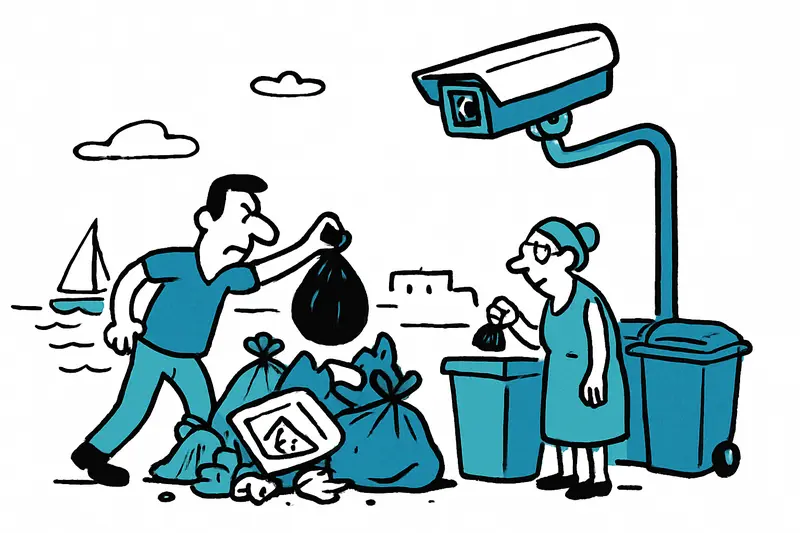
A scene from everyday life: On Saturday afternoon an elderly woman stands at the container in Calle Gerreria, sorting glass into the green boxes, a teenager throws an empty can beside it and disappears. A tourist takes a photo of the harbor, a delivery van parks incorrectly. The camera looks silently from a lamppost at the scene — and not all problems are visible through a lens. Sometimes you need people who explain, collect or keep an eye on things.
Pithy conclusion: Cameras can be part of a mix of measures, but they must not be sold as a cure-all. Porto Cristo needs practical services, better information, adapted logistics and transparent handling of video surveillance in accordance with data protection rules. If the town finds the balance between control and service, there could be less rubbish and fewer conflicts. If not, the cameras remain a visible patch over a deeper problem.
What to do now: The town should publish how long recordings are stored, who has access and what sanctions are planned for violations. In parallel: more visible services for proper disposal and low-threshold collections for bulky waste. And a suggestion to the neighborhood: Those who keep the area clean regularly should be recognized — for example through small acknowledgments, sponsorships for spaces or a local "Clean Porto Cristo" competition. Technology yes, but please with sense and added value for the people who live and work here.
Frequently asked questions
What is the best time of year to enjoy outdoor activities in Mallorca?
What should I pack for a trip to Mallorca, especially in summer?
Are there calm beaches in Mallorca suitable for swimming beginners?
Do I need a car to get around Mallorca, or can I rely on public transport?
What are some must-do activities in Mallorca beyond the beaches?
What is Mallorca's weather like throughout the year?
When is Mallorca least crowded, and when is peak season?
How can I choose a family-friendly beach in Mallorca?
Similar News

Several Days of Rain Approaching: How Well Is Mallorca Prepared?
Aemet says: rain from Thursday until at least Tuesday, especially heavy on Monday. Temperatures remain mild. A reality c...

Nervous Reaction at a Traffic Stop: Why Campos Is Not Just a Sniffer-Dog Problem
At a traffic stop in Campos a 37-year-old German was arrested with a bag full of drugs. Our reality check explains why s...
Reality check: Palma's "white" torrent — harmless salt or neglected warning sign?
White crusts on the Torrent de Sa Riera are causing a stir. Emaya describes them as salt deposits. Our reality check: wh...
When Ryanair's fleet grows: What Mallorca's travelers should know
Ryanair will soon receive 737 Max 10 jets. The larger aircraft offer potential savings — but also new risks for flight o...

Rising fuel and housing costs: Why Mallorca's overland buses are suddenly overcrowded
More and more people are leaving Palma — and boarding TIB buses: Between January and August 2026, the network recorded o...
More to explore
Discover more interesting content

Can Cap de Bou

Townhouse Lleo 72
