
Porto Cristo and Manacor: A Referendum Is Not Yet Secession
Independence is once again being discussed in Porto Cristo. But before the town could become a new municipality, it would need majority support, state approval and, above all, answers about costs and everyday life.
Porto Cristo and Manacor: A Referendum Is Not Yet Secession
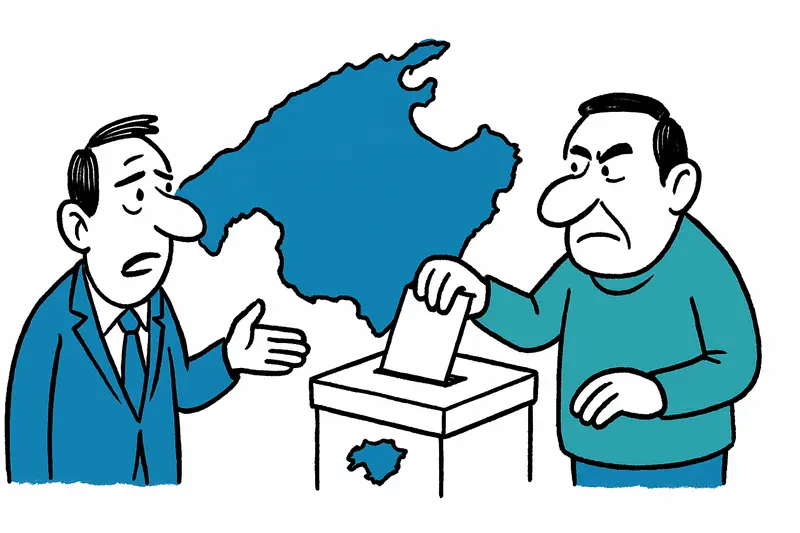
Can Porto Cristo decide its own future without first working out what independence would cost in everyday life? That question lies behind the latest push to let residents of the coastal town vote on separating from Manacor. The initiative should be taken seriously as a political proposal. But it is not yet a decision to establish a new municipality—and a yes vote would not prove that the practical problems had been solved.
The debate over independence has been part of life in Porto Cristo for many years. Now the local group AIPC wants to persuade Manacor’s town council to arrange a referendum. It needs support from other groups on the council. Even if a majority were secured there, that would not settle the matter: according to the information available, the referendum would also require approval at the state level. The political path is therefore much longer than a ballot paper with two boxes.
What a yes vote would actually mean
A yes vote would initially send a clear signal from the town. It would not automatically mean that Porto Cristo would wake up the next morning with its own administration, budget and town council. To establish a municipality, it would have to be convincingly demonstrated that the new entity could carry out its responsibilities over the long term. That involves more than political powers: it also means staffing, revenue, ongoing expenses and deciding who would take over existing obligations.
So far, little concrete information on these questions has been made public. How would the costs of administration and municipal services be divided? What revenue would Porto Cristo have, and which responsibilities would remain with Manacor? Who would be responsible for investments that span several years? These are not dry footnotes. They determine whether bringing decisions closer to residents would actually mean greater capacity to act—or whether a new town council would face the same constraints, just with its own letterhead.
The boundaries of a potential new municipality would also be more than lines on a map. They would change responsibilities and planning, and could alter the expectations of people in the areas in between. Those who live, work or own property there should not have to wait until the end to find out what a reorganisation would mean for them. A simple yes-or-no question can capture a powerful political sentiment. It is less suited to settling the details.
What is missing from the debate over self-government
The debate understandably focuses on having a say and on whether decisions affecting Porto Cristo are made close enough to the town. Less visible is the question of which specific decisions are currently seen as too distant. Is the concern about public spaces, traffic planning, cleanliness, investment, or the feeling that Porto Cristo carries too little weight in a large municipality? Without taking stock of these issues, “independence” remains a powerful word but an imprecise mandate.
A district council already gives Porto Cristo its own local representation, but it is no substitute for a municipality with comprehensive powers. That may not be enough for some residents. Even so, it is worth looking closely: which responsibilities could be changed within the existing structure? What could be formally delegated to the town, and what would genuinely require secession? This comparison belongs before a referendum, not just during its eventual implementation.
At the harbour, municipal politics is not an abstraction. In the morning, shutters roll up, delivery vans look for a place to stop, and someone pushes a shopping trolley along the pavement; later, the voices of residents and visitors mingle. When a street needs repairs, a public square needs maintenance or a concern needs attention, what matters most to people is usually whether anything gets done. The administrative boundary matters less than having someone they can reach and getting a reliable response.
First the figures and responsibilities, then the vote
A fair process would provide an accessible assessment of the consequences before any referendum: several realistic financial scenarios, a list of current and potential future responsibilities, and an explanation of which services might change. The documents should be available in Catalan and Spanish, explained publicly and open to questions. An independent review could help distinguish political promises from sound calculations.
The referendum—if it is approved and scheduled—should also make clear exactly what people are being asked to decide. Is the question whether negotiations on creating a new municipality should begin? Or are voters being asked to assess a specific proposal, including its boundaries and financial consequences? Those are not the same thing. Voting eligibility must also be transparent so that nobody discovers only when the campaign begins whether they are entitled to have a say.
Porto Cristo has every right to discuss greater self-government. But a referendum cannot replace the work of addressing the difficult questions. Before a yes vote becomes a promise, there must be clear figures, well-defined responsibilities and an honest account of the risks. Otherwise, the ballot may be simple—but the bill that follows probably will not be.
Frequently asked questions
What is the proposed referendum in Porto Cristo about?
Would a yes vote make Porto Cristo independent from Manacor?
Who would need to approve a referendum on Porto Cristo leaving Manacor?
How much would it cost to make Porto Cristo a separate municipality?
Which services could change if Porto Cristo separated from Manacor?
Does Porto Cristo already have its own local representation?
Why is Porto Cristo discussing greater self-government?
Could Porto Cristo’s boundaries change if it separated from Manacor?
Similar News

Son Bonet Rehearses a Disease Alert: What an Airport Exercise Really Needs to Show
A medical emergency involving a possible infection risk was simulated at Son Bonet airfield. The test makes sense—but wh...

When a Beloved Local Spot Moves: What Remains of the Old Place?
A restaurant can take its kitchen with it. The routes, rituals and encounters around its old front door cannot simply be...

Mallorca’s Affordable Properties: Why the Price per Square Meter Isn’t Enough
A low average price sounds tempting. But for homes in the island’s interior, condition, additional costs, everyday life ...

Mallorcan on the Menu: What Does It Really Mean?
“From Sóller,” “from the island farm,” “Mallorcan”: origin claims create expectations. But not every phrase means the sa...

Sa Calobra: The Bar Stays Open – Its Future Is Secured for Just One Year
The lease for the bar at the Nus de sa Corbata hairpin bend has been extended through the end of October 2027. This keep...
More to explore
Discover more interesting content

Can Cap de Bou

Townhouse Lleo 72
