
Son Bonet Rehearses a Disease Alert: What an Airport Exercise Really Needs to Show
A medical emergency involving a possible infection risk was simulated at Son Bonet airfield. The test makes sense—but what matters is what happens with the lessons learned.
When a pilot reports severe symptoms, the alarm plan is only part of the response
An aircraft arrives with two seriously ill people on board, and the situation could pose a risk to public health. That was the scenario rehearsed on Wednesday at Son Bonet airfield. It was explicitly an exercise, not a real illness. According to the information available, normal flight operations were not affected.
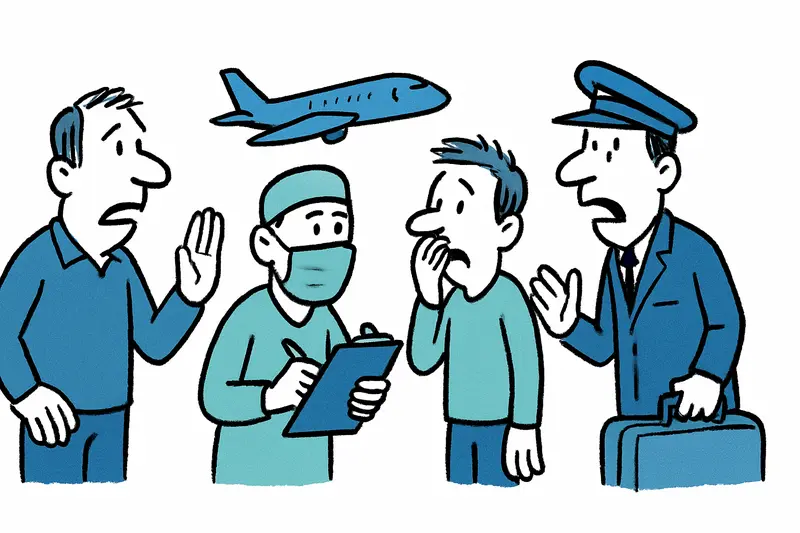
The simulated aircraft was en route from Lyon-Bron. During its approach, the pilot reported that two passengers had developed a fever, vomiting, nosebleeds, and headaches and muscle pain. Both were thought to have recently been in an area with an epidemiological risk. An emergency procedure was then activated: responders directed the aircraft to a designated area, and the care and evacuation of the affected passengers were simulated.
The key question is not simply whether enough vehicles and uniformed personnel were on site. It is whether, in a real emergency, everyone involved can quickly understand the same situation, clarify responsibilities, and protect people without causing unnecessary confusion.
Many agencies, one coordinated response
Airport staff, health and social services, the police, the Guardia Civil, the 112 emergency call service, the SAMU 061 ambulance service, private security staff, and other organizations operating at the airfield took part in the exercise. The airport fire brigade was also involved. This makes sense in a situation involving a possible infection risk: a medical team alone cannot control access to an aircraft, secure the area, and organize further care.
Exercises like this are not a performance for the benefit of people watching from the road. They are intended to test procedures under time pressure. At Son Bonet, the aim was also to measure response times and see whether changes to the updated emergency plan were effective. After the practical exercise, the participating agencies reviewed the response together. That is where an exercise’s value lies: not in a photo of an emergency vehicle, but in the questions that can—and should—be asked afterward, even if they are uncomfortable.
Even a well-rehearsed alarm can reflect only part of reality. During a simulation, some participants know that a scenario is underway. In a real situation, information may be incomplete, language barriers may arise, passengers may be distressed, and assessments may change. A plan that seems clear on paper must also work amid the noise of an airfield. The fact that a procedure has been rehearsed does not automatically prove that every possible situation is covered.
What the public rarely gets to hear
After a report like this, practical questions remain for the island’s residents. How will other passengers or employees be kept from entering the affected area unnecessarily? Who decides on further medical measures? How will travelers be informed if they need to leave the aircraft or wait temporarily? And how will authorities ensure that personal health information is not included in general communications?
These questions do not suggest that anything went wrong during the exercise. No such information has been reported. Rather, they are questions that help measure the quality of the preparations. In a medical emergency, it is especially important to distinguish clearly between what is confirmed, what is only suspected at first, and which instructions apply to people at the scene. Vague or alarmist messages can create additional anxiety of their own.
Once the participating agencies have completed their review, a concise, easy-to-understand summary would therefore be helpful: Which procedures were tested, what did the exercise reveal, and what improvements will be made? There is no need to publish confidential operational details. But a transparent overview would show whether measured response times actually lead to changes—or whether the exercise ends with the debrief.
Everyday life on the island is no rehearsal
At Palma Airport, travelers wheel their suitcases through the terminal, look for the right gate, and try to make sense of announcements over the rumble of wheels and snippets of conversation. Son Bonet is a different place, but an effective response there also depends on information reaching people quickly and clearly. Someone who has just arrived does not automatically know which agency is responsible or whether a cordon means a routine check. In uncertain situations, people tend to look at one another first—and that is exactly when clear announcements can make a difference.
A robust plan therefore requires more than a list of organizations. It needs regular exercises involving different scenarios, a clear handover between airport and health services, and understandable communication channels for passengers and staff. After each exercise, outstanding issues should be documented, responsible people assigned, and improvements checked again later. Preparation should also cover translation and support for people who need help understanding instructions or leaving the aircraft.
Son Bonet rehearsed a possible medical emergency without disrupting normal operations. That is a sensible test. But safety does not come simply from having many agencies in the same place at the same time. It is demonstrated when, in a real emergency, every one of them knows what to do—and when the public can later understand what was learned from the exercise. The alarm plan is the beginning. The proof comes in what happens afterward.
Frequently asked questions
What happens when a plane reports seriously ill passengers before landing in Mallorca?
Was the disease alert at Son Bonet in Mallorca a real emergency?
Which services took part in the emergency exercise at Son Bonet?
What did the Son Bonet emergency exercise in Mallorca test?
Why do airport emergency drills in Mallorca involve police and firefighters as well as medical teams?
Did the Son Bonet exercise disrupt flights in Mallorca?
How would passengers be informed during a medical emergency at an airport in Mallorca?
Have the results of Son Bonet’s medical emergency exercise in Mallorca been published?
Similar News
Porto Cristo and Manacor: A Referendum Is Not Yet Secession
Independence is once again being discussed in Porto Cristo. But before the town could become a new municipality, it woul...
When a Beloved Local Spot Moves: What Remains of the Old Place?
A restaurant can take its kitchen with it. The routes, rituals and encounters around its old front door cannot simply be...

Mallorca’s Affordable Properties: Why the Price per Square Meter Isn’t Enough
A low average price sounds tempting. But for homes in the island’s interior, condition, additional costs, everyday life ...
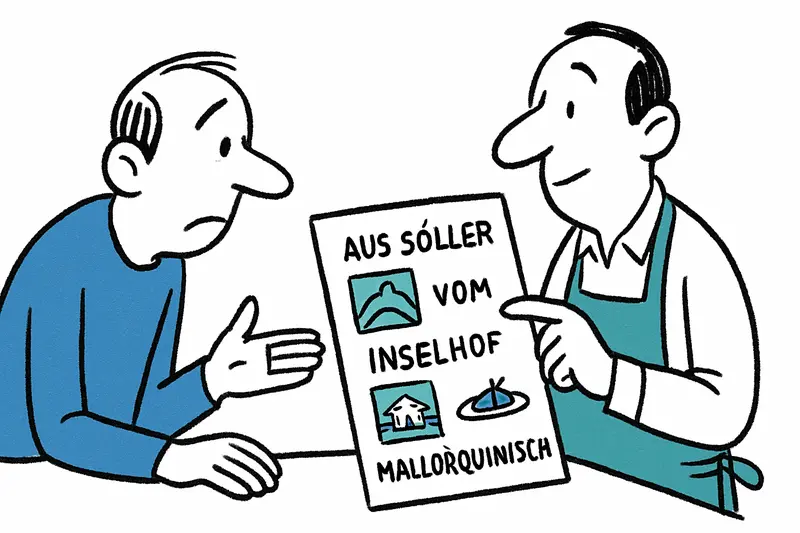
Mallorcan on the Menu: What Does It Really Mean?
“From Sóller,” “from the island farm,” “Mallorcan”: origin claims create expectations. But not every phrase means the sa...
Sa Calobra: The Bar Stays Open – Its Future Is Secured for Just One Year
The lease for the bar at the Nus de sa Corbata hairpin bend has been extended through the end of October 2027. This keep...
More to explore
Discover more interesting content

Can Cap de Bou

Townhouse Lleo 72
