
Weeks-long outages in Son Ametler: Residents freeze — who takes responsibility?
Weeks-long outages in Son Ametler: Residents freeze — who takes responsibility?
In Son Ametler (Marratxí) about 500 homes are struggling with repeated power outages — sometimes lasting up to twelve hours. Residents demand answers and lasting solutions.
Weeks-long outages in Son Ametler: Residents freeze — who takes responsibility?
In the Son Ametler settlement north of Palma, power outages have become both a daily occurrence and a source of frustration this winter. In a neighborhood of around 500 homes, residents reported repeated interruptions in electricity supply that escalated within a few weeks into longer outages.
Key question: Why does a densely populated residential area repeatedly experience multi-hour power outages — and what immediate and long-term measures are needed so that families, elderly people and those working from home do not sit in the dark again?
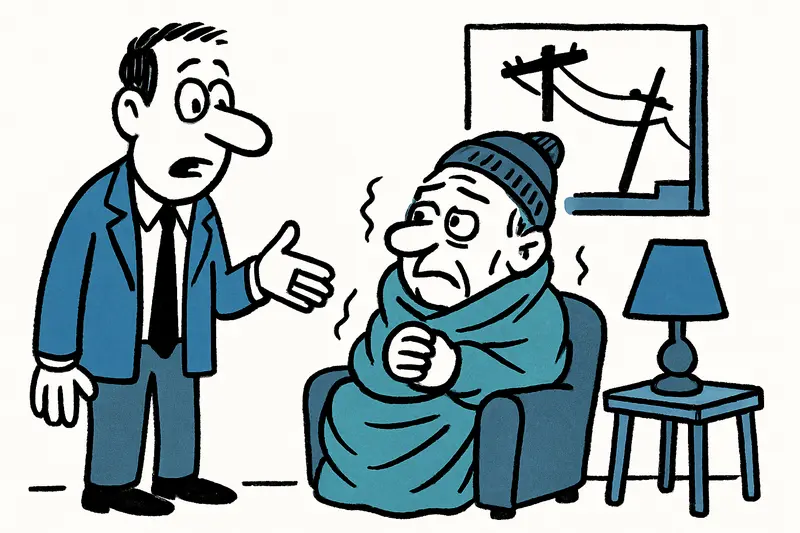
Places like the plaza in the center of Son Ametler are normally meeting points for dog owners, parents picking up children from school and older neighbors doing their shopping. On a cold February afternoon there is little coffee chatter and more subdued whispering: candles on balconies, wrapped-up children, refrigerators getting noticeably warmer. Residents say the pattern has worsened since late autumn: outages that were initially short later lasted for hours. On December 12 the power went out for ten hours, on January 18 it was eight hours, and on February 14 parts of the settlement were without electricity for half a day. Some residents even report peak durations of up to twelve hours.
María Garrido, chair of the local neighborhood association, describes the situation as a constant up and down: "The interruptions come and go, but the frequency has increased." Manuel Zurera, a local resident, emphasizes the practical consequences: loss of heating in the cold, perishable food in fridges and freezers, and work and lessons that cannot take place. These accounts represent a situation that disrupts daily life on a lasting basis.
The energy supplier has since apologized for the inconvenience and described the problem as a "coincidence" of independent faults. But this explanation does not answer the core questions: Are the cables, switchgear or external influences such as construction work or weather events the cause? And how can it be ensured that malfunctions do not occur in series?
Critical analysis: System failure or run of bad luck?
At first glance an apology sounds like a starting point. But a credible answer requires more: transparent fault diagnoses, timetables for repairs and information on outage durations. Without this information, speculation remains, as similar long disruptions in nearby towns — for example Alaró: 40 hours without phone and internet — show the wider impact of prolonged utility failures. Local distribution networks are older than the major transmission lines; bottlenecks, poorly insulated transformers or insufficient maintenance can lead to recurring faults. On the other hand, it is possible that several independent defects coincidentally occurred. Both scenarios require different measures — and that must be disclosed.
Two points have so far been lacking in the public debate: first, a clear chain of responsibility between the grid operator, regional authorities and the supplier; second, protection for vulnerable households — elderly people, families with young children and people who depend on electricity for medical reasons must not be the losers of such disruptions.
What is missing from the debate?
Concrete support for those affected is missing: emergency hotlines, temporary replacement services (for example mobile heating devices, refrigerators at collection points) or transparent compensation rules. The question of whether repair and spare parts stocks are sufficient is not being asked either, as seen in other local crises such as Inca families spending more than a week without regular tap water. And: has grid planning been updated for an increase in loads — due to more household appliances, air conditioning or e-mobility?
Concrete proposals for solutions
- Short term: set up a local hotline and an information channel (SMS/WhatsApp), provide clear time windows for announced repairs, prioritize particularly vulnerable households and offer mobile support (generators, heated collection points).
- Medium term: technical inspection of the Son Ametler distribution network with publication of findings, replacement of old transformers and reinforcement of critical line sections.
- Long term: investments in smart grid technology (sensors for rapid fault detection), decentralized backup solutions such as neighborhood batteries or subsidized solar systems with storage for private households, and binding standards for compensation in case of repeated outages.
At the administrative level, the mayor's office and the island government should order binding audits and obligate the supplier to publish transparent reports, to avoid repeated official inaction like that described in Costa Canyamel: 22 years of official inaction. Coordination between the grid operator, the supplier and local stakeholders must be formalized so that every fault does not become an information desert.
Everyday scene from Son Ametler
Anyone driving along Carrer de Son Ametler on a February morning sees neighbors carrying shopping bags, heaters that remain cold, and parents trying to organize schoolwork by torchlight. A small baker places loaves outside his door because his oven won't start. Such images stay in the mind — and fuel the desire for reliable infrastructure.
Conclusion: Apologies are not enough. The people in Son Ametler need clear answers, reliable communication and swift measures so that winter evenings are no longer spent in the dark and without heating. Politics and the supplier are now called upon to disclose sources of error and compensate burdens fairly. Otherwise a run of bad luck risks turning into lasting mistrust of the electricity supply — and that can be costly, both humanly and economically.
Frequently asked questions
Why do power cuts happen so often in Son Ametler, Mallorca?
How long can electricity outages last in Son Ametler, Mallorca?
What should residents in Mallorca do during a long power cut in winter?
Can repeated blackouts damage food and heating systems in Mallorca homes?
Who is responsible for fixing power outages in Son Ametler, Mallorca?
What kind of support should vulnerable residents get during outages in Mallorca?
Is Son Ametler north of Palma a new development or an established neighborhood in Mallorca?
Why do repeated utility failures in Mallorca create so much frustration for residents?
Similar News
Carriages Without Horses: Palma Plans E-Carriages – a Reality Check
Palma plans to switch to electric carriages in 2027. The prototype was shown near the cathedral. What is the technology ...
Record season, empty coffers: Who really benefits from the tourism boom?
Full hotels and more flights: the numbers sound impressive — yet many locals feel no benefit. A reality check with an ev...

Pool ordered for €46,000 – €23,000 paid, no work carried out: A fraud case in Palma
A homeowner in Palma transferred €23,000 for the construction of a pool. Weeks later it emerged that no building applica...

Summer greetings from the Pitiusas island: Gottschalk and Krüger enjoy the sun on Ibiza
A friendly photo of Thomas Gottschalk and Mike Krüger on Ibiza evokes memories of their shared film years and shows that...
Occupied in a Few Days: When Property in Mallorca Turns into a Dispute
Six young men were arrested in Palma after homeowners returned and could no longer open their own door. A case that rais...
More to explore
Discover more interesting content

Can Cap de Bou

Townhouse Lleo 72
