
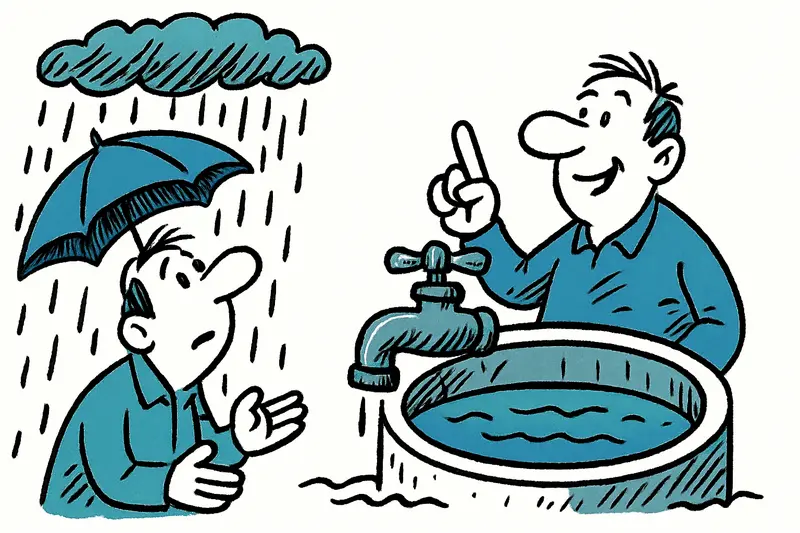
Rain Bringer: Palma's Reservoirs Fill Up – A Breather for Water
Rain Bringer: Palma's Reservoirs Fill Up – A Breather for Water
Recent rains and snowmelt have substantially refilled Palma's drinking water reservoirs: Emaya currently reports about 59 percent total capacity. Gorg Blau is around two-thirds, Cúber just under 48 percent — but conservation is still necessary.
Rain Bringer: Palma's Reservoirs Fill Up – A Breather for Water
More rain, more reserve, but no free pass for the tap
The clouds over the Serra de Tramuntana have done their work in recent weeks. Palma's municipal supplier Emaya reports that the two drinking water reservoirs in the mountains now hold together around 59 percent of their capacity, for background on previous fluctuations see Why Mallorca's reservoirs remain empty despite rain — a reality check. Anyone walking through the Passeig Mallorca area in the morning and inhaling the scent of wet asphalt could sense it: the water is coming back.
The jump is especially clear at the Gorg Blau reservoir: it now stands at about two-thirds of its capacity. A few days ago – Emaya speaks of a strong increase within a week – the level was significantly lower, just under half. Cúber has also gained and currently sits at about 48 percent; not long ago it was around 35 percent. Together, before the rain both reservoirs had held just over 42 percent, as reported in Rain wasn't enough: Why Mallorca's reservoirs remain low.
The reasons are tangible: heavy precipitation at lower elevations and snowfall in the higher parts of the Tramuntana, which adds extra volume when it melts. For Palma this means concretely: more buffer in the pipes, less immediate worry about daily supply, and more room to get through possibly drier weeks with less strain.
City leaders reacted with visible relief. Deputy mayor and president of Emaya, Llorenç Bauzá de Keizer, described the figures as clearly positive for the reserves – while reminding people that water must not now be wasted thoughtlessly. That's a tone many residents share: the relief is real, caution remains sensible.
Why this matters to Mallorca beyond a short-term story: water security is not just a matter for the kitchen water meter. Agricultural businesses in the island's interior, municipal gardens, hotels with pools and the many private wells and cisterns all benefit from more stable reserves. A fuller Gorg Blau also reduces the pressure to desalinate extremely expensive seawater – which eases household budgets and helps the environment, as discussed in Mallorca: Reservoirs remain conspicuously empty despite rain and snow.
Anyone thinking “mission accomplished” should still pause. On the streets of Palma in recent days you could see pressure washers used for house cleaning, but also people using watering cans instead of hoses. It's precisely these small habits that count: a little drip here, a broken pipe there, adds up over months.
What helps in practice: have dripping taps repaired immediately, run automatic garden irrigation in the cool morning hours instead of the afternoon, collect rainwater in barrels for the balcony or terrace, and cover flowerbeds with mulch so the water stays in the soil. At the municipal level, targeted maintenance programs for pipe networks, incentives for water-retaining garden designs and information campaigns could make a visible difference.
The mood in the villages of the Tramuntana is a mix of relief and realistic caution. On the Plaça des Mercat you can drink a coffee again without the subject coming up in every conversation, but farmers know: a good rain does not replace a smart plan for the summer.
Conclusion: the current water volume offers Palma a real breather. It's an invitation to use the resource more sustainably now, so the island doesn't run dry in less rainy months. A bit of common sense at the tap, a bit of planning at the municipal level – that's all it takes to preserve the calm.
Frequently asked questions
Have Palma’s reservoirs recovered after the recent rain?
Does more water in Mallorca’s reservoirs mean tap water restrictions are over?
What should residents in Palma do now to save water at home?
Why do rain and snow in the Tramuntana matter for Palma’s water supply?
What is the difference between Gorg Blau and Cúber in Mallorca’s water system?
Will fuller reservoirs reduce the need to desalinate water in Mallorca?
Is Palma’s water supply safe for the coming weeks?
What can Mallorca’s municipalities do to protect water supplies better?
Similar News
Injured captain, big plans: Germania Mallorca before the away match in Consell
The newly founded FC Germania Mallorca travels to Consell on Saturday. Captain Bastian Müller is out injured, but coach ...
Palma, Palma de Mallorca, Palma‑Mallorca: What is it really about?
The debate over the city's name is more than grammar: it concerns identity, law and branding policy. A sober reality che...
Warning to Bathers: Nipping Fish in Cala Major and Other Coves — a Reality Check
In Cala Major and several beaches around Mallorca, bathers report painful “nips”. Who are the animals, why are they gett...

Rental Car Theft in El Arenal: What This Incident Reveals About Our Gaps
A teenager steals a running rental car in El Arenal, flees on foot, climbs over walls and is caught by the Guardia Civil...

Red Rope in Palma's Library: What Helps Against Selfie Tourism — and What's Missing
Palma's city library cordoned off an area with a red rope to keep selfie tourism away from reading and working activitie...
More to explore
Discover more interesting content

Can Cap de Bou

Townhouse Lleo 72
