
When the Snakes Come: A Reality Check for the Islands
When the Snakes Come: A Reality Check for the Islands
Residents on Mallorca and the neighboring islands report increased snake sightings. A critical assessment: why the problem is growing, what is missing and how we can respond calmly but effectively.
When the Snakes Come: A Reality Check for the Islands
Key question
Is this a seasonal appearance or the start of a real spread of invasive snake species in the Balearics — and what does it mean for gardens, beaches and native wildlife?
Critical analysis
In recent weeks residents on various islands have repeatedly seen snakes in gardens, on beaches and even in seawater, as reported in Why Snakes Are Appearing More Often in Mallorca Now — Danger, Causes and What We Should Do. Such observations are not everyday summer ripples: warmer winters, densely planted properties, travel transports and the presence of abundant food sources like lizards create favourable conditions for reptiles that were previously rarer or absent here. The problem is two-sided. On the one hand many species are harmless to humans. On the other hand they threaten native species, such as small mammals and especially the lizards that are typical here. If a neighbour's compost heap, piles of branches or open sheds serve as refuges, islands of safety are created for the animals — and with them potential for conflict for us.
What's missing in the public discourse
There is a lot of talk about individual sightings, but little about responsibilities and systematic measures. Missing elements include: clear reporting channels for sightings, coordinated deployments of specialist personnel, transparent information for homeowners on safe animal removal, and data on species identification and distribution. The role of recreational boats, horticultural imports (see Emergency in Mallorca: Why Olive Trees Are Suddenly Banned — and Whether That's Enough) and the legal/illegal reptile trade is also rarely discussed, even though they are plausible entry pathways. Without coordinated recording we are left guessing.
An everyday scene from Mallorca
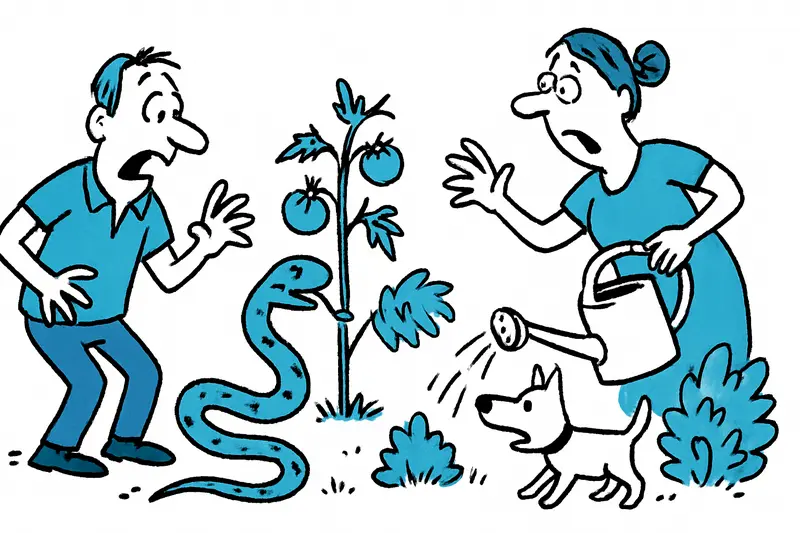
Imagine a hot morning in the west of the island: cicadas chirp, the neighbour waters his herbs, the scent of rosemary rises from the herb bed. Someone steps into the garden and feels something slithering near the tomato plants — not a panic moment, more of a shock. The dog barks, the grandchildren are called into the house. Such small dramas now happen more often; they are no longer a distant nightmare but everyday life in some villages and settlements (recent reports include sightings near the Malgrats off Santa Ponça, see Alarm at the Malgrats: Invasive Snakes Threaten the Sargantana).
Concrete approaches
1. Reporting and information platform: A central, easily accessible place (municipal or island-wide) for sightings, connected with quick feedback and evaluation of finds. This helps with mapping and prioritization.
2. Public prevention program: Guidance for property owners: avoid firewood and debris piles, cover compost, store construction and garden materials securely. Small measures immediately reduce refuges.
3. Specialist teams for safe removal: Trained teams that properly catch, identify and — if legally possible and ecologically sensible — relocate animals. Laypeople should not catch animals themselves; the risk to humans and animals is too great.
4. Monitoring and research: Funded studies on species identification, spread direction and possible entry routes (recent field observations underline unexpected interactions, see 'A snake eats another' - what cannibalism among invasive snakes reveals about Mallorca's ecosystem). Only with data can long-term planning be done.
5. Control trade and transport: Checkpoints for plant imports, awareness-raising in ports and marinas, and information obligations for animal transports.
Pithy conclusion
We should neither tend toward panic nor downplay the problem. Sightings are warning lights: some causes can be remedied locally, others require coordination across municipal and island borders. Those who tidy up early, rearrange woodpiles and use reporting systems help immediately. Those who push politics and administration work on a lasting solution. Both involve responsibility — for island nature and for the people who live here. If we act now clearly, practically and in a networked way, the situation remains controllable.
Frequently asked questions
Are snakes in Mallorca just a seasonal issue or could they be spreading across the Balearics?
Where are snakes being spotted in Mallorca, and what does that mean for gardens and beaches?
What practical steps can Mallorca residents take to reduce snake refuges around homes?
Is there a public reporting system for snake sightings in Mallorca?
Are there trained teams in Mallorca for safe snake removal?
What kind of research is needed to understand snakes in Mallorca?
Could trade and transport be contributing to snakes arriving in Mallorca?
What can residents do now to help keep Mallorca’s wildlife safe from snakes?
Similar News
Bloody clash in Canòdrom Park: What is missing in addressing violence on Mallorca's streets?
At midday on October 23, an 18-year-old man was critically injured in Canòdrom Park in Palma. The attack raises question...
Palma raises bus fares: Who pays the bill for public transport?
Single tickets rise from €2 to €3, airport trips have a reference price of €4.50. It remains unclear whether residents w...
Palma's New Indoor Pool: Sea View, Sunbeds and Space for Everyone
At Aigua Dolça, near the Paseo Marítimo, Palma has a new municipal indoor pool. For a small fee people can now train, re...
How Four Burglars Emptied Ten Houses with a Simple Trick — and What It Means for Mallorca
Four men used the impressioning technique, posed as delivery workers and accepted two years in prison. A reality check f...
Bundles of Drugs, Containers and Open Questions: A Reality Check for Mallorca
3.3 tonnes of marijuana, 80 kilos hidden in golf-ball vending machines and a 44-year-old German released on conditions i...
More to explore
Discover more interesting content

Can Cap de Bou

Townhouse Lleo 72
