
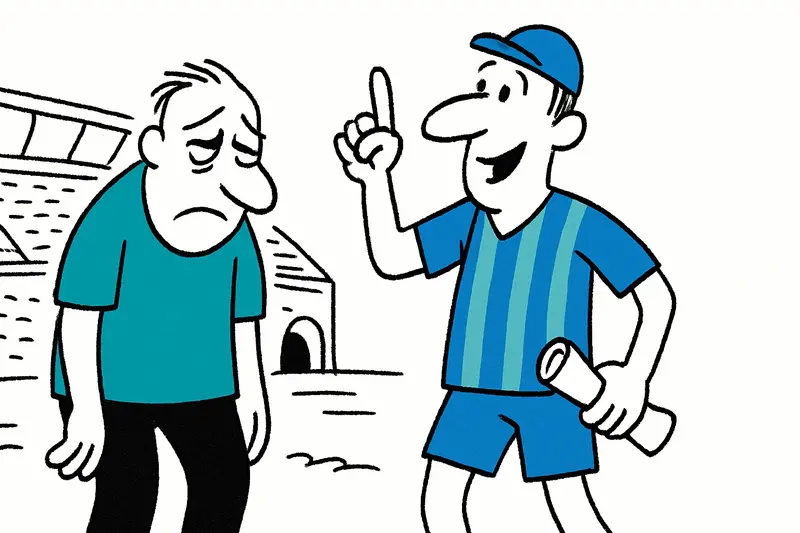
Poor Start: RCD Mallorca 0-3 to Barcelona – Son Moix Left Disappointed
A mild evening in Palma, but no warmth on the pitch: RCD Mallorca lost the season opener to Barcelona 0-3. Two dismissals, a porous defence and many questions for the coach and squad.
Son Moix: mild evening, cold outcome
It was one of those mild evenings in Palma when the heat of the day slowly gives way to a gentle sea breeze and the voices outside the Son Moix stadium drift toward tapas and conversation. What followed, however, felt like a long, cold aftermath: RCD Mallorca lost the season opener to FC Barcelona 0-3. The scoreline is clear — but the real question that hung over the streets around Son Moix after the final whistle was: was this a one-off slip, a warning shot, or does this match point to deeper problems?
Early deficit and a first half without rhythm
Barcelona scored early, extended their lead in the first half, and Mallorca often looked like a team that had left its game plan at home. The ball moved too quickly through the visitors' midfield, and the hosts struggled to get a grip. The usual compactness was missing; duels were lost and the spaces revealed gaps that a team like Barcelona punished immediately. A loud murmur ran through the south stand as the lines failed to tighten — a sound that resembled a disappointed send-off.
Reduced to ten, then nine: the game turns
The turning point was discipline: two dismissals in one match — a yellow-red and later a straight red — turned the game on its head, as detailed in a report on the two dismissals. Suddenly it became less about courage and more about damage limitation. The coach's substitutions no longer looked like tactical interventions but reactions to incidents. In stoppage time, Lamine Yamal put the final touch for Barcelona, turning a difficult night into a sobering statistic: 0-3.
Less noticed aspects: preparation, communication, leadership
What is often overlooked in public debate is preparation for situations with a numerical disadvantage. Even in lower leagues these scenarios are practised — so why not clearer concepts for pressing traps, a back five or shifts in play? The communicative component was also missing: on the pitch some players looked disoriented, as if there was no loud voice to organise them. This is not only tactics but also a matter of leadership culture.
Concrete issues and proposed solutions
Some concrete points that are important now:
1) Sharpen discipline: Clear rules of conduct for challenges, tougher internal sanctions and more intensive referee briefings can reduce early dismissals.
2) Increase midfield presence: A tighter three in the middle, possession phases with clear triangles and more players who carry the ball forward could reduce turnovers.
3) Set pieces and transitions: Organisation on set pieces and counter-defence must be trained repeatedly — especially against teams with high possession, transitions are the opportunity.
4) Mental preparation: Game management: how do we react to an early deficit, how do we organise ourselves when down a player? These are training topics, not theoretical questions.
Stadium atmosphere: between resignation and persistence
About 25,000 to 26,000 spectators were estimated to be there. Some left before the final whistle, others stayed, shook their heads and sat for a long time while the stadium announcers made their messages. In front of a small tapas stand by the exit three older men argued heatedly, a teenager pulled his Barcelona shirt tighter in resignation. These are the scenes — voices that not only criticise the performance but also demand attitude.
Looking ahead: realistic chances and demands
The season is long and football lives on comebacks. One difference: if Mallorca play calmer in possession, shorten the distances and above all restore discipline, such a start can be classified as a one-off. The coach and the players now have two options: allow the mood to take over or get to work. Both happen in Palma anyway — on the training ground under Mallorca's sun, between the cicadas and the distant sound of the sea. For a preview of the next home fixture see Son Moix in Focus: Can Mallorca React After the Barça Defeat?.
Conclusion: An evening to forget — but not necessarily to despair. The tasks are clear and solvable. Next chance: the next home game. Then Son Moix must sound different.
Frequently asked questions
Why did RCD Mallorca lose 0-3 to Barcelona at Son Moix?
What did Mallorca do wrong against Barcelona?
How much did the red cards affect Mallorca against Barcelona?
What should Mallorca improve after the defeat to Barcelona?
Was the atmosphere at Son Moix very negative after Mallorca lost to Barcelona?
Is one bad result against Barcelona a major concern for Mallorca this season?
What is important for Mallorca before the next home game at Son Moix?
How do Mallorca usually react after a heavy defeat like this one?
Similar News
Severe motorcycle crash at Portals Nous: Why an open-face helmet and the slope can be dangerous
In the night to Friday a 48-year-old rider crashed on the Ma-1 near Portals Nous (km 9). He was taken to Son Espases wit...

Boating in Mallorca: Which License Applies? A Reality Check
Since early October: rental boats only with proof of competence. What this means for residents and holidaymakers, which ...

Frontal collision in the Tramuntana: Who protects residents and spectators from risky driving maneuvers?
Near Fornalutx two motorcycles collided head-on. Shortly before the hill climb race, fans had gathered along the route. ...

FC Germania Mallorca aims for the top after just three matches
Newcomer FC Germania Mallorca hosts Deportivo Marratxi on Sunday at the Camp de Futbol La Nova Cabana. New reinforcement...

Etihad comes earlier: More flights between Abu Dhabi and Palma from May
The Gulf carrier shortens its summer break: from 16 May 2027 direct flights with the A321LR and premium cabins are expec...
More to explore
Discover more interesting content

Can Cap de Bou

Townhouse Lleo 72
