
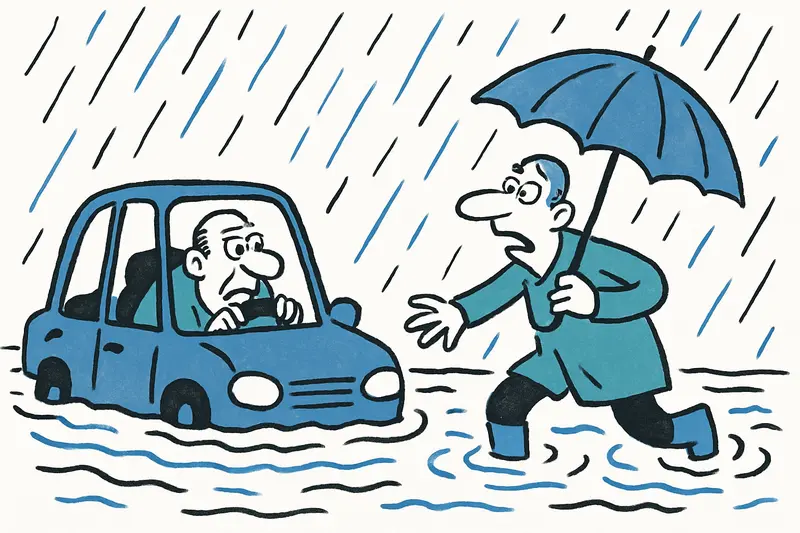
Red Alert on Ibiza: What the Island Must Learn Now
Torrential rains have paralyzed Ibiza: airport terminals leaking, streets turned into streams, schools closed. Why such events still catch us off guard here — and what measures are now needed.
Red Alert: Ibiza in Water, Noise and Concern
The rain did not come as a gentle shower but as a heavy curtain: since early Tuesday morning water has been pouring down on the island, weather stations report locally enormous amounts — reported in Heavy Downpour on Ibiza – Floodwaters, Damage and the Question of Preparedness. On the roofs of the old town of Eivissa the drops drum, on the Passeig Marítim it roars like a small river. Tunnels are filling, streets are turning into streams, and in some places water is already pressing into houses. For many this no longer sounds like a weather whim but like a warning signal.
Which areas are worst affected?
The hardest hit municipalities are Eivissa, Sant Josep, Sant Antoni and Santa Eulària. The airport reports leaks in terminals and already the first flight delays and cancellations. Buses are running only with restrictions, schools remained closed – flooded schoolyards and wet classrooms are currently unacceptable. Authorities urgently advise avoiding unnecessary trips and following the instructions of the emergency services. Mayor Rafa Triguero is calling for disaster status, as detailed in After Heavy Rain in Ibiza: Mayor Calls for Disaster Status.
The central question: Was the island prepared?
This is the key question many are asking now: How well is Ibiza prepared for such extreme events? At first glance the road closures, relief efforts and warnings look like standardized crisis management. On closer inspection, however, gaps become apparent: outdated sewage systems, sealed surfaces in settlements, lack of retention basins and an airport whose terminals are not protected against incoming water. Local coverage After the Cloudburst: Ibiza Between Puddles, Mudslides and the Question of What's Next points to these shortcomings. All of this can quickly turn a weather event into a local disaster.
Aspects that are often overlooked
1) The role of sealed landscapes: in tourist centers and new developments green spaces are increasingly disappearing under concrete and paving. Rain cannot infiltrate, surface runoff forms more quickly. 2) Seasonal infrastructure: many measures are geared toward summer tourist use, not extreme rainfall events in winter or spring. 3) Social vulnerability: seasonal workers, elderly residents and homeowners in low-lying neighborhoods often have no savings or insurance for such damage.
Concrete opportunities and solutions
No need for doom-mongering, but sober solutions are required. In the short term clear evacuation routes, temporary barriers, mobile pumps and better coordination between municipalities help. A practical measure would be a map of "flood-sensitive" spots accessible to all residents — displayed at town halls and bus stops. In the medium to long term we need:
- More infiltration areas: trees, green spaces and permeable surfaces where asphalt now dominates.
- Retention basins and targeted renaturation of streams so that water is released slowly.
- A review of building regulations: no new residential areas in natural runoff zones.
- Technical upgrades of critical infrastructure: airport terminals, tunnels and underpasses must be better sealed and equipped with pumping systems.
- Expansion of early warning systems and clear information channels for tourists.
Practical advice for residents and visitors
If you are now on Ibiza or Formentera: stay on the upper floors, avoid parks and low-lying streets, do not park in underpasses or depressions. Store important documents and electronic devices in waterproof bags, note the number European emergency number 112 and follow local announcements. And one tip that repeatedly saves lives: never drive through flowing water — even 20 centimeters can sweep a car away.
Economic and tourism impacts
The immediate consequences are visible: flight cancellations disrupt connections, hotels report damage to underground garages and supply bottlenecks. Less visible are the long-term costs: higher insurance premiums, adaptation costs for infrastructure and possible image damage for an island that depends on tourism. Still, this must not lead to panic — it is an invitation to invest wisely.
A local call
At the moment the message is to keep calm, help where possible and follow information closely. But we should also learn from these days: more rain is no longer a coincidence, it is part of a changed weather reality. Anyone who listens to the trees now heavy with water and smells the salt at the harbor senses: the island is vulnerable — and changeable. With green thinking, technical upgrades and better crisis management much can be mitigated. That is the real task after the storms subside: not only to clean up, but to rethink.
Frequently asked questions
What should I do in Mallorca if there is heavy rain and flooding nearby?
Is it safe to drive in Mallorca during a flood warning?
What should visitors pack for Mallorca if storms are expected?
Which parts of Ibiza are most affected by heavy rain and flooding?
Why do Mediterranean islands like Mallorca and Ibiza flood so quickly after heavy rain?
Can heavy rain affect flights to and from Mallorca?
What can residents do to protect their home during sudden flooding in Mallorca?
What are the long-term lessons from flooding in Ibiza for Mallorca?
Similar News

Maribel: Five Decades of Service – Housekeeper from Peguera Celebrated with a Special Honor
Over 50 years in the hotel business: María Isabel “Maribel” Molinos was honored in Palma at the Nit del Turisme by Unive...

Orange Alert over Parts of Mallorca: Are We Prepared?
Dark clouds and an announced wet spell have triggered an Orange alert in parts of Mallorca. A reality check: what's miss...

Sundair & Co.: Sale speculation and what it could mean for Mallorca
Rumors about a possible sale of the airlines Sundair and Fly Air 41, which belong to Schauinsland-Reisen — and whether b...
Anne Wünsche in Mallorca: A job offer with a catch — who fits the role of personal assistant?
Influencer Anne Wünsche has left Berlin and is urgently looking for a full-time personal assistant in Mallorca. Why the ...

Daily from New York: Palma Between Boom and Strain
United will increase the Newark–Palma route to daily flights in 2027 using Boeing aircraft (231 seats). What does the in...
More to explore
Discover more interesting content

Can Cap de Bou

Townhouse Lleo 72
