
Why was the rental car hanging in the pine tree? A look at safety, responsibility and everyday life at Mirador Na Burguesa
Why was the rental car hanging in the pine tree? A look at safety, responsibility and everyday life at Mirador Na Burguesa
A black four-wheel-drive slid about four to five meters down the embankment at the Mirador Na Burguesa in the morning and became caught in a pine tree. Firefighters and local police were on site. Who is liable, and what safety gaps does the incident reveal?
Why was the rental car hanging in the pine tree? A look at safety, responsibility and everyday life at Mirador Na Burguesa
Key question: Who bears responsibility when a rental car apparently rolls down the embankment by itself?
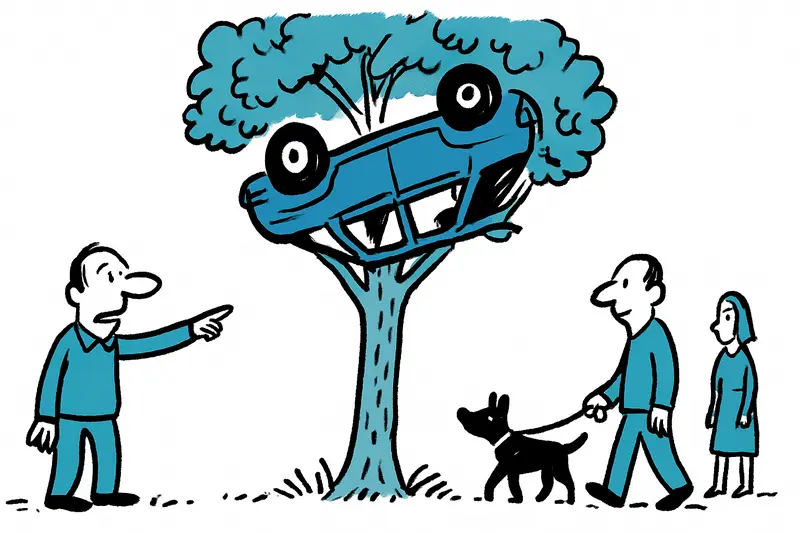
On Friday morning, around 9:30, a person at the Mirador Na Burguesa near Palma discovered an unusual sight: a black four-wheel-drive vehicle lay about four to five meters below the parking area and was stopped by a pine tree. According to the finder, the vehicle was empty; firefighters and local police responded, recovery was postponed, and the responsible rental company tried in vain to reach the customer. What seems curious at first raises a number of practical questions—for locals and for visitors.
I imagine the scene like this: the scent of pine still hangs in the warm air, cicadas are buzzing, walkers at the mirador pause and look, people with dogs stop. In this idyll a black SUV stands out, it does not really float but remains hanging upside down in a pine tree—a sight you do not see every day and one that quickly prompts questions about cause and responsibility. Other serious accidents, such as the Genova crash that left six injured, underline the potential consequences of vehicles leaving the road near trees.
Critical analysis: three possible causes usually come up—mechanical failure, parking error, or inadequate safety measures at the parking area. With a rental car, additional aspects are involved: handover protocols, clarity of instructions, condition of the parking brake, and the ability to reach the customer. It is unclear whether this was a user error, a technical defect, or a combination of unfavorable topography and missing protective measures at the edge of the parking area. Similar slope incidents happened in Sant Elm, including a case where a car slid three meters down a slope and another where an unlicensed driver’s family car rolled down an embankment.
What is often missing from public debate is a look at the infrastructure at the town’s edge: many viewpoints and parking spaces in Mallorca were not originally designed for the current volume of visitors. Embankments, narrow access roads and missing or damaged guardrails are common. Safety concerns at viewpoints are broader, as shown by the Mirador d'es Colomer break-ins and arrests. It is also rarely examined systematically how rental companies deal with vehicles left at remote spots. Who checks immediately whether a car is properly secured? Who ensures emergency contacts respond quickly?
An everyday scene: a retiree from Palma parks early, takes a walk, makes a short phone call—and later sees a tow truck with flashing lights. Life here runs like that: quick decisions, heavy traffic in season, and occasionally events outside routine. The fire brigade could only establish on site that no one was inside the vehicle; the actual recovery awaited special equipment and further decisions by the insurer and the rental company. Rescue dramas at viewpoints are not limited to vehicles — for example, the paraglider crash at Mirador de Sa Torre required a complex rescue.
Concrete measures that could be implemented immediately: 1) Municipal review of sensitive parking areas: simple guardrails, additional gravel buffer zones and clearer markings often prevent slipping. 2) Mandatory photographic handover documentation for rental cars: photos of the parked vehicle, the parking brake position and the parking spot via an app would be quick to implement. 3) Fast alarm chain: rental companies should maintain a 24/7 contact chain with local staff who can check quickly before a vehicle remains unattended for hours. 4) Insurance and towing services: municipalities could agree emergency rates with local towing companies so recoveries can be carried out quickly and in an orderly manner.
These suggestions are not cure-alls, but they close gaps: more protection at parking areas reduces risks for everyone; digital handovers create clarity between customer and lessor; local emergency plans speed up assistance and reduce follow-up costs. Especially in sensitive zones like Mirador Na Burguesa, such measures would make sense—not only for safety reasons but also to preserve the island’s image as a reliable host.
Concise conclusion: A car in a pine tree is more than a curiosity. It is an indication that in some places practice, technology and infrastructure do not fully align. Simple, locally implementable measures could reduce the risk—and the next morning’s walk at the mirador could again be dedicated to the view of the sea, not to marveling at a hanging SUV.
Frequently asked questions
What safety concerns should I consider when parking at Mallorca viewpoints like Mirador Na Burguesa?
Who is responsible if a rental car ends up precariously parked or rolling away at a Mallorca viewpoint?
What practical safety improvements could Mallorca towns implement to prevent incidents at popular viewpoints?
What should travelers pack or plan for when visiting Mallorca's scenic spots to handle possible car issues?
What happened at Mirador Na Burguesa and what does it reveal about Mallorca's parking safety?
Are there quick, practical steps Mallorca municipalities can take now to speed up car recoveries in remote spots?
How should rental car customers prepare before visiting Mallorca's edge-of-viewpoint spots?
What role can digital handovers and 24/7 contacts play in Mallorca rental-car safety?
Similar News
From the Reality Studio to the Pitch: Aleks Petrovic Makes Mallorca His Base
The former participant in numerous TV shows moves from Dubai to the island and launches a project with FC Germania Mallo...
When the Phone Falls Silent: Concern for Sarah Joelle in Mallorca — and What It Reveals
After days without a response, the TV personality's unreachability in Mallorca sparked concern. Shortly afterwards an al...
Ultraluxury on the Ground: Four Seasons Jet in Palma — a Reality Check for Formentor and the Island
A high-priced flight crosses Mallorca and its guests stay for days at the Formentor resort. What does the island get bes...
Death of a Witness and the Justice Backlog: Why the Kegel Brothers Trial Matters in Mallorca
A witness in the Playa de Palma fire case has died, and the trial against eight German holidaymakers has been delayed un...

Champagne Reception, Red Carpet and Mini Originals: The Pre-Nit del Art at Gallery Mensing
Almost 400 guests, champagne, pop-art feats by Tom Boston and a raffle for the Parkinson's foundation: Gallery Mensing t...
More to explore
Discover more interesting content

Can Cap de Bou

Townhouse Lleo 72
