
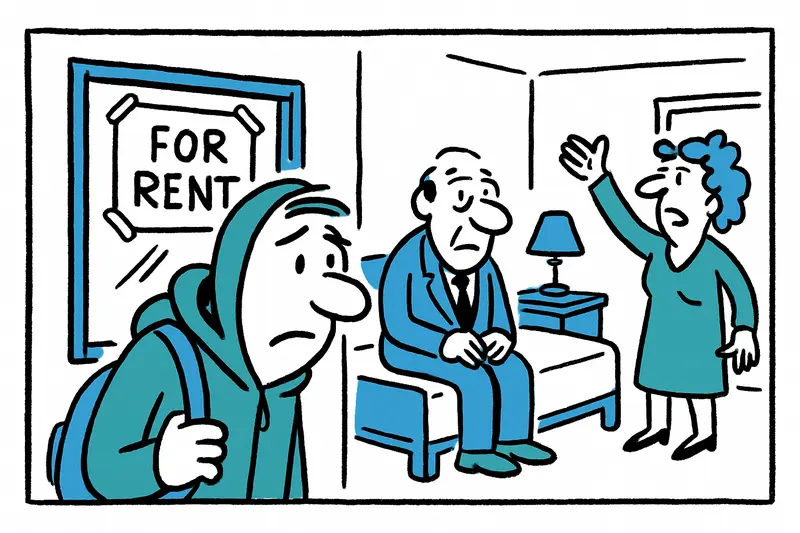
Rental-price madness for shared rooms: Why a room in Mallorca has become almost a luxury
Rental-price madness for shared rooms: Why a room in Mallorca has become almost a luxury
Rental prices for shared rooms in Mallorca keep climbing: average €580/month, Palma at €590. What this means for students, seasonal workers and neighbours — and how the island could respond.
Rental-price madness for shared rooms: Why a room in Mallorca has become almost a luxury
Key question: How could room prices on an island with vacant holiday apartments explode so much — and what helps local people?
The figures are as dry as they are painful: in December the average price for a room in the Balearics was €580 per month, and in Palma around €590. Compared with 2020 this is up 58 percent, and compared with 2015 almost a doubling (+92 percent). The basis is an analysis of long-term rental data that makes the trend visible, as reported in Rent-price shock 2026: How Mallorca is heading toward a social crisis.
On the Plaça Major on a gray weekday you can see how the issue affects everyday life: female students with backpacks and thermoses standing by the fountain, swiping through room listings on their smartphones; a bus driver speaking with a worried expression about friends who won't find affordable housing after the summer; building noise from a house whose ground floor has been empty for months. You hear scenes like these in Passeig del Born, the La Llotja quarter, or at the UIB stop.
In short: conditions are stressing residents. Those most affected are students, seasonal workers, young couples and people with middle incomes who would normally turn to flatshares. At the same time, listings repeatedly appear on platforms asking up to €800 for ordinary rooms. That doesn't add up: vacancy on the one hand, displacement on the other — a dynamic also explored in When €800 Suddenly Becomes €1,300: How Minimum Lease Periods Are Pushing Tenants Out in Mallorca.
Critical analysis: why the data looks like this and what is often missing
The statistics show only prices. They don't say enough about who the providers are, how many apartments are used permanently as holiday rentals, which living spaces are actually vacant and how incomes have changed. Public debate focuses too much on individual cases — “expensive room here, overpriced apartment there” — instead of structural drivers: supply shortages caused by short-term rentals, missing municipal instruments to reclassify vacant spaces, and inadequate data for neighbourhood planning. This thematic overview is examined in Buying and Renting in Mallorca: Why Prices Are Pushing Locals to the Edge — and What Could Help Now.
There is also a lack of age-sensitive analysis: many of those now living in flatshares earn significantly less than rents are rising. The consequence is longer commutes from villages, overcrowded buses in the morning and a city that is losing its diversity.
What rarely occurs in public debate
It is seldom openly discussed how much short-term holiday rentals really influence prices — both financially and spatially. Nor is it systematically recorded how many apartments remain vacant long-term because owners are waiting for better returns. The question of transparency on platforms and rental data is missing, as is a look at the link between transport, working hours and housing choice.
Concrete solutions that could be implemented on Mallorca
- Mapping and transparency: municipal surveys of vacant apartments and registered holiday rentals, made more accessible for urban planning and social services.
- Incentives for conversion: subsidy programs for owners who convert vacant apartments into long-term rental housing; tax reductions for conversions into social housing.
- Regulate short-term rentals: strict licensing, a limited number of licenses per area, and sanctions for non-compliance.
- Social housing and student residences: targeted investments, including in peripheral districts with good transport links.
- Rent support and caps for particularly affected groups: time-limited grants for students and seasonal workers; legally reviewable models for rent caps in hotspots.
- Support for housing cooperatives and collective ownership to create long-term housing options independent of the market.
These measures are not a cure-all, but they would help balance the tourism economy and housing needs.
An everyday example: in the Sa Gerreria neighbourhood, where small craft businesses still compete with cafés and holiday apartments, spontaneous house viewings have occurred in recent years where multiple interested parties bid for a single room. Such auction-like situations accelerate the price spiral — and show how urgently planned supply is needed.
Conclusion, pointed
€580 for a room is not just a number but a warning sign: the island is losing its normal life reality. Bold, concrete interventions are needed — not just appeals to landlords. Those who now refrain from measures for transparency, conversion and targeted social housing pass the bill on to the younger generation and the less privileged. Palma can be beautiful, but without affordable housing the city becomes a postcard without residents.
Frequently asked questions
Why are shared rooms in Mallorca so expensive now?
How much does a room cost in Mallorca at the moment?
Who is most affected by the housing shortage in Mallorca?
Is it still possible to find an affordable room in Palma?
What can Mallorca do to make rooms more affordable again?
Why do people in Mallorca talk so much about holiday rentals and empty flats?
Is Mallorca still a good place for students if housing is this expensive?
Why are people in Mallorca moving farther away from Palma to find housing?
Similar News

Are the Balearic Islands the Southern Border of Europe? A Reality Check on Immigration
The Balearic Islands are again calling for EU aid after a sharp rise in arrivals by sea. Conflicting priorities between ...

"Expensive chaos" and many open questions: What clients can do when a lawyer suddenly stops responding
Several clients complain that a well-known German lawyer in Mallorca has been unreachable for months. Key question: What...

TV tip: 'The Last Problem' — Mallorca as the setting of a classic crime
A classic whodunit on Mallorca: A new miniseries set in spring 1959 brings storm, an isolated hotel and a dense web of s...

Nipping Sea Creatures: Why Bathers in Cala Major and Elsewhere Should Be Cautious
In Cala Major, bathers have reported being nipped by small fish. What is behind it, how can problems be avoided — and wh...
Forced eviction in Santa Catalina: When a 65-year-old slept in her car and showered on the beach — a question of responsibility
The story of Pilar López from Santa Catalina represents a problem affecting many Mallorcans: How can an island with a bo...
More to explore
Discover more interesting content

Can Cap de Bou

Townhouse Lleo 72
