
Easter at Ballermann: Full Hotels, Crowded Streets — and Who Pays the Price?
Easter at Ballermann: Full Hotels, Crowded Streets — and Who Pays the Price?
Hotels around Playa de Palma are filling up — but high occupancy brings noise, pressure on staff and rising prices. A critical assessment.
Easter at Ballermann: Full Hotels, Crowded Streets — and Who Pays the Price?
Hotel occupancy, everyday scenes and the question of sustainable tourism management
The sun is just brushing the roofs of the first hotels on Playa de Palma, a street vendor's radio blasts Spanish pop mixes, and suitcases are already rolling through the alleys: the season starts with very well-filled houses. Hoteliers speak of around 80 percent occupancy in parts of Playa de Palma; in the municipality of Calvià, which includes Magaluf, Peguera and Palmanova, forecasts are also high. Coverage of pricing and safety concerns is available in Hoteliers See Room for Price Increases – Who Will Foot the Bill in Mallorca?.
Key question: How will the island cope with this early wave without residents, employees and quality of life footing the bill? That's the question that comes up in ordinary conversations at bar counters, at the market in Santa Catalina or between taxi queues at the airport.
Critical analysis: High occupancy figures are a blessing for hoteliers, but a burden for infrastructure. When large parts of hotels open and flights continue to increase, that means more waste, more noise, stronger traffic peaks and additional pressure on cleaning and service staff who often work seasonal shifts. At the same time we hear from restaurateurs who face higher purchase prices and must pass these on to guests, as discussed in When the Off-Season Gets Expensive: Why Mallorca's Hoteliers Keep Raising Prices. Result: budget travelers may choose cheaper establishments — or skip dining out altogether, hitting small businesses on the promenade's edge.
What is often missing from public debate: concrete numbers on staffing needs, transport capacities and waste logistics during Easter. There's no honest accounting of how additional guests affect bus lines C1/C2 or access roads at Son Molinar. It is equally rare to discuss how additional revenue from the tourist tax is actually reinvested into noise prevention, better working conditions or targeted traffic management.
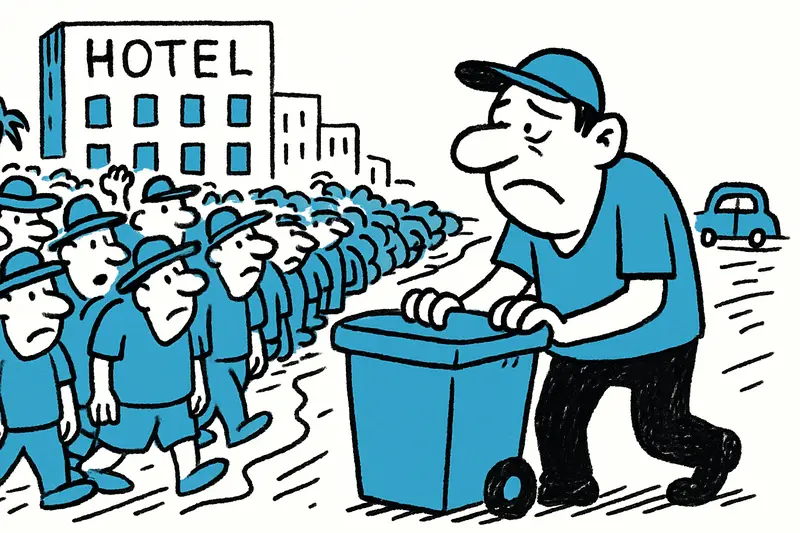
An everyday scene from here: in the morning I stroll along the Avenida de Alemania, see hotel staff pulling bins, hear a hotel receptionist negotiating with a taxi driver in Mallorcan while the smell of paella drifts from a corner restaurant. Children balance on the edge of a small fountain; older residents sit shaking their heads on a bench and watch the hustle. This is how the island feels when statistics meet the street. Similar human stories appear in In the Rhythm of the Night: Who Really Benefits from Mallorca's Tourism?.
Concrete approaches: First, stagger arrival times — airlines, hoteliers and destination management could create incentives so that large groups do not all land at the same hour. Second, more resources for night and weekend public transport services so that taxis do not have to fill every gap. Third, transparent use of the tourism levy: targeted funding for waste logistics, noise protection measures and training for service staff. Fourth, flexible pricing for municipal parking and parking management around Playa de Palma so residents are not displaced. Fifth, binding minimum standards for noise protection and working hours in particularly burdened zones.
Some of these steps cost money; others require better management and coordination between municipalities, hoteliers and transport companies. In return there would be direct benefits: fewer jams, fewer complaints, more satisfied employees and a tourist demand that is less volatile even in the summer months.
Concise conclusion: High occupancy at Easter is an opportunity, not an excuse. Those who celebrate the numbers must tackle the side effects openly. Otherwise the full hotels will quickly become full-blown problems for neighborhoods — and there are already first signs of this in Palma and on Playa de Palma this spring. Local coverage such as Ballermann in Focus: How safe is Playa de Palma really? highlights these developments.
Frequently asked questions
Why is Mallorca so busy at Easter, especially around Playa de Palma?
Is Easter a good time to visit Mallorca if you want quieter streets?
What problems can full hotels cause in Mallorca during Easter?
How does Easter tourism affect local residents in Mallorca?
Which areas of Mallorca are busiest at Easter?
What practical issues does Easter tourism create for transport in Mallorca?
What can Mallorca do to manage early-season tourism better?
Can Easter tourism in Mallorca be good for business and still cause problems?
Similar News

More water than last year: Mallorca's reservoirs breathe easier
September rain refilled the Tramuntana's reserves: overall fill around 35 percent, Cúber at 40.42 percent, Gorg Blau at ...
Three Luxury Hotels in Banyalbufar: Lots of Money, Many Questions
A Danish investor plans three exclusive accommodations in Banyalbufar — including the historic Son Valentí. The announce...
2.1 tonnes of cocaine on sailing yacht off Spain's coast – a reality check for the coastguard
A 14-metre yacht was seized with 2.1 tonnes of cocaine. Who monitors the ports, how does the international hunt succeed ...

Heat Bonus in Mallorca: 100 Euros Extra for Outdoor Staff at MarSenses
MarSenses pays employees who worked outdoors in August an extra €100 as recognition. Lighter uniforms, reduced hours for...

Renovating in Mallorca: What You Really Can Do Without Neighbour Consent
Many think they can do whatever they want in their apartment. That's partly true — but only as long as structural elemen...
More to explore
Discover more interesting content

Can Cap de Bou

Townhouse Lleo 72
