
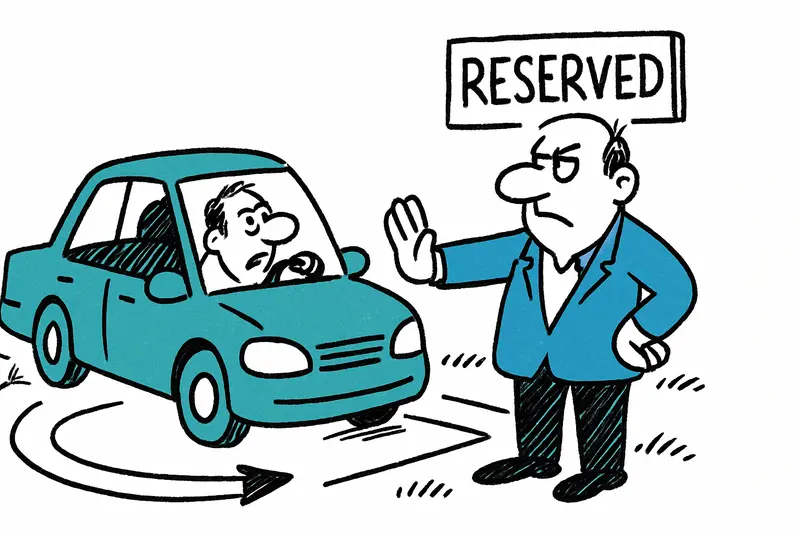
Resident parking spaces in Cala Millor and Cala Bona: a start with warnings
From November, Son Servera will reserve about 300 parking spaces in Cala Millor and Cala Bona for residents. Good news — but the central question remains: are enforcement and displacement sufficiently considered?
Finally order on Plaça Mallorca, but is that enough?
Last Friday at around 9:30 a.m. as I walked along Plaça Mallorca, mosquitoes were buzzing, a delivery van rattled somewhere and cars were doing laps like a poorly oiled carousel. Starting in November, the Son Servera council wants to bring peace: around 300 reserved parking spaces for residents in Cala Millor and Cala Bona are to be officially marked as resident zones. A relief for many, not a cure-all — and that's precisely the question that must remain.
What the new regulation entails
The affected areas stretch from Plaça Mallorca along Carrer Llambies in Cala Millor to parts of Cala Bona. Those registered in the municipality who have paid their vehicle fees can apply for a free sticker. The sticker will be placed visibly at the lower right of the windshield and is valid for four years; renewal should then be free of charge. The town hall speaks of a pilot phase that will be observed and adjusted if necessary.
Key question
The key question is: does this measure really reduce the problem of search traffic — or does it merely shift it? In the short term it should save affected people time and nerves in the mornings. In the long term, however, side effects can occur: displacement into side streets, impairments for craftsmen, suppliers and short-term visitors, as well as possible misuse of stickers.
Aspects that have been little discussed so far
In public debates one heard a lot about signs and bollards, but little about practical implementation: How will enforcement be carried out? Are random checks by the local police sufficient or is systematic monitoring with mobile teams needed, as discussed in Sóller wants to tame the parking chaos: Three parking lots and 300 resident spaces — is that enough?? How will long-term tenants without municipal registration or holiday apartments be treated? And: who will cover the costs for additional measures such as parking sensors or towing?
Who could end up as losers
Besides tourists who will have to walk a bit more, it is often seasonal workers, craftsmen and visitors to small shops who could lose out. If the designated resident spaces are well occupied, there is a real danger that the search will move into the side streets — creating new conflicts there. Rental car drivers who arrive late or leave early could also end up stuck in dead ends. Reports of vandalism in Cala Millor parking areas have heightened concerns.
Concrete improvements and opportunities
The good news: many problems can be mitigated with pragmatic measures. Practical suggestions:
- Time staggering: Resident zones not round the clock, but for example from 8 a.m. to 8 p.m. to allow business and delivery traffic.
- Digital parking permits with QR code: Facilitates checks and reduces forgeries; data remains local and time-limited.
- Mobile enforcement teams: Instead of only sporadic patrols, fixed control intervals could help and increase deterrence.
- Visible loading zones: In front of shops and cafés so that suppliers do not have to park in residential streets.
- Park and ride (perimeter parking & shuttle): Visitors park on the edge of town, a minibus connects the lots with the beach and town center in the high season.
Measurable goals for the pilot phase
To ensure the pilot phase is more than a well-meaning experiment, there should be clear metrics: average time until a parking space is found, change in occupancy in side streets, number of complaints per week, reduction in noisy driving around and — importantly — residents' satisfaction scores. Without numbers, much remains just a feeling.
Looking ahead — and my personal impression
I believe the sticker regulation is a necessary first step. When the signs go up and the first stickers are applied in November, what I hope for most is honest enforcement and a willingness to adjust. Then a pragmatic start can become a sustainable improvement — less racket on Plaça Mallorca, more space for everyday life: strollers, deliveries, elderly neighbors who can calmly buy bread. And if people are still driving in circles, I'll go for another walk and listen again — the sounds often say more than official figures.
Frequently asked questions
What are the new resident parking rules in Cala Millor and Cala Bona?
Who can apply for the resident parking sticker in Mallorca's Cala Millor and Cala Bona?
How long is the Cala Millor resident parking sticker valid?
Will resident parking in Cala Millor solve the parking problem completely?
What should visitors expect when parking in Cala Millor or Cala Bona?
Why are side streets a concern with the new parking zones in Cala Millor?
What practical measures could improve resident parking in Cala Millor and Cala Bona?
When will the resident parking changes start in Cala Millor?
Similar News
Man Exposes Himself in Front of Café in Palma: Why This Must Not Be Dismissed as an Isolated Case
A man was arrested in Palma after he lowered his trousers in front of a café and exposed himself to minors. What does th...

Brawl at the Airport: Who Is Responsible for the Escalation Among Transfer Drivers?
A dispute between two transfer drivers escalated on Saturday morning in the arrivals area of Son Sant Joan. One man was ...
Collision in Palma: Why an E-scooter and a Patrol Car Ended Up on a Collision Course
At an intersection in Palma in early September a young e-scooter rider collided with a local police patrol car. No one w...
Warty on the Green: When a Cyborg Is Supposed to Learn Golf in Mallorca
A silver humanoid named Warty visits Son Gual – as advertising for Water D and as a guinea pig for golf lessons. A criti...
Balearics Consider Restrictions on Second-Home Purchases – a Reality Check
The regional government is examining whether purchases of second homes by non-residents can be restricted in future — bu...
More to explore
Discover more interesting content

Can Cap de Bou

Townhouse Lleo 72
