
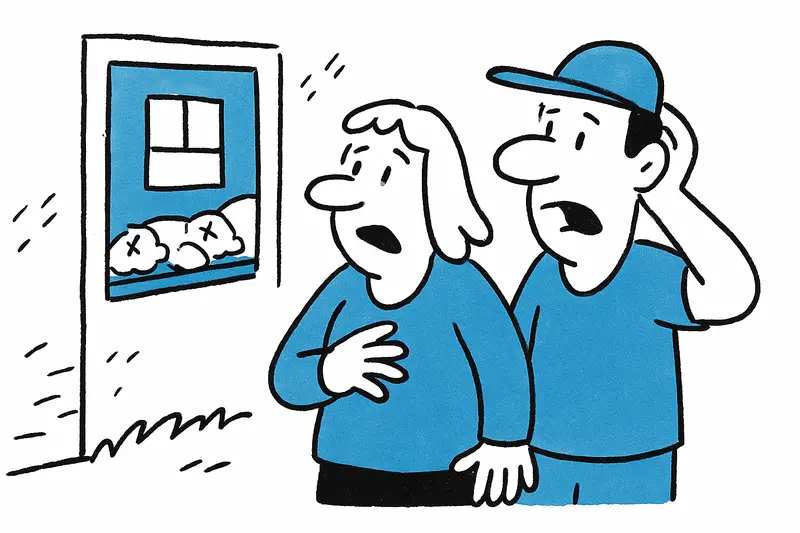
Portocolom: Mother and son found dead — a wake-up call for the neighborhood
Portocolom: Mother and son found dead — a wake-up call for the neighborhood
In Portocolom, an 80-year-old woman and her 54-year-old son were found dead in their home on Carrer de Grívia. The Guardia Civil is investigating; there are no signs of external violence. Our reality check explains why neighborhood and health networks must be strengthened.
Portocolom: Mother and son found dead — a wake-up call for the neighborhood
Two people found dead in Carrer de Grívia: what the facts say — and what's missing
On Thursday afternoon a relative discovered two apparently lifeless people in a residential house in Portocolom. The deceased are an 80-year-old woman and her 54-year-old son. Local police and Guardia Civil units arrived on Carrer de Grívia at around 2:00 pm. Emergency personnel could only confirm the deaths.
Officers report that during the search of the bedrooms several medications were found on the bedside tables, each with a glass of water. Based on currently known information there are no signs of external physical violence. The Guardia Civil has taken over the investigation into the cause of death; among other possibilities, a suicide is being examined.
Key question: How can a small community like Portocolom prevent people in crisis from being left alone and unnoticed?
The bare facts are not enough to fully understand the situation. Yet they contain a familiar pattern: an elderly woman and a middle-aged son, medications in the room, a quiet household — a pattern that also appeared in a fatal discovery in Son Macià.
That fits everyday scenes we often see here on Mallorca — sheltered houses in coastal villages, fishing boats in the harbor in the morning, church bells sharing the calm, and neighbors who are generally friendly but not always closely connected. This has happened even in busier neighborhoods, for example an unnoticed death in Santa Catalina.
Critical analysis: authorities and support services exist, but gaps remain. The Guardia Civil is investigating, emergency numbers are available, and there are telephone counseling services. However, the practical bridge from an isolated household to regular contact points is often missing. General practitioners are overburdened, social services have limited resources, and relatives do not always live nearby. Cases like the Manacor case where a mother was found in a decaying apartment underline that point. Medications sit in drawers; who checks whether a mixture of substances could become dangerous? Who ensures regular checks when usual signals — taking out the trash, shutters up, a voice at the door — are absent?
What is missing in public debate: the everyday mechanisms of care. People talk about numbers, institutions and hotlines, but rarely about simple, practical measures that work directly in villages. Also little noticed is the double burden on middle-aged relatives who may be in poor health themselves while also providing care. Psychological strains often remain invisible until it is too late.
A small everyday scene from Portocolom helps illustrate the point: Teresa sits on the square in the town center selling fresh oranges, the dog barks, the cafés fill with regulars. Carrer de Grívia is a quiet side street; you can hear the sea, but not always the worries of those who live there. A brief look through the front door is sometimes enough to notice that something is wrong — but who looks in?
Concrete solutions that can be implemented quickly on Mallorca:
- Municipal check routines: The town council could coordinate a voluntary neighborhood network in which volunteers report at set times and react to prolonged absences. Such networks need simple rules and a central point of contact.
- Pharmacies as checkpoints: Pharmacists regularly see which pills are picked up. A voluntary notification to social services in case of unusual dispensing patterns (e.g. sudden changes in medication or prescriptions not being collected) can help.
- Telephone shifts and digital aids: A phone chain for older people living alone or an affordable personal emergency alarm should become standard. Existing hotlines like Teléfono de la Esperanza (971 46 11 12) and the national number 024 for suicide prevention must be promoted more actively.
- Medication checks: GPs and home care nurses should prepare medication overviews regularly, ideally with support from the pharmacy. Drug interactions are a major risk, especially for older people.
- Raising awareness of silent crises: Information in municipal newsletters, at the market, in churches and at the local football club can lower barriers to seeking or offering help.
These proposals are no panacea, but they are practical and quick to implement. They require little money, but above all coordination and the awareness that neighborhood is more than an address.
Sharp conclusion: Tragic cases like the one on Carrer de Grívia are not a verdict on an entire village. They are, however, a warning sign. When the bells ring over Portocolom and the sea lies calm, we should not only enjoy the panorama but also look out for one another. Concrete local measures can prevent people from disappearing into silence.
If you need support yourself or know someone who is at risk: anonymous counseling at Teléfono de la Esperanza is available at 971 46 11 12. Across Spain the hotline 024 provides help for suicidal crises. In acute emergencies call 112.
Frequently asked questions
What happened in Portocolom on Carrer de Grívia?
Was there any sign of violence in the Portocolom deaths?
Why do isolated households in Mallorca sometimes go unnoticed for so long?
What simple ways can Mallorca neighborhoods help older people living alone?
Can pharmacies in Mallorca help spot a health or crisis problem?
What should you do if you think someone in Mallorca may be in a mental health crisis?
Why are medication checks important for older people in Mallorca?
What does Portocolom need to prevent people from being left alone in a crisis?
Similar News
Carriages Without Horses: Palma Plans E-Carriages – a Reality Check
Palma plans to switch to electric carriages in 2027. The prototype was shown near the cathedral. What is the technology ...
Record season, empty coffers: Who really benefits from the tourism boom?
Full hotels and more flights: the numbers sound impressive — yet many locals feel no benefit. A reality check with an ev...
Pool ordered for €46,000 – €23,000 paid, no work carried out: A fraud case in Palma
A homeowner in Palma transferred €23,000 for the construction of a pool. Weeks later it emerged that no building applica...
Summer greetings from the Pitiusas island: Gottschalk and Krüger enjoy the sun on Ibiza
A friendly photo of Thomas Gottschalk and Mike Krüger on Ibiza evokes memories of their shared film years and shows that...
Occupied in a Few Days: When Property in Mallorca Turns into a Dispute
Six young men were arrested in Palma after homeowners returned and could no longer open their own door. A case that rais...
More to explore
Discover more interesting content

Can Cap de Bou

Townhouse Lleo 72
