

Manacor: Son in Custody, Mother in a Decaying Apartment — A Case That Raises Questions
In Manacor the police found an elderly woman in a neglected apartment infested with rats and cockroaches. The son is in custody. A local wake-up call for better prevention.
How a gray morning in Manacor unveiled a chapter of domestic abuse
It was one of those damp, quiet mornings in Manacor: cars rolled cautiously over the cobblestones, voices from the weekly market drifted muffled through the lanes, a dog barked in the distance. Then suddenly the blue lights in a narrow side street, the voices of the national police and the alarm call of a concerned caregiver. She had not looked away — and in doing so exposed a scene neighbors will not soon forget.
More than disorder: The condition of the apartment
The emergency teams found an elderly woman in an apartment that was not only unkempt but smelled of neglect: an empty refrigerator, moldy walls, dirty dishes. Cockroaches roamed several rooms, and rats had been feasting on the supplies. The dogs appeared sick and poorly cared for. For the police, the picture was not a private scandal but an indication of systematic abuse and years of neglect.
The key question: Why did no one intervene earlier?
That is the central question hanging over this case. In a small town like Manacor, as reported in Manacor: No murder — but many questions remain, where people know each other on the plaza, it seems hard to imagine that deteriorating health or an empty refrigerator could go unnoticed for months. But shame, limited mobility, family power dynamics or the fear of being wrong can make the visible invisible. Often it is not indifference but powerlessness.
Accusation against the son: Abuse and financial exploitation
The son, who lived in the same apartment, was arrested on the day of the operation. He is suspected of having physically abused his mother, siphoned off her pension and neglected her over a long period. A court protection order forbids him from contacting the apartment. Such cases, like Fatal Discovery in Son Macià: A Case Raising Questions about Protecting Older People, show how closely physical violence, emotional harassment and financial exploitation are often intertwined.
A blind spot: Financial control as a lever of neglect
What is often missing from public debate is the role of money. Regular pension withdrawals by close persons, abusive powers of attorney or secret transfers are common patterns. Banks, social services and insurance agencies should be better networked: suspicious account movements should be reported systematically, powers of attorney checked and protected accounts offered for particularly vulnerable people.
Concrete solutions instead of mere outrage
The case in Manacor offers concrete starting points. In the short term, low-threshold reporting channels are needed for neighbors, carers and relatives — a clear emergency number that is also reachable in the evening. In the medium term, local social services should set up mobile teams that regularly visit older people in the old town alleys and residential areas. Mandatory training for paid caregivers and general practitioners could help detect warning signs more quickly.
A proposal: Financial protection as prevention
A sensible tool would be a simple verification procedure for sensitive accounts: unusually large withdrawals would automatically trigger a social review. Banks could also be required to report suspicious transactions and to re-verify relatives with powers of attorney more frequently. A central register of powers of attorney — accessible to social services in cases of justified suspicion — would significantly counteract abuse.
Animal welfare as an indicator
Neglected pets are often the first visible sign: sick dogs, unkempt cats, emptied bowls. Municipal cooperation between animal shelters, veterinarians and social services with joint reporting protocols would trigger alarms faster. In Manacor some neighbors were disturbed by the whimpering of the dogs — and yet it took time for someone to act. Here lies a clear prevention approach.
The role of the neighborhood: attentive but respectful
It is not an easy balancing act: not to be intrusive and yet to act. A musty smell from an apartment, the absence of a familiar person from the plaza or sudden isolation are signals that should be taken seriously. The city administration must lower the barriers to reporting and guarantee confidentiality so that people dare to take the step.
What needs to be done now
For the affected woman, medical care and protection are the immediate priorities. Social services moved her to a supervised facility, the police are checking account movements and interviewing neighbors. For the community this is a wake-up call: not every rescue begins with a heroic act by an individual caregiver. Structure, procedures and binding cooperation between banks, social services and animal organizations are needed.
This case from Manacor should not be seen as an exception but, as reports such as Santa Catalina: Man reportedly lived for a month with his dead mother – questions for the city, a warning: an empty refrigerator can be an alarm signal — and we must learn to follow it.
Frequently asked questions
What warning signs of elder abuse should people in Mallorca look out for?
How can neighbours in Mallorca report suspected elder abuse safely?
What should a family do if an older relative in Mallorca is living in poor conditions?
Why do cases of elder abuse in small towns like Manacor often go unnoticed?
What living conditions in Mallorca may point to neglect of an elderly person?
Can financial control be part of elder abuse in Mallorca?
What role do caregivers play in spotting abuse of older people in Mallorca?
What should Mallorca residents do if they suspect animal neglect during a welfare case?
Similar News
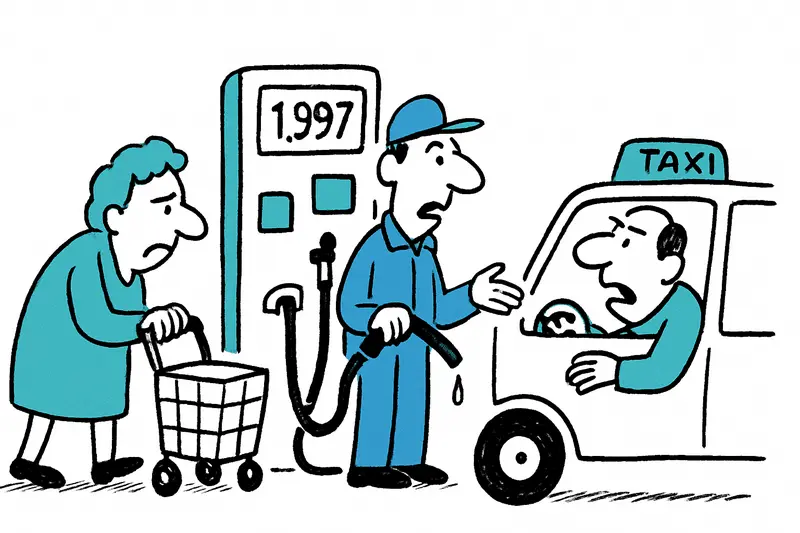
The End of the Cheap Ride? Why Mallorca Is Hit Harder by the Fuel-Price Shock
Gasoline and diesel average close to two euros per liter. What this means for commuters, supply chains and renters in Ma...
Relaxed liquid rules in Munich: What Mallorca travelers will notice
At Munich Airport the 100-milliliter rule will be lifted at all checkpoint lanes — thanks to new CT scanners passengers ...

For 45 Years on Mallorca — and Then This: How a Market Visit in Santa Ponsa Became a Lesson
A woman who has lived on the island for decades lost money and important documents at the Mercat Setmanal in Santa Ponsa...
10 percent surcharge on the beach: How legal and transparent is the extra charge at Playa de Muro?
A German part-time resident noticed days after a restaurant visit in Playa de Muro that the bill included a flat ten per...

Body near the Llevant Market: What this death says about our city
A man was found dead on Sunday afternoon near the Llevant Market. Police say the death appears natural. The scene raises...
More to explore
Discover more interesting content

Can Cap de Bou

Townhouse Lleo 72
