
Sleep Instead of Runway: Palma Between Health and Aircraft Noise
Residents from El Terreno, Portixol and other neighborhoods are demanding a night flight ban from 23:00 to 06:00. Measurements show peaks up to 97 dB; around 19,000 people are said to be affected. How big is the problem — and what solutions exist?
Sleep instead of runway: Palma between health and aircraft noise
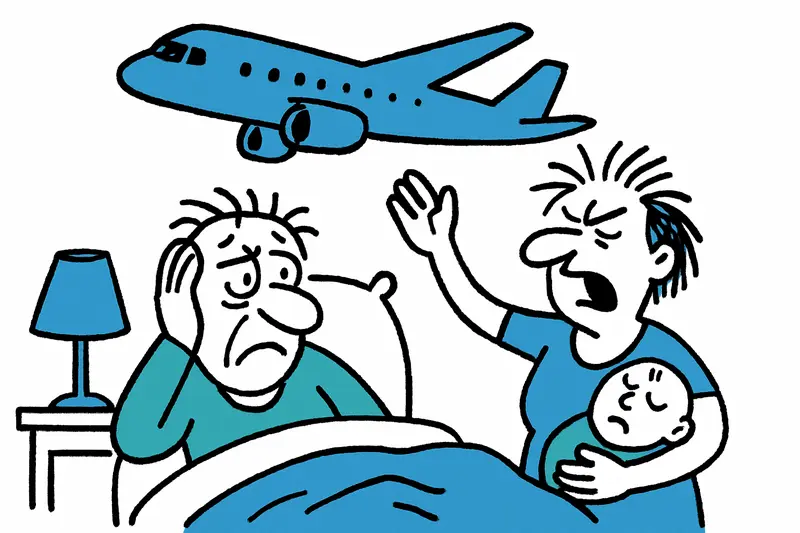
When the streets become quieter in the evening and the chirping of the crickets drifts in from the sea, many Palma residents finally expect peace. Instead, sometimes a deep thud rumbles over the balconies of El Terreno, Portixol or the Paseo Marítimo. In a new citizens' initiative, residents are now demanding a night flight ban: no take-offs or landings between 23:00 and 06:00. Their figures sound alarming: measurements inside bedrooms up to 70 decibels, outdoor peaks close to 97 decibels – and according to the initiative's estimate about 19,000 people are affected.
The key question: Does Palma need to protect the night?
This is the central question behind petitions and measuring devices. It's not just about disturbed nights, but about health: sleep disorders, increased cardiovascular complaints, concentration problems during the day. Families with small children and night-shift workers report immediate consequences. "Our baby keeps waking up, we are exhausted," says a mother from El Terreno. Such voices make clear that this is not a matter of comfort but of basic restorative needs, as reporting on Sleepless nights in Nou Llevant documents.
But a blanket ban also affects the other side: island operations. At night freight chains run, there are connections for early flights, emergencies and logistical processes that are difficult to reorganize. Airport representatives warn of economic and organizational consequences – and this is not mere rhetoric but the daily reality of an island that depends on tourism and the transport of goods.
Underexposed aspects
In the debate some points often remain unmentioned: who bears the costs of a reorganization? Can night bans be implemented in a socially just way without disadvantaging workers at the margins of society? What happens if flights do not disappear but are shifted to fringe hours so that noise exposure is merely displaced?
Furthermore, noise is not the same everywhere: take-offs are generally louder than landings, and the noise distribution depends on approach and departure routes. Island winds, such as the Tramuntana, can carry sound further; a still summer night without wind therefore feels louder than a stormy evening when the sea roars and the aircraft is hardly noticeable. Such local details must be considered in any measurement campaign. Local coverage of nighttime noise and speeding in Nou Llevant is another example of persistent urban noise concerns.
Concrete approaches instead of blanket bans
A ban from 23 to 6 is a clear demand – but there are intermediate steps that should be seriously considered: stricter noise limits near residential areas, regulated slot redistribution with financial incentives for quieter aircraft, night-preferred use of less noisy runways, better sound insulation for apartments or compensatory measures for those affected.
Technically, differentiated regulations are also conceivable: ban only take-offs, exclude certain aircraft types, or exempt night windows for medical and humanitarian flights. A binding monitoring system is important: standardized indoor measurement protocols, publicly accessible data and an independent review commission that also assesses social impacts.
Who decides – and how?
The debate is already political. Municipalities, environmental groups and citizens' initiatives are collecting signatures and preparing hearings. Politics faces a trade-off: protection of health versus economic and logistical interests. Transparent decision-making bases are needed here, not just spin. Public hearings should not only listen to statistics but to those affected: parents, nurses, night drivers, hoteliers, airport employees.
In the end there will be no easy solution. A completely silent sky from 23 to 6 would be a great gain in quality of life, yet the practical consequences are profound. A realistic and responsible approach would be a phased plan: immediate measures to reduce noise, binding measurements, financial incentives for quieter technology – and a clear timetable for further restrictions if the numbers and complaints do not decline.
I will follow the upcoming hearings and continue listening – not only to the measuring devices but to the people in the neighborhoods. Because in the end sleep is more than a question of comfort; it is the foundation for health and a functioning everyday life on this island. And a quiet summer evening in Palma, with the sound of the sea instead of turbine hum, would be a welcome gain for us all.
Frequently asked questions
Why are Palma residents asking for a night flight ban?
How loud is aircraft noise in Palma at night?
What health problems can noise from Palma airport cause?
Which parts of Palma are most affected by aircraft noise?
Is a night flight ban realistic for an island like Mallorca?
What other solutions are being discussed for Palma airport noise?
How do wind and flight routes affect aircraft noise in Mallorca?
What would a fair decision process on Palma airport noise look like?
Similar News
First Day, First Consequences: What Palma's Rent Freeze Really Means
A new decree stops a planned eviction in Palma — but what really changes for tenants and landlords? A reality check with...
When Housing Becomes a Matter of Survival: Mallorca Between Rental Frenzy and Everyday Life
The case of 87-year-old Maricarmen showed that on Mallorca many people's lives are poised between affordable and uninhab...
Autumn in Mallorca: When Melancholy Gets a Window
Why autumn quietly tightens here — and how to make use of the mood: walks, culture, candles and the light from Palma to ...
Near-miss on Lanzarote: Landing Ryanair Jet and Iberia Takeoff — what really went wrong
On Lanzarote there was a dangerous incident: A Ryanair flight (FR5910) from Dublin landed on runway 03 while an Iberia E...
Eurowings introduces new Premium Business seats on Mallorca routes
From December 1, selected Eurowings flights to Palma and other destinations will feature eight particularly generous sea...
More to explore
Discover more interesting content

Can Cap de Bou

Townhouse Lleo 72
