
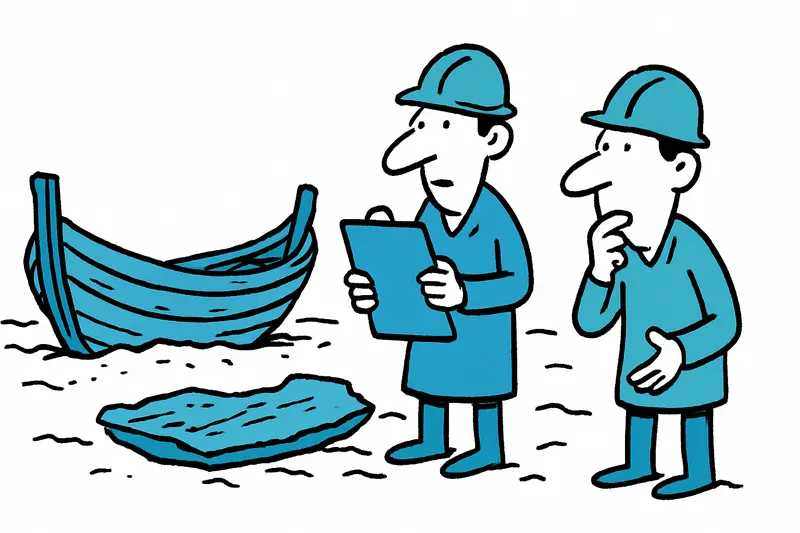
Roman Wreck off Can Pastilla: Piecemeal Recovery Raises Questions for the Island
A late Roman wreck lies off Playa de Palma — the planned piecemeal recovery offers scientific benefits but also raises open questions for Can Pastilla and the coast.
Recover carefully, but the questions grow louder
If you walk along the Paseo Marítimo in Can Pastilla in the morning, you hear the seagulls crying, the distant clatter of sunshades and the faint hum of the small motorboats. Lately a new topic has blended into the usual beach sounds: off the coast lie the remains of a late Roman ship that is now to be recovered piece by piece. Archaeologists talk about 3-D scans, lifting containers and immediate conservation measures. That sounds like precision and modernity — and like a construction site that could disturb the summer holiday season.
The central guiding question
How can scientific urgency be reconciled with the protection of the coastal economy and everyday life at Playa de Palma? This question towers above all technical details. It is not only about amphorae and planks of wood, but about parking behind the promenade, noise levels, divers who are working instead of bathing, and holidaymakers who may become curious — or annoyed.
Why piece by piece, and what does that mean in practice?
The decision for a fragmented recovery is pragmatic: the central keel is missing, so the hull cannot be lifted as a whole. Instead, secured blocks will be formed, each section documented by 3-D scan, lifted and immediately treated for conservation. Teams in wetsuits will work with pontoons, lifting slings and special containers. The National Museum of Underwater Archaeology is involved to avoid mistakes. For tech enthusiasts this means high-tech under the sun — for locals it means prolonged periods of boat noise, crane operations on the beach and increased delivery traffic on the narrow access roads.
Aspects that remain mostly out of the spotlight
An unearthed amphora makes a good postcard. What often gets overlooked is the work afterwards. Who pays for long-term conservation? Where will the tons of sediment dredged up be stored? How does the relocation of sediment affect local seagrass and mussel beds? And practically: does the regional museum have enough drying rooms, display cases and specialist staff to catalogue thousands of fragments? A promise of financial support from the island council sounds good — but concrete commitments on space, laboratory equipment and personnel are needed, otherwise expensive follow-up demands may arise.
Concrete risks
Besides bureaucratic pitfalls, there is the risk of illegal activity: finds can become targets for looters if protection is inadequate, especially once the public has access on site. Tourist crowds can disturb work areas and endanger conservation. And finally there is the seasonal question: if the intensive lifting phase falls into the high season, the potential for conflict with hoteliers, beach vendors and bathers increases.
Opportunities — if they are seized
But the recovery is not purely a burden. If organized properly it can strengthen local research, create skilled jobs and provide educational offerings: workshops in schools, internships for those interested in technology, even temporary exhibitions along the promenade outside the main season. A conserved find makes history visible and can enrich the island's cultural offerings.
Practical proposals for a successful balance
Transparent budget planning: Public budgets and detailed schedules, openly accessible to residents and business owners.
Mobile conservation stations: Temporary laboratories directly on the promenade reduce transport, create local jobs and speed up conservation.
Controlled public outreach: Instead of open excavations for onlookers: live 3‑D models, virtual tours and regular information evenings in Can Pastilla. This keeps finds protected while satisfying curiosity.
Environmental monitoring: Start with a baseline mapping of seagrass, mussel beds and fauna, then carry out daily measurements of turbidity and sediment displacement during the works.
Museum capacity check: Early assessment of available space, staff and conservation resources — if necessary support with temporary storage solutions.
Security and legal framework: Clear rules on ownership, defined responsibilities and a security concept to prevent looting.
What does this mean concretely for Can Pastilla?
The immediate consequence: planners, containers and work boats will become a fixed part of the soundscape for several months. Parking behind the promenade could be used as storage areas, delivery traffic will increase, and the hammering and whirring of lifting machines will be heard. Hoteliers hope that the critical operations will take place outside the high season or be scheduled so that sightlines and beach access are preserved. For residents and beach vendors, participating in planning rounds and information events can make a decisive difference: those who are informed early can help shape the process instead of complaining later.
A call to the community
International protocols and scientific care are in place — that is reassuring. But science on the beach needs social support. Real success only comes if the island community is involved: regular information evenings, school workshops in Can Pastilla, clear contacts at the island council and transparent insights into budgets and schedules. Only in this way can it be prevented that the past is lost between bureaucracy and deckchairs.
I look forward to the stories the wreck will bring to light. At the same time I remain curious whether it will be possible to maintain the balance between the divers' work, marine protection and the lively everyday life at the Playa.
Frequently asked questions
What is happening with the Roman shipwreck off Can Pastilla in Mallorca?
Why can't the Roman wreck off Mallorca be lifted in one piece?
Will the recovery work in Can Pastilla affect the beach and nearby hotels?
When is the best time to visit Can Pastilla if recovery work is taking place?
Can visitors see the Roman wreck recovery in Can Pastilla?
Who is responsible for conserving the Roman shipwreck finds in Mallorca?
Could the wreck recovery in Can Pastilla affect the local environment?
Why is the Roman wreck off Can Pastilla important for Mallorca?
Similar News

When coercive fines aren't enough: Could holiday rental owners soon face prosecution?
The island administration is stepping up action against unauthorized holiday rentals: high daily coercive fines up to €5...

Palma Airport on an Expansion Course — Who Decides How Much Growth the Island Needs?
Aena and Madrid are planning multi-million euro investments for Son Sant Joan and project higher capacities. Concern is ...
Who Gets Left Out? Why Overbookings Will Hit Many Mallorca Travelers This Summer
On hot check-in days at Son Sant Joan, frustrated travelers pile up. New figures from Reclamador.es show that a large sh...
When the Handyman Came: How an Engagement Ring Disappeared in Mallorca and What It Says About Trust
During a repair in Andratx a highly personal engagement ring went missing — a case that calls not only for punishment bu...

How Burglars Test Fincas in Mallorca — and What You Can Do About It
The Spanish National Police warn of a simple but effective trick: small markings on doors reveal whether a finca is occu...
More to explore
Discover more interesting content

Can Cap de Bou

Townhouse Lleo 72
