
Roof collapses in Palma — Why we are far from safe
Roof collapses in Palma — Why we are far from safe
A roof collapsed on Carrer del Sant Novici, burying an eighth-floor apartment. Why repeated warnings were apparently ignored and what is now needed: a realistic plan to protect lives.
Roof collapses in Palma — Why we are far from safe
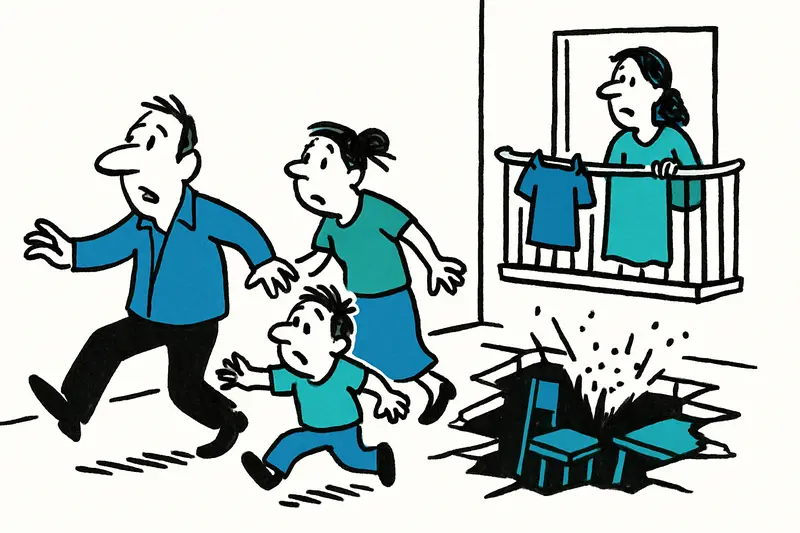
On Monday afternoon in Foners, near Carrer del Sant Novici, a loud crash was heard. Parts of a roof gave way and the ceiling of an eighth-floor apartment collapsed. The residents — a man, his wife and a child — were able to get outside at the last second. According to available information it remained a scare; there were no injuries. But the image of the collapsed dining room lingers: broken tiles, dust in the air, the neighbor with laundry on the balcony, the bells of Palma in the background and fire engine sirens echoing over the Rambla.
Key question
Why was a building whose residents apparently reported cracks and danger repeatedly still allowed to be inhabited — and who bears responsibility before people become victims?
The scene in Foners is local, but it could happen anywhere on the island: an older multi-family building, a roof structure with defects, residents who have been waiting months for a response, as happened when six venues in Cala Major were temporarily closed.
Critical analysis
Two levels must be distinguished: the technical and the organizational. Technically, cracks, settlement and corrosion can be detected if one looks. In Mallorca, past accidents, such as the ceiling collapse at Plaza de l'Olivar, have already led to investigations pointing to illegal alterations, overloading of old structures and lack of maintenance as causes. Organizationally, the incident reveals a dangerous gap: reports from residents apparently end up in queues, are not prioritized quickly and there is a lack of rapid securing measures.
It is not solely the problem of individual owners. Often several parties are involved: communities of co-owners without funds, contractors with backlogs, technical experts under time pressure, and administrations with limited resources. This problem has also manifested on large projects, for example the wall collapse at Palma Airport. When an apartment on the eighth floor suddenly lies under rubble, the system has failed on several levels — preventive control, rapid assessment, immediate securing measures.
What is missing from the public discourse
The debate too often revolves around assigning blame and legal proceedings after something happens. Hardly visible is the question of how to help residents living in unsafe buildings — financially, legally and practically. Equally little discussed is an effective reporting and follow-up system: who verifies that an on-site inspection actually took place after a report? What deadlines apply? And how are particularly vulnerable buildings identified before something collapses?
Everyday scene from Mallorca
Imagine the neighborhood: a kiosk on the corner, the vendor speaking Mallorquí with older customers, children dragging backpacks past, a cat jumping from a wall — and above it all the feeling that "tomorrow" might not be the same as "today." Conversations about bills and renovations mix with the rumor that a roof "might give way someday." This is not a play, it is everyday life.
Concrete solutions
1) Prioritization register: Municipalities must maintain a transparent register of buildings classified as at risk, including report history and deadlines for re-inspections. 2) Mobile emergency teams: A small team of structural engineers and craftsmen ready within 48 hours to make provisional securements. 3) Mandatory response deadlines: Residents' reports must be answered and logged within specific timeframes. 4) Financial support funds: Short-term emergency housing and grants for provisional securing so residents are not made homeless while legal or technical clarifications proceed. 5) Transparency on alterations: An easily accessible database of all reported structural changes helps identify risks faster. 6) Local awareness: Information in municipal bulletins and at town offices so residents know how and where to report acute dangers.
Why this is realistic
Many proposals do not require a new law but organizational will and priorities in town halls. A register and clear deadlines can be implemented with existing IT tools. Mobile emergency teams can be organized regionally and coordinated through existing fire and building authorities. A small emergency fund can be reallocated from budget items until permanent financing is arranged.
Concise conclusion
The risk of collapse is not only a technical issue — it is also an administrative problem and a social duty. Those who now only look for culprits overlook the people who cannot sleep at night because the roof above them creaks ominously. If we seriously want to prevent a happy escape from turning into a tragedy one day, we need pragmatic, quickly implementable measures. Otherwise Palma will remain a place where you have to hear the crash before anyone acts.
Frequently asked questions
What should residents in Mallorca do if they notice cracks or signs of structural damage in their building?
Are older apartment buildings in Palma more likely to have roof problems?
Can residents in Mallorca be forced to keep living in a building after reporting structural danger?
What kinds of building defects can lead to a roof collapse in Mallorca?
What should you pack if you have to leave your home suddenly in Palma?
How do Mallorca town halls usually handle reports of dangerous buildings?
Is Foners in Palma known for building safety issues?
What can Mallorca residents do if they feel their reports about building damage are being ignored?
Similar News
More water than last year: Mallorca's reservoirs breathe easier
September rain refilled the Tramuntana's reserves: overall fill around 35 percent, Cúber at 40.42 percent, Gorg Blau at ...
Three Luxury Hotels in Banyalbufar: Lots of Money, Many Questions
A Danish investor plans three exclusive accommodations in Banyalbufar — including the historic Son Valentí. The announce...
2.1 tonnes of cocaine on sailing yacht off Spain's coast – a reality check for the coastguard
A 14-metre yacht was seized with 2.1 tonnes of cocaine. Who monitors the ports, how does the international hunt succeed ...

Heat Bonus in Mallorca: 100 Euros Extra for Outdoor Staff at MarSenses
MarSenses pays employees who worked outdoors in August an extra €100 as recognition. Lighter uniforms, reduced hours for...
Renovating in Mallorca: What You Really Can Do Without Neighbour Consent
Many think they can do whatever they want in their apartment. That's partly true — but only as long as structural elemen...
More to explore
Discover more interesting content

Can Cap de Bou

Townhouse Lleo 72
