
Royal Memoirs and Mallorca: Between Anecdote and Reality
Royal Memoirs and Mallorca: Between Anecdote and Reality
In his memoirs Juan Carlos I. portrayed Mallorca as a stage — an image full of sailing yachts, state guests and family memories. But how much influence did the Crown really have on the island's development?
Royal Memoirs and Mallorca: Between Anecdote and Reality
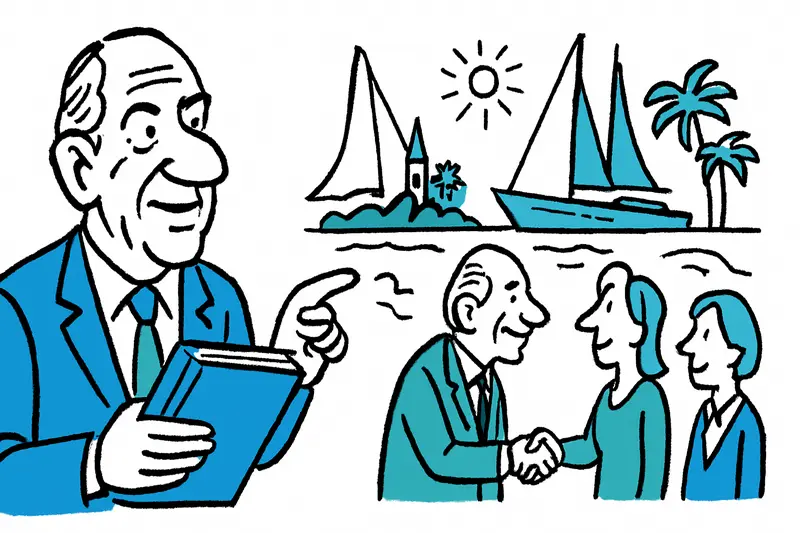
That the new memoirs of Juan Carlos I biography at Britannica, titled Reconciliación and written together with Laurence Debray, give Mallorca considerable space is no coincidence. The former king describes how, since the 1960s, he invited guests from around the world to the Marivent Palace Wikipedia page — from sailing trips with heads of state to the summer receptions he presents as contributing to Palma's international profile.
Key question
The question that arises: Do such memories form a reliable history of the island, or are they primarily a personal testimony — an attempt to affirm influence and significance from a personal perspective?
The accounts contain concrete data points: first participation in a regatta in 1969, regular summers at Marivent from 1974, the house between Palma and Cala Major, built in the 1920s by architect Juan de Saridakis. He mentions big names, sailing trips on the Fortuna and also darker chapters — a defused bomb in 1977 and a failed assassination attempt in the 1990s near the harbor. After his abdication in 2014 he is said to have completely withdrawn from the island, with only a brief appearance in 2018; since then he has preferred other places for official visits.
Those who know the daily reality here in Mallorca — the fishermen at Portixol, the morning buoy setters on the Passeig Marítim de Palma Wikipedia page, the cafés at Moll Vell — feel immediately: the island was never just the stage of a single person. Palma's rise to an international travel destination is the result of many factors: better flight connections, changed holiday patterns in Europe, the commitment of local hoteliers and entrepreneurs, the development of harbors and regatta infrastructure, as well as a long series of cultural and economic decisions by the municipalities.
The book makes no claims, nor does it deny anything. Nevertheless, it remains open how much royal receptions actually influenced structural development. A state guest aboard a yacht makes headlines, yes — but do they create airports, roads, or jobs? This distinction is part of what is often missing in public discourse.
Another question mark: the perspective of the locals. In the memoirs private memories are prominent, while voices from the neighborhood of Cala Major, dockworkers, entrepreneurs and sailing clubs are largely missing. This is not only literarily relevant but political: memory politics shapes which aspects of a story become visible.
An everyday scene helps to locate this: on a cool December morning, when the boats on the Passeig are still swinging on chains and the trash collectors push their carts, people talk less about royal anecdotes than about rent prices, parking spaces and the specific dates of the Copa del Rey regatta Wikipedia page. The regatta is more tangible for many here than any royal anecdote — it brings work for sailmakers, the hospitality sector and skippers, not just photos for the gossip columns.
What is missing in public discussion? First: empirical data on the economic effect of royal visits. Second: local voices that explain how Marivent and the yachting industry actually impact the community — positively or burdensome. Third: transparency regarding historical security issues; mentioning is good, investigation and archival work are better.
Concrete approaches to complete the picture: a municipal collection of oral histories — interviews with dockworkers, club members and entrepreneurs who have accompanied regattas and reception operations. The city council could digitize files from the relevant decades and make them more easily accessible. For the regattas it would be conceivable to create accompanying educational offerings — cheaper tickets for residents, workshops in schools about maritime professions, open harbor tours during regatta phases.
The royal family also has options to support the narrative shift: more engagement with local heritage, less secluded receptions, more visible support for smaller, charitable projects on site. That would not disprove the memoirs, but it would complete the picture.
Conclusion: the autobiography of a ruler remains, above all, personal. It can preserve memories and spark debates. But it is no substitute for documented local history. Anyone who sees the lights along the Passeig Marítim in Palma in the evening knows: Mallorca is a complex web of people, businesses and memories — royal sailing was only one of many threads. If we seriously want to know how the island became what it is, then we need more voices than a chapter in a book.
Frequently asked questions
How much did royal visits really influence Mallorca’s development?
When did Juan Carlos I start spending summers at Marivent in Mallorca?
Is Juan Carlos I’s account of Mallorca a reliable history of the island?
What does the Copa del Rey regatta mean for Palma and Mallorca?
Why is Marivent Palace so closely linked to Mallorca?
What changed in Mallorca after Juan Carlos I abdicated in 2014?
What role does the Passeig Marítim in Palma play in everyday Mallorca life?
What kind of local voices are missing from stories about Mallorca and Marivent?
Similar News
From Workshop to Luxury Villa: What a €19.5 Million House Reveals About Palma's Market
A historic town house on Carrer de la Pelleteria was converted into a 1,000-sq m residence and is on the market for €19....

FC Germania Mallorca: Why does the lead always slip away in stoppage time?
After the 1-2 at C.A. Pal ne da Tesa questions arise: are these coincidences, a shortage of personnel, or a deeper probl...
Hidden War Bunkers in Palma: Remember, Preserve, Reveal?
Beneath Palma's paving lie remnants of a forgotten shelter system from the Civil War. Consolidation, ethics and tourism ...

Death in the Gorge: Key Questions on the Safety of Rallies on the Ma-10
A Porsche plunged into a ravine during the 550 Challenge near Mortitx. Who bears responsibility, what safety gaps were r...

Eighth BAF surge: Why freight costs in Mallorca are rising now — and what it means for us
Fuel surcharges (BAF) for ferries between the mainland and the Balearic Islands rose by around eight percent in October....
More to explore
Discover more interesting content

Can Cap de Bou

Townhouse Lleo 72
