
Ryanair expands routes – what Mallorca really gains
Ryanair expands routes – what Mallorca really gains
Ryanair's announcement of additional summer connections to Mallorca sounds like relief for holidaymakers. But what does it mean for the island — and which consequences remain unclear?
Ryanair expands routes – what Mallorca really gains
Central question
Central question: More seats and new routes from Germany sound good for travelers – but does that help the island sustainably, or is Ryanair just shifting the problem from one airport to another?
Critical analysis
Ryanair has announced that it will reinstate about 300,000 seats for summer 2026 and serve eleven new routes in Germany; specifically airports such as Cologne, Niederrhein, Memmingen and Bremen are named as winners, while Berlin and Hamburg can expect further reductions. New are also connections like Friedrichshafen–Palma; in addition, more routes between Germany and Spanish destinations are to be created. The airline cites changes in German tax and fee policy as the trigger: the air traffic tax will be reduced from July 2026 and air navigation charges are to be frozen. That explains why capacities are returning. Recent coverage, such as Ryanair pulls back – what threatens Mallorca's tourism summer, discusses similar capacity shifts.
For Mallorca that means, in the short term, more supply, likely lower prices and more direct connections from regions that were previously less well connected. But supply does not automatically lead to positive effects: higher frequencies strain the airport environment, reinforce seasonal peaks and bring additional traffic to Palma and the coastal resorts.
What is missing from public discourse
The debate often limits itself to seat numbers and the joy over new direct connections. Important points are too rarely on the table: What effects do additional flights have on noise, air quality and road traffic around Son Sant Joan airport? How will feeder buses and rail connections be handled capacity-wise in the summer months? And: who pays in the long term for the urban infrastructure that is most heavily used by short-term tourism growth? Local analyses, for example Ryanair threatens further cuts – How at risk is Mallorca?, explore some of these economic risks.
Everyday scene from Palma
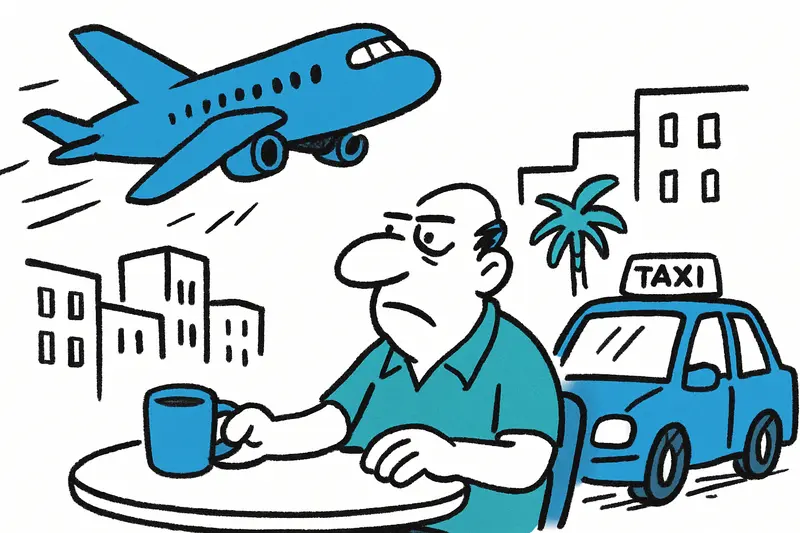
Early in the morning in front of the café at Plaça d'Espanya sits a taxi driver we know. He tells of long traffic jams at the airport access road because several aircraft are being unloaded at the same time; the shutters of the small bakery opposite rattle, a plane roars over Passeig Mallorca. Such scenes become more frequent when frequencies rise: more suitcases, more taxis, more deliveries for hotels, more rubbish on the beach. These are the directly felt consequences that do not immediately show up in figures.
Concrete solution approaches
Growth cannot be managed without rules. Some practical measures that those responsible in Mallorca and at the German airports should discuss: First, coordinated slot planning that relieves peaks instead of shifting them. Second, a dedicated charge on additional seats at peak times, the revenues of which flow into noise and air protection projects and public transport. Third, a binding modal-split plan: more capacity for shuttle buses and targeted promotion of train connections in the summer months. Fourth, a transparency obligation for airlines and airports towards municipalities: clear advance information on expected passenger flows and freight movements. Fifth, minimum standards for working conditions on the ground: more staff at check-in and security checks reduces delays and pressure on employees.
Why this matters now
The announced changes in German tax and fee policy are being interpreted by airlines as permission to grow. That may please consumers, but it leads to shifts that must be compensated locally. Experience on Mallorca shows: if infrastructure, traffic and environment do not grow in parallel, costs arise for residents and tradespeople that rarely end up in the ticket price. Earlier seasonal reductions have also been documented in Ryanair Cuts Winter Flights — a Warning Signal for Mallorca.
Pointed conclusion
More seats and new direct connections are not a free pass for the island. They are an opportunity – if politics, airports and municipalities negotiate binding rules. Otherwise Mallorca risks profiting from more flight offers in the short term while bearing the burdens in the long term. On Plaça d'Espanya this will be noticeable in more stressed delivery services, crowded taxis and noisier summer nights. Those who welcome the additional passengers should also leave them an island that works.
Frequently asked questions
Will Ryanair’s route expansion make flights to Mallorca cheaper in summer 2026?
What does more Ryanair capacity mean for Mallorca’s airport and summer traffic?
Are new direct flights from Germany to Mallorca good for the island?
Which German airports are gaining more Ryanair routes to Mallorca?
Is Mallorca likely to feel more crowded if Ryanair adds more summer flights?
What should Mallorca do if more flights bring more passengers?
Does more Ryanair traffic increase noise around Palma and Son Sant Joan?
Why does Ryanair’s expansion matter for Mallorca’s tourism model?
Similar News

Warning to Bathers: Nipping Fish in Cala Major and Other Coves — a Reality Check
In Cala Major and several beaches around Mallorca, bathers report painful “nips”. Who are the animals, why are they gett...

Rental Car Theft in El Arenal: What This Incident Reveals About Our Gaps
A teenager steals a running rental car in El Arenal, flees on foot, climbs over walls and is caught by the Guardia Civil...
Red Rope in Palma's Library: What Helps Against Selfie Tourism — and What's Missing
Palma's city library cordoned off an area with a red rope to keep selfie tourism away from reading and working activitie...
Fort San Carlos: Museum, Harbor Dispute — and a Conflict That Demands Answers
The military museum at Fort San Carlos sits right on Palma's harbor, with unexpectedly quiet rooms filled with cannons a...
Old Town Under Pressure: When a Doorway Becomes a Sleeping and Shower Place
For months a woman has been living with a parasol, a clothes rack and personal belongings next to the social welfare off...
More to explore
Discover more interesting content

Can Cap de Bou

Townhouse Lleo 72
