
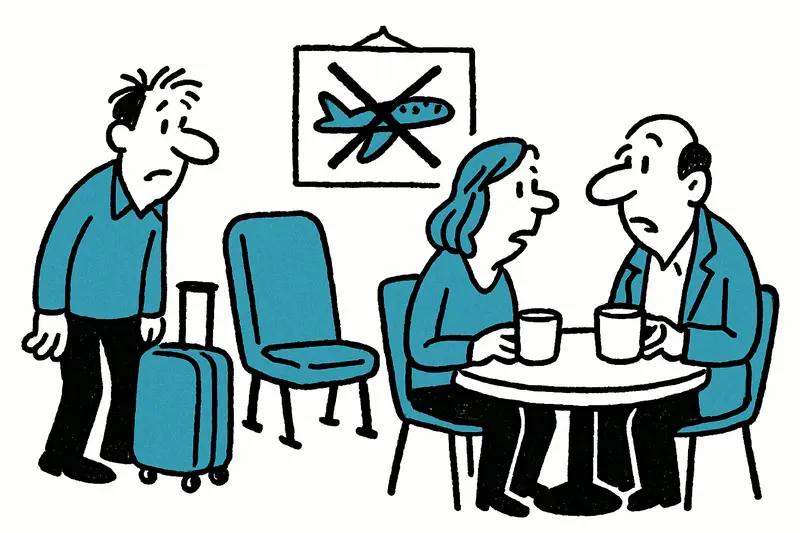
Ryanair pulls back – what threatens Mallorca's tourism summer
Ryanair is cutting millions of seats in Spain. Mallorca has not yet seen a direct collapse, but hotels, taxis and restaurants are nervously watching the coming months. What does the withdrawal really mean and which measures can help the island?
Fewer flights, loud worries on Avenida Jaime III
On a rainy morning on Avenida Jaime III, between the clinking of espresso cups and the soft hum of moped-delivering couriers, the conversation in the café revolved around news nobody here wants to hear: Ryanair is drastically reducing its offering in Spain, as reported in Ryanair threatens more cuts: What it means for Mallorca. In winter around 16 percent of capacity will be cut – more than one million seats. Details are in Ryanair threatens further cuts – How at risk is Mallorca?. Together with already announced summer reductions, the total quickly approaches nearly two million cancelled seats.
The central question
What does Ryanair's pullback concretely mean for Mallorca? The answer is not just a number. It's about accessibility, pricing and the fine interconnections of the island's economy: hotels, car rental companies, taxi drivers, restaurants and seasonal workers all depend on stable flight connections. If the low-cost carrier reallocates its capacity – away from Spain and toward Italy, Croatia and Switzerland – gaps will appear. They are not immediately visible at Palma airport, but the signals are clear: less choice for travelers, potentially higher prices and increased dependence on a few large providers.
Who falls through the net?
Smaller regional airports are most affected. Places like Santiago or Vigo will, according to plans, lose almost half their services; that shows up in fewer direct connections. For Mallorca that means indirectly: if mainland regions receive less capacity, the number of potential short-break visitors or connecting travelers transferring to the island falls. On Passeig del Born hoteliers and restaurant owners look more closely at booking data – and at their tills. Taxi drivers at the airport exchange looks when planes arrive later or do not arrive at all. This reduction is analysed in Ryanair Cuts Winter Flights — a Warning Signal for Mallorca.
Ryanair blames Aena. Excessive fees, less attractive conditions – that is the official explanation. Aena publishes its fee structure on Aena official site. That is part of the story. Airline decisions are based on several factors: the profitability of individual routes, fleet planning, staffing capacities and political frameworks. What is often missing in public debate: the chain reaction affects more than passengers. Lost flights also reduce cargo capacity, complicate staff transfers and shift seasonal labor migration patterns. Ryanair's own statements on capacity adjustments can be found in Ryanair press releases.
Concrete risks for Mallorca
In the short term, travelers have fewer choices. In the medium term, prices may rise if demand remains the same but supply falls. Hotels that rely on volume in the shoulder season could see revenue declines. If a region loses accessibility over the winter, there is a danger that regular guests change their habits – and are hard to win back.
An underestimated point: the mobility of seasonal workers. Fewer direct connections mean more complicated arrivals and departures for service staff essential to hotels and restaurants. The flexibility of tour operators and their willingness to quickly fill capacities are limited. All of this increases the risk of logistical bottlenecks on an island heavily dependent on tourism.
What could and should be done?
The solution does not lie with Aena or the airline alone. A bundle of measures is needed at the local level:
1. Aviation policy communication: The island government, hoteliers and airport operators should form a joint task force to identify short-term gaps and coordinate negotiation positions. Clarity builds trust – and creates a chance to preserve routes at risk.
2. Incentives instead of confrontation: Instead of only arguing about fees, temporary slot incentives or joint marketing initiatives could help keep seasonal routes economically viable. This is not a free pass for airlines, but a targeted infrastructure policy tool.
3. Strengthen alternatives: Improve ferry connections from the mainland, offer combined travel packages and increase cooperation with other airlines or charter companies to cushion capacity shortages. More flexibility in slot allocation and rapid redeployment of aircraft would also be useful.
4. Value instead of volume: In the long term it pays for Mallorca's economy to focus on higher occupancy and sustainable visitors – not only on cheap and numerous arrivals. Longer stays and higher quality guests patch budget holes better than pure volume.
A curious detail on the side: while some cafés are emptier, construction machines on the promenade continue to roar. The island plans its future, but it does so in an environment that reacts increasingly quickly to market shifts.
Looking ahead
Stay calm, but remain vigilant – that is the motto for Mallorca in the coming months. The withdrawal of a low-cost airline hits more than just passengers. It exposes vulnerabilities: dependence on a few providers, lack of diversification of source markets and limited short-term response options. The opportunity lies in cooperation: those who seek dialogue instead of confrontation can mitigate some of the impacts. Those who only watch risk that small gaps become permanent.
The raindrops on the avenue have now stopped. But the discussion at the tables here lingers – and it is a reminder: on an island like Mallorca, many things are ultimately decided by small, everyday connections. Flight by flight.
Frequently asked questions
How could Ryanair cutting flights affect Mallorca tourism?
Will flights to Mallorca become more expensive if airlines cut capacity?
Is Mallorca still likely to be easy to reach by air this summer?
What is the problem for Mallorca if winter flights are reduced?
How do flight cuts affect seasonal workers in Mallorca?
Why are airport fees part of the debate over Ryanair and Mallorca?
What can Mallorca do if low-cost airlines reduce their routes?
Which parts of Mallorca's tourism sector feel flight cuts first?
Similar News
Why the Striped Breams in Cala Pí Should Be a Wake-up Call
Once again bathers in Cala Pí were surrounded while swimming by small, nippy fish — some wounds bled. Time for clear rul...
Daily from New York: How Palma's Air Traffic Is Growing — and What Must Change
United will increase the Newark–Palma service to daily flights in 2027 (Boeing, 231 seats). Strong tourist numbers clash...

When Love Ends in Shards: Destruction in Son Vida and the Questions That Remain
In Son Vida a relationship dispute escalated: a woman destroyed furniture in a luxury villa, later pressed a panic butto...

Who Bears the Burden? Mallorca Between Tenant Protection and Landlord Fears
Madrid's new housing decrees strengthen tenant rights — but on Mallorca concern is growing: will the law drive small lan...
On the Edge: What Mallorca's Airport Loses If a Major Low-Cost Carrier Falters
The company that operates numerous connections from Palma to France and domestically is negotiating with creditors to re...
More to explore
Discover more interesting content

Can Cap de Bou

Townhouse Lleo 72
