
S'Escorxador: Repair funds aren't enough — what Palma really needs to do
S'Escorxador: Repair funds aren't enough — what Palma really needs to do
The city is putting €1.8 million into S'Escorxador. Good. Is that enough to wake the old slaughterhouse from its Sleeping Beauty slumber — or will it remain a neglected neighborhood with a pretty façade? A local check and concrete proposals.
S'Escorxador: Repair funds aren't enough — what Palma really needs to do
A critical assessment and concrete proposals for the former slaughterhouse
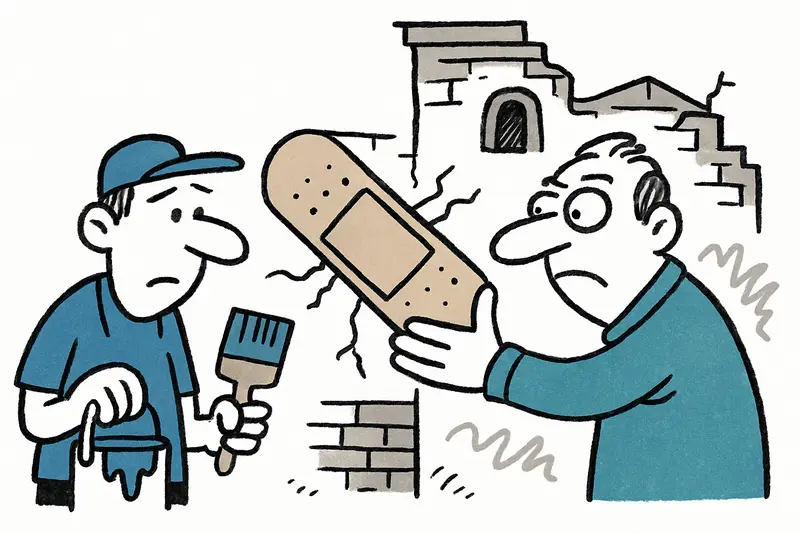
Key question: Are €1.8 million for painting, carpentry and sewage works, plus €42,000 for the health center, enough to permanently pull S'Escorxador out of its standstill — or will the amount only briefly place a band-aid over a deeper problem?
If you walk 25 minutes northwest from the center along the Blanquerna pedestrian street, you reach the area that once began as a slaughterhouse and was designed by Gaspar Bennàzar at the beginning of the 20th century. On site you immediately sense that particular mix: voices from the Casal del Barri, children flipping through books in the Llompart library, the smell of fried food from small bars like Casita del Reloj or Piscolabis and, in between, pigeons, graffiti and crumbling plaster.
The city's announcement that the works will start within an eleven-month timeframe is a clear signal. The statement that there are no major structural damages also sounds reassuring. But: the problems I observed while walking the site are far more than cosmetic. Dirty toilets, neglected garden areas, lack of cleaning, unclear operating concepts for vacant spaces — these are not tasks that can be solved solely with paint and sewer repairs; similar doubts were raised when work funding was debated at other sites such as Baluard del Príncep: Final Sprint at the City Gate – Is the Financial Boost Enough?.
Critical analysis: €1.8 million is a start, but the amount is limited. Painting and repairing doors improve appearances, yet long-term usage concepts, ongoing operating funds for cleaning and security, cultural programming, activation of the derelict Mercado de San Juan area and a strategy against vandalism incur recurring costs. If the budget planning only provides a one-off allocation, the effect will remain temporary; the scale of municipal investment programs raises similar follow-up-cost questions as noted in €624 Million for Palma: Visions, Construction Sites — and the Outstanding Bill.
Another point: responsibility and planning. It is correct that the current administration is planning the construction works; debates about the past years in which little was invested do not directly help the area. What matters is who will take responsibility for operation, cleaning, programming and small repairs once the construction works are completed. Without such a matrix of responsibilities, freshly painted walls risk looking weathered again in no time.
What hardly appears in the public debate: the question of usage rights, rental models and access. What mix of culture, neighborhood services, gastronomy and retail should live here in the future? Should the Mercado de San Juan be revived, perhaps in a reduced form with temporary stalls? Or will it remain an empty eye-catcher whose doors are rarely opened? Such decisions determine whether people from the neighborhood come regularly or only glance by.
Everyday scene: On a sunny morning Juana from the sewing course sits with needle and fabric near the Casal del Barri; next to her an older man loads his shopping into a basket after a trip to Eroski. Children run across Plaça Paris, the Ciutat cinema advertises films in Greek and Slovak on its façade — a colorful, perfectly normal neighborhood life. This normality must not be suffocated under a layer of dust and pigeon droppings.
Concrete, immediately implementable solutions:
- Short term: A clean operations pool for two years — regular toilet cleaning, daily rubbish collection and pigeon control measures. This costs comparatively little and has visible effects.
- Medium term: Develop a participatory usage concept: workshops with residents, bar operators, the library, Casal del Barri and cultural actors. Result: a masterplan with clear rental and lease rules for vacancies, flexible pop-up markets and cultural windows.
- Revive the Mercado area as a pilot project: six months of pop-up stalls, local producers, seasonal weekly markets coupled with evening events — this tests demand without risking large sums.
- Funding: Combine municipal funds with regional aid programmes, EU cultural funds and small sponsorship partnerships from the local business community. For other phase-based funding debates, see Palma launches Es Carnatge: €2.2M for first phase – is that enough?. Create transparency: a public dashboard with expenditures and a timeline reduces mistrust.
- Operation: Set up a small management unit (2–3 people) for cleaning, occupancy and programme coordination. Permanently employed staff are more efficient than purely project contracts.
What is missing from the discussion: a binding maintenance agreement and usage rules, a preventive strategy against graffiti and simple, visible signage explaining what is open and when. Lighting and seating, a few plants, repaired toilets — these immediately improve perception.
A small example that brings a lot: a simple string of lights over Plaça Paris in the evening, a weekday free film screening at the Ciutat for residents and one more market stall on Saturday morning. Such measures build familiarity and bring people back regularly.
Pointed conclusion: The money is necessary but not sufficient. What S'Escorxador needs is a package of construction measures and a clear, sustainable operating concept. Without this, the investment risks acting like a temporary patch — attractive for a short time, but not transformative in the long run. If Palma really wants to keep the area lively, politicians and administration must back up their promise to people here with organisational sense, transparent resources and small, immediately noticeable measures.
When the painter has finally applied the colour, not only should the façades look cleaner, but there should also be a plan for who comes in and out, who cleans, who organises culture and who reopens the market's doors.
Frequently asked questions
Is €1.8 million enough to revive S'Escorxador in Palma?
What kind of repairs does S'Escorxador in Palma need?
Why does S'Escorxador in Palma keep feeling half-used?
What would make S'Escorxador more useful for Palma residents?
How far is S'Escorxador from Palma city centre?
What is the Mercado de San Juan area at S'Escorxador in Palma?
What practical steps could improve S'Escorxador quickly in Palma?
Who should be responsible for S'Escorxador once the works are finished?
Similar News

When the Wallet Becomes a Danger: Attack in Peguera and Lessons for Mallorca
In Peguera, two women are said to have stolen the wallet from a 75-year-old German couple. When the victim intervened, t...
Plata stays Plata: Young people take over, Llonguets remain
A small bar on Carrer de l'Argenteria will continue: Tolo Serra hands the place over to young Mallorcans at the end of t...

Unnoticed in the Luggage Compartment: How a Boy Traveled More Than 100 Kilometers in a Team Bus
A minor traveled in the undercarriage of a team bus for more than 100 kilometers until his cries for help were heard. A ...

Cap Vermell Grand: Second Michelin Key – a Gift for the East
The Cap Vermell Grand in Capdepera has been awarded its second Michelin key. For the region this elevates the luxury off...

Eurowings lets four aircraft carry names – a friendly idea that also reaches Mallorca
Eurowings is launching a campaign: four Airbus A320s are to carry the first names of people who help others in everyday ...
More to explore
Discover more interesting content

Can Cap de Bou

Townhouse Lleo 72
