
Fire in Sa Coma: When Can People Return to Their Homes?
Fire in Sa Coma: When Can People Return to Their Homes?
A garage in Sa Coma caught fire involving a hybrid car. About 50 people remain evacuated, and power and water supplies have failed. A guide on what is missing now and how returning can be made faster and safer.
Fire in Sa Coma: When Can People Return to Their Homes?
The short question on everyone's mind: How long will the buildings remain empty and who will actually take care of repairing the damage?
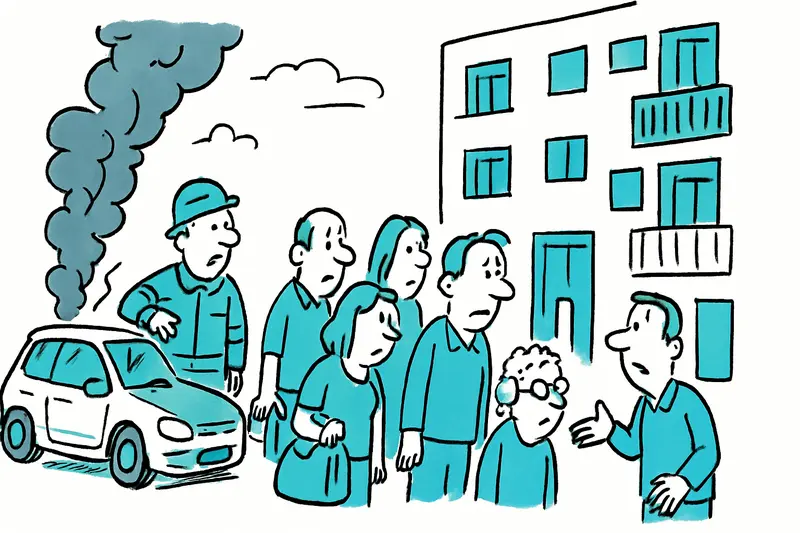
Early on Saturday morning smoke rose from an underground garage in Sa Coma after a hybrid vehicle caught fire. The fire brigade responded quickly, and teams secured the residential building with temporary supports. By Sunday it was already clear: electricity and water were gone, pipes were seriously damaged, and around 50 people had to leave their homes.
Key question: How can the community get back quickly into safe, habitable apartments — and what lessons should we draw from the incident?
The facts are sparse: about half of the evacuees were temporarily accommodated in an apartment complex organized by the Sant Llorenç municipality, at least until January 2. Why this is only a stopgap solution becomes clear when considering concrete problems: without electricity there is no heating, no elevator, no functioning pumps. Without water sanitary facilities cannot operate. For people with small children, elderly residents or people with limited mobility the situation becomes immediately harsh.
Investigations into the cause of the fire are ongoing, and similar incidents such as Flames on Camí del Far: Burning Car Raises Concerns in Sóller underline the risks posed by vehicle fires. Whether a technical defect in the vehicle, a charging error or even deliberate action is behind it remains open. It is also unclear how the garage was constructed, whether there were adequate fire compartments, or whether fire- and smoke-protection measures prove to be insufficient.
On site in recent days one could observe a mix of professionalism and improvisation. Emergency teams checked sections and units, residents waited with suitcases outside the block, an elderly woman pushed her walker behind her, children played nervously in the plaza. The wind from the sea carried the smell of burned plastic to the promenade; the bright winter light made the temporary supports visible. Conversations revolved around a simple question: who will pay for damage to apartments and electrical appliances ruined by heat or firefighting water?
What is often missing in public discussion is attention to the technical vulnerability of our homes: many multi‑family buildings in Mallorca have underground garages and shared supply lines, built at a time when e-mobility was not an issue. Hybrid and electric cars bring new risks, especially when there are no clearly separated charging zones, no adequate ventilation and no dedicated fire detectors. Emergency plans are also patchy in many residential complexes: who coordinates when the entire community is affected? Who covers the costs for emergency securing and temporary accommodation? Past evacuations in tourist areas, like Fire in hotel at Playa de Palmanova: Evacuation, no injuries — and unanswered questions, show how complex coordination can become.
Concrete proposals that help in the short term and increase safety in the medium term: First, a rapid inspection of all underground garages by specialists for fire compartments, ventilation and electric charging points. Second, binding charging regulations for e‑vehicles in residential complexes: only tested wall chargers, no improvised extension cables. Third, mandatory separate conduits for electricity and water lines so that a fire does not disable the entire supply. Fourth, more municipal emergency shelters that can be activated quickly and clear rules on who pays which costs — insurance, homeowners' associations, municipality. Fifth, information campaigns for property managers and owners: correct charging behavior, smoke detectors in garages, evacuation drills.
Many of these points can be implemented quickly in practice: a team of electrical and fire safety technicians could inspect the most critical points in garages within days; municipalities can prioritize emergency housing and provide financial aid for short-term accommodation. More difficult are structural changes to outdated buildings or reforming insurance rules — these require time and money.
Responsibility lies on several levels: the property manager for structural safety, owners for proper charging infrastructure, the municipality for disaster accommodation and inspection authorities for controls. The city administration should now communicate openly what deadlines apply and what support affected people can expect. Unclear information unsettles residents more than bad news.
A small, bitter observation from Sa Coma: while officials and firefighters supervised the stabilizing work, tourists stood on the waterfront promenade with coffees as if nothing had happened. That shows how normal the emergency has become for some — a warning sign for all of us. Similar large-scale responses have happened before, for example Fire in Port d'Alcúdia: Why the big scare is also a wake-up call for fire safety.
Conclusion: Residents' return is not just a question of repairs. It's about basic securities — water, electricity, sanitary services — and about who bears the burden in a community when something goes wrong. In the short term, those affected need clear, practical help; in the medium term we must build our living environment safer and enforce rules for new technologies. Without both, people will be kept out longer than necessary.
The coming week will show how quickly authorities and property managers act. Until then: listen, document and apply pressure — so that the temporary support soon becomes an open front door again.
Frequently asked questions
When can residents return to their homes after the fire in Sa Coma?
What usually makes a Mallorca apartment building uninhabitable after a garage fire?
Who pays for damage after a fire in an apartment block in Mallorca?
Where were evacuees from the Sa Coma fire staying temporarily?
Is it safe to charge a hybrid or electric car in an underground garage in Mallorca?
What should residents do after a fire if they have been evacuated in Mallorca?
What fire safety problems do older Mallorca apartment buildings often have?
Why did the Sa Coma fire affect so many residents at once?
Similar News
Nipping Sea Creatures: Why Bathers in Cala Major and Elsewhere Should Be Cautious
In Cala Major, bathers have reported being nipped by small fish. What is behind it, how can problems be avoided — and wh...
Forced eviction in Santa Catalina: When a 65-year-old slept in her car and showered on the beach — a question of responsibility
The story of Pilar López from Santa Catalina represents a problem affecting many Mallorcans: How can an island with a bo...
New traffic rules from October 1: What Mallorca visitors and locals need to know
From October 1, 2026, Spain will implement far-reaching changes to traffic regulations. Important for Mallorca: greater ...

More water than last year: Mallorca's reservoirs breathe easier
September rain refilled the Tramuntana's reserves: overall fill around 35 percent, Cúber at 40.42 percent, Gorg Blau at ...
Three Luxury Hotels in Banyalbufar: Lots of Money, Many Questions
A Danish investor plans three exclusive accommodations in Banyalbufar — including the historic Son Valentí. The announce...
More to explore
Discover more interesting content

Can Cap de Bou

Townhouse Lleo 72
