
Santa Catalina: Apartment as a Drug Hub – What Remains of Our Neighborhood?
Santa Catalina: Apartment as a Drug Hub – What Remains of Our Neighborhood?
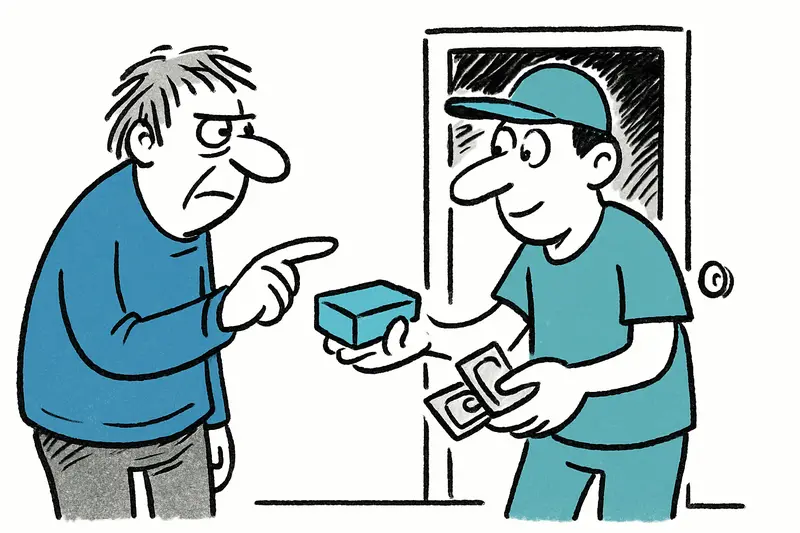
In Santa Catalina the national police arrested a man accused of operating his apartment as a drug sales point. 1.1 kg of hashish, a precision scale and €1,440 were seized. An analysis of what this means for the neighborhood and how it could be improved.
Santa Catalina: Apartment as a Drug Hub – What Remains of Our Neighborhood?
Key question
How could an apartment in the lively Santa Catalina become an open distribution point for hashish, and what needs to change so that residents and restaurateurs can regain confidence in their neighborhood?
Critical analysis
The national police recently arrested a man in an apartment in Santa Catalina after investigators observed an unusually high flow of people at one address. During the search, officers found 1.1 kilograms of hashish, divided into blocks, portions and single doses, as well as capsules, joints, a precision scale and €1,440 in small bills. According to authorities, purchases were sometimes handed over in the apartment, sometimes on the street and in nearby bars; among the customers were apparently also minors.
Scenes like this are not new — similar incidents include a vacant villa in Sa Cabaneta linked to a drug case — but what is special here is the location: Santa Catalina is a neighborhood shaped by market traders and seniors during the day and by bars and young people at night. Where the two overlap, niches form that criminal structures exploit. The rapid comings and goings at an apartment are a classic sign of dealing – and apparently this pattern was enough to expose the case.
What is missing from the public discourse
In conversations on the plaza and in cafés I often hear a focus on spectacular arrests; however, calmer operations — such as a quiet raid in Palma that followed neighborhood tips — underline how community information can make a difference. What is missing, however, is a debate about how urban planning and social factors contribute to the emergence of such distribution points. It is not only about police actions: vacant apartments, opaque rental arrangements such as illegal vacation rentals in Palma and the close everyday life in narrow, winding alleys create spaces that are hard to monitor. We also do not talk enough about how easily young people can access drugs – this is not a marginal issue but an important protection duty for schools, parents and venue operators.
Everyday scene from Santa Catalina
In the early evening, when market vendors pack up their stalls and the streetlights cast a soft yellow, the clatter of dishes mixes with the hum of small motorcycle engines. A group of teenagers leans on the corner, a server carries plates by, voices drift out of the bars. It is exactly in this transitional time, when daily life and nightlife overlap, that the brief encounters in which drugs are handed over occur – minutes that hardly attract attention but have consequences.
Concrete solution approaches
1) Better cooperation between police, municipal administration and neighborhood initiatives: information channels about suspicious activities must work quickly and anonymously. 2) Hold landlords accountable: regular checks of rental contracts and identities could make vacancy harder to use as a cover. 3) Prevention for young people: schools and youth centers in Santa Catalina need low-threshold programs for education and life skills, not just prevention brochures. 4) Training for bar and café staff: employees can learn to recognize suspicious behavior and respond appropriately. 5) Monitor cash flows and small-cash transactions: concentrations of small cash sums are an indicator; financial investigations can complement police work.
Concise conclusion
Arrests are important and right, but they are only the most visible end of a problem rooted in the everyday life of neighborhoods. Santa Catalina is not a crime scene per se, but a lively district with corners that are particularly vulnerable. Anyone who wants to change that needs more than police presence: transparent rental arrangements, engaged neighborhoods, preventive work with young people and trained hospitality staff. Only then will Santa Catalina remain the neighborhood where you pick up bread in the morning and still safely have a glass of wine in the evening.
Frequently asked questions
Why does Santa Catalina in Mallorca sometimes become a target for drug dealing?
What are the usual signs of a drug dealing apartment in Mallorca?
Can drug purchases happen in bars and on the street in Santa Catalina?
What should landlords in Mallorca do to prevent illegal use of an apartment?
Is Santa Catalina in Palma still safe to visit in the evening?
How can schools and parents in Mallorca help keep young people away from drugs?
What can café and bar staff in Santa Catalina do if they notice suspicious behaviour?
Why do small cash payments matter in drug investigations in Mallorca?
Similar News

More Electric Cars in the Balearic Islands: Sales Rise Sharply
Between January and August, 14,185 vehicles without petrol or diesel propulsion were sold — an increase of more than 40 ...
Autumn in Mallorca: What Truly Remains of Summer
The days grow shorter, the evenings cool — and yet more of summer lingers than you might think: sounds, recipes, people,...
Rescue operation at Tolleric: Why nighttime cliff parties become dangerous
A British holidaymaker fell about ten meters at the cliffs of Tolleric during the night, later climbed back up and was r...
Car accident on the MA-1: Mother and daughter on a bicycle struck by a fellow countryman – Who protects cyclists here?
On the MA-1 between Portopí and the Cala Major exit, a mother and her daughter on a bicycle were struck by a car. A para...
Smoke over the UIB: Who is responsible for the fire on the roof?
On Saturday afternoon a fire broke out on the roof of the Arxiduc Lluís Salvador building at the University of the Balea...
More to explore
Discover more interesting content

Can Cap de Bou

Townhouse Lleo 72
