
Court ruling after brawl in Magaluf: What's missing in dealing with nighttime violence?
Court ruling after brawl in Magaluf: What's missing in dealing with nighttime violence?
A British tourist was sentenced to six months in prison and a €240 fine for punching a Guardia Civil officer in Magaluf. The prison sentence was suspended — we ask: Is that enough of a signal?
Court ruling after brawl in Magaluf: What's missing in dealing with nighttime violence?
Key question: Is a suspended prison sentence an adequate response to assaults in Mallorca's nightlife districts?
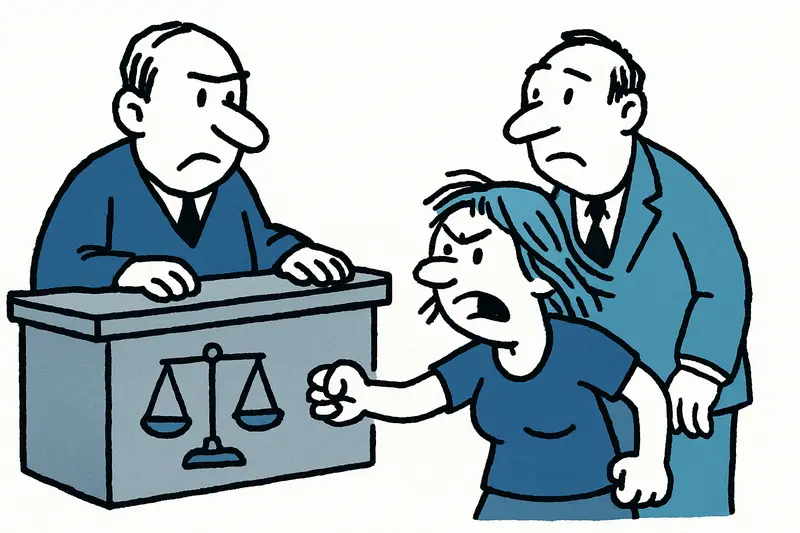
In the early hours of an August day in 2025, an altercation in front of a nightclub on the party strip Punta Ballena in Magaluf escalated. A young British woman insulted officers of the Guardia Civil, pushed one policeman and struck a second with a punch. The injured colleague suffered an abrasion on his face; the woman was arrested. At the criminal court in Palma she accepted a guilty plea for assault and minor bodily injury. The court sentenced her to six months in prison and a €240 fine. However, the prison term was suspended as part of an agreement between defense and prosecution; the condition is a two-year probation period without new offenses.
Briefly analyzed: The court followed a typical procedure in cases with comparatively minor injuries and a confession. The sentence is formally imposed, but in practice the prison term becomes a suspended sanction. For residents and workers in Magaluf, who must tolerate insults, jostling and occasional fights night after night, the outcome often feels like a weak deterrent against the recurrence of such incidents.
What is often missing in public discourse is an honest inventory of how tourism, club operations and public safety interact on weekends. It's not just about individual perpetrators or single verdicts. It's about routines: overcrowded taxis on Calle Punta Ballena, bouncers forced to balance hospitality and enforcement, and sleepless residents who hear the noise until morning. These places shape the image of Mallorca on many travel forums; incidents such as Magaluf after the beach discovery: When partying becomes a danger zone show the structural dimension.
A scene from everyday life: night shifts end, the bus to the beach fills with hungover guests, streetlights cast cold light on discarded cups, a security guard sweeps the corner in front of the club while uniformed police check the situation. This is what the aftermath of such incidents looks like — not only in court, but at six in the morning, when cleaning crews and shift workers start their day, as in Riot in Magaluf: TV out the Window, Room Like After a Storm — What Now?.
Concrete approaches that go beyond single-case penalties: 1) Better documentation and faster reporting lines: Clubs could be required to secure camera recordings and set up short reporting chains so incidents are reliably documented; recent brawls such as Brawl at Playa de Palma: Why a verbal exchange could have ended fatally underline this need. 2) Training for bouncers and night staff in de-escalation techniques as well as clear reporting protocols to police and health services. 3) Multilingual prevention information for visitors, visible at entrances, in taxis and in hotel information — simple rules, points of contact, phone numbers. 4) Targeted sanctions: a combination of fines, community service in the municipality and mandatory de-escalation courses for physical assaults could be more deterrent than merely suspended sentences. 5) Strengthened cooperation between municipalities, tourism associations and police to concentrate increased presence at hotspots for limited times and involve accommodation providers.
What remains critical: Those who work on site — bartenders, cleaning staff, taxi drivers — experience the consequences every day and feel resignation when perpetrators return; incidents such as Magaluf: Escalation at the Bus Stop — What the Incident Reveals About Safety and Civil Courage illustrate the point. A court verdict that orders probation instead of prison is legally understandable and relieves the prison system in the short term. For the neighborhood, however, the signal needs to be stronger: not only threats of harsher punishment, but prevention and clear everyday procedures.
Conclusion: The case in Magaluf shows a gap between legal proportionality and the expectations of those who work and live in the nightlife districts. If we want such incidents to become less frequent, it takes more than individual verdicts: binding measures in clubs, better documentation, mandatory training and coordinated actions by authorities. Only then will noticeable change occur for the nights at Punta Ballena and similar spots on the island.
Frequently asked questions
Why do nightclub fights in Magaluf often end with suspended prison sentences?
What is the nightlife like in Magaluf on Punta Ballena during peak season?
Is Magaluf safe at night for visitors and people working there?
What should I know before going out in Mallorca’s party areas?
How do police and clubs deal with violence outside nightclubs in Mallorca?
Why do residents in Magaluf complain about nightlife problems so often?
What kind of penalties can someone face for assaulting police in Mallorca?
Does Mallorca need stricter rules for nightlife hotspots like Magaluf?
Similar News

More Electric Cars in the Balearic Islands: Sales Rise Sharply
Between January and August, 14,185 vehicles without petrol or diesel propulsion were sold — an increase of more than 40 ...
Autumn in Mallorca: What Truly Remains of Summer
The days grow shorter, the evenings cool — and yet more of summer lingers than you might think: sounds, recipes, people,...
Rescue operation at Tolleric: Why nighttime cliff parties become dangerous
A British holidaymaker fell about ten meters at the cliffs of Tolleric during the night, later climbed back up and was r...
Car accident on the MA-1: Mother and daughter on a bicycle struck by a fellow countryman – Who protects cyclists here?
On the MA-1 between Portopí and the Cala Major exit, a mother and her daughter on a bicycle were struck by a car. A para...
Smoke over the UIB: Who is responsible for the fire on the roof?
On Saturday afternoon a fire broke out on the roof of the Arxiduc Lluís Salvador building at the University of the Balea...
More to explore
Discover more interesting content

Can Cap de Bou

Townhouse Lleo 72
