

Why Apartments in Mallorca Are Becoming Even More Expensive — and What Can Help
Rising construction costs, scarce housing in Palma and foreign buyers are driving up prices. A sober assessment of what is missing and which measures could actually be effective.
Why Apartments in Mallorca Are Becoming Even More Expensive — and What Can Help
Key question: Which levers are missing so that locals don't get left behind?
Early morning on the Passeig Mallorca: delivery vans honk, construction workers lift scaffolding, and the smell of strong coffee drifts from a café. At the same time, listings for apartments continue to rise — not only along the coast but increasingly in Palma, as seen in Buying and Renting in Mallorca: Why Prices Are Pushing Locals to the Edge — and What Could Help Now. The picture of the housing market is simple and painful: demand is high, supply scarce, and the costs of new construction and renovation are climbing.
Looking at the problem soberly quickly leads to the drivers: global crises push up energy and raw material prices, supply chains have become more vulnerable, and diesel and oil-based building materials are making projects more expensive. These factors feed directly into construction costs — and thus into purchase and rental prices. Added to this are local bottlenecks: too few building permits, often multi-year approval procedures, and a shortage of developable land, issues examined in Balearic Islands in the Price Squeeze: Who Can Still Afford Mallorca?. Palma is growing faster than infrastructure and the construction sector can respond; estimates suggest the actual population could be significantly higher than the official figure, creating additional pressure.
In this mix, foreign buyers act as a stabilizing but also price-driving factor: about a quarter of transactions involve non-residents. That keeps demand high, even if buyer groups like Germans are more cautious today than before. At the same time, the island attracts wealthier buyers in uncertain times as a "safe haven" — the consequence: more demand for longer stays and permanent residences, and less housing for residents with middle incomes, a divide documented in Sky-high prices, tents, empty promises: Why Mallorca's housing crisis is no longer a marginal issue.
Credit is available, but selective. Banks require higher equity ratios, good project planning and stable permitting foundations. That opens space for alternative financiers who step in for certain projects — often more flexible, but also with higher costs and shorter time horizons. For classic, price-capped housing projects, this remains a hurdle.
What often gets too little attention in the public debate
Discussion often revolves around assigning blame: investors, tourism, central government. What is rarely sufficiently illuminated are three sober but decisive points: first, the cost structure of construction projects — not just material prices, but logistics, shortages of skilled trades and energy-efficiency requirements push the numbers up. Second, planning and approval processes: delays multiply costs; many procedures are not digitized or standardized. Third, there is no realistic strategy for vacant stock: apartments that are unused could be brought back to the market with proper incentives.
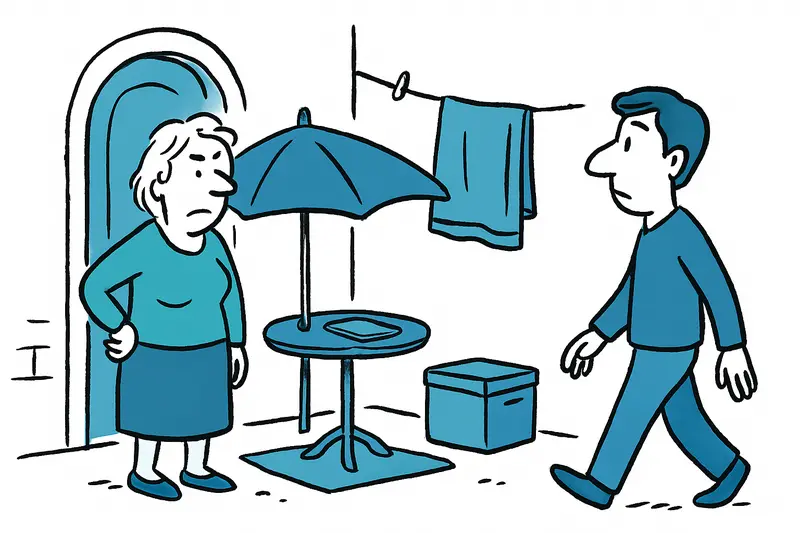
An everyday scene that makes this tangible: on a narrow side street in El Terreno a multi-family building has stood empty for years, windows barred, grapevines on the façade. Opposite, a tradesman's van is parked; the older neighbor tells how his grandchildren now have to live far outside because rents are no longer affordable. This is not an isolated case — it echoes down many streets of Palma, and the squeeze on cheaper shared rooms is explored in When the Shared Flat Room Becomes a Luxury: Palma Under Pressure.
Concrete solutions — pragmatic and implementable
1) Speed up and standardize approvals: clear deadlines, digital workflows, blanket checks for simple infill developments. Time is money — the shorter the procedures, the smaller the calculation risks for affordable housing.
2) Establish municipal land banks: promote urban and community interim uses, reserve land specifically for price-bound housing and offer long-term affordable lease models.
3) Prioritize renovation over new builds: tax incentives for owners to renovate vacant apartments and bring them back to the market. Link subsidized loans with bonus terms for energy-efficient modernization.
4) Financing bridges for social housing: state or municipal guarantee instruments that take the risk off banks, combined with transparent usage and purpose restrictions.
5) Promote housing models that reduce turnover: cooperative housing, tenant cooperatives, models with price caps and continued management for at least 10–20 years.
6) Regional relief through mobility: improve connections to suburbs and neighboring towns so that the housing shortage is not concentrated in Palma alone. That reduces pressure on central urban locations.
Brief and pointed
Mallorca is not an isolated small piece: global wars, energy prices and financial markets impact local structures directly — an explosive mix. There is no simple solution, but practical levers that can have an effect: reduce bureaucracy, use land strategically, reactivate vacant apartments and close financing gaps in a targeted way. That requires courage — from politicians, municipalities and also investors. Those who hesitate now will pay later with higher social costs.
On the street the traffic keeps buzzing, people sit in the sun on the plaza. The island will not become less lively — but without decisive measures, more and more residents will lose the feeling that they can stay here long-term. And that would be a loss Mallorca cannot afford.
Frequently asked questions
Why are apartments in Mallorca getting more expensive right now?
What makes building new housing in Mallorca so difficult?
Are foreign buyers pushing up Mallorca property prices?
Can empty apartments help ease the housing shortage in Mallorca?
What housing solutions are being suggested for Mallorca?
Is Palma more affected by the housing problem than other parts of Mallorca?
What can Mallorca residents do if they are being priced out of central Palma?
Why do banks make it harder to finance housing projects in Mallorca?
Similar News

Warning to Bathers: Nipping Fish in Cala Major and Other Coves — a Reality Check
In Cala Major and several beaches around Mallorca, bathers report painful “nips”. Who are the animals, why are they gett...

Rental Car Theft in El Arenal: What This Incident Reveals About Our Gaps
A teenager steals a running rental car in El Arenal, flees on foot, climbs over walls and is caught by the Guardia Civil...

Red Rope in Palma's Library: What Helps Against Selfie Tourism — and What's Missing
Palma's city library cordoned off an area with a red rope to keep selfie tourism away from reading and working activitie...

Fort San Carlos: Museum, Harbor Dispute — and a Conflict That Demands Answers
The military museum at Fort San Carlos sits right on Palma's harbor, with unexpectedly quiet rooms filled with cannons a...
Old Town Under Pressure: When a Doorway Becomes a Sleeping and Shower Place
For months a woman has been living with a parasol, a clothes rack and personal belongings next to the social welfare off...
More to explore
Discover more interesting content

Can Cap de Bou

Townhouse Lleo 72
