

Santa Catalina: Who Owns the Neighborhood? Between Mills, Market and Lifestyle
From an industrial quarter to a magnet for cafés, expats and holiday rentals. Who benefits — and who is left behind? A look at the history, everyday life and possible countermeasures.
Santa Catalina: Who Owns the Neighborhood? Between Mills, Market and Lifestyle
Key question: Who shapes the face of Santa Catalina today — the people who have lived here for generations, or those who buy, renovate and rent out on a short-term basis?
History you can still see in the walls
Santa Catalina was not always the corner of avocado toast and designer lamps. Maps from the 17th century already show mills around the district; over the centuries the area developed through crafts and industry. Archaeologist Raúl Guardiola Navarro from the historian collective Cultura Ufana points out that the area grew from the 14th century and that during the 19th-century industrialization several businesses — from rope and glass production to Mallorca's first grain mill — were established here. Passing the market you can feel these layers of the city: old stones, narrow lanes, and weathered facades that carry stories.
The market as heart — and as a benchmark
The Mercat de Santa Catalina is the focal point. For many residents it is more than a place to shop; it is a meeting place, a workplace and an anchor of identity. Business owners like Thomas Grasberger, who has run a bakery opposite the market hall since 2018, see this as a protective shield for the neighborhood: as long as the market keeps its function, a piece of everyday life remains. At the same time he notices that the patience of many long-time residents is dwindling — not only because of the tourist flows, but because the rhythm of the neighborhood is changing.
Between memory and reality
Some voices come from family businesses rooted in Santa Catalina for generations. Pep Amengual, born in 1954 and once the operator of a traditional bakery, recalls unpaved streets, craftsmen and neighbors who used to sit outside in the evenings. That scene has dissolved: today there are full tables in front of bars, delivery vans honking early in the morning, and multilingual conversations shaping the soundscape. The artist Tatiana Sarasa, who has worked here for about 15 years, describes the neighborhood as "tidier but sterile" — an observation many share: a visual makeover cannot simply replace the social fabric.
A concrete conflict
At present one case is causing friction: a family on Pursiana street complained about a foreign investor who bought several apartments and allegedly used them as holiday rentals and carried out structural changes. The buyer, by contrast, says he can present inspections and existing permits. The dispute is symptomatic: it's not just about individual errors but about power relations in the housing market, legal certainty and the question of how we control urban space.
What is often missing in the debate
The public discussion stays too focused on individual cases and appearances. Data on the share of long-term rental housing versus holiday rentals is missing, as noted in When the Neighborhood Gives Way to the Market: Paths Out of Mallorca's Housing Shortage. Voices from craftsmen, cleaning staff, market vendors and pupils are too rarely heard. Also underexposed: the role of financing models that attract international investors, as discussed in Who Owns Palma? When Luxury Quietly Repaints the Working-Class Neighborhoods, and the weaknesses in municipal oversight, for example in the registration of holiday rentals or in enforcing building permits.
Everyday scene
A morning in Santa Catalina: the market hall smells of coffee and fried fish, vendors call out prices, a delivery worker pushes a cart over the cobbles, a tourist asks in English for the best place for tapas. On the opposite side of the street an elderly neighbor sits on a chair in front of her door, silently watching as a real estate agent prepares an apartment for viewings. This coexistence is fragile and sometimes feels provisional.
Concrete proposals for local politics and neighborhood action
- Mandatory transparent owner registry with access rights for neighborhood associations and the municipality.
- Stricter controls and sanctions for illegal holiday rentals; swift closure orders instead of years-long proceedings.
- Quotas for long-term rental apartments and obligations to include socially subsidized housing in new developments.
- Support for traditional trades: rent subsidies or tax relief for craft businesses and local producers.
- Pilot project 'Mercat Local': designated market times or stalls reserved primarily for local producers.
- Promotion of collective ownership models such as community land trusts so that property does not become entirely speculative.
Conclusion
Santa Catalina stands at a crossroads. The stones of the old mills and the voices of the market sellers speak of a city with roots. If the administration, residents and local businesses do not act now, a lively neighborhood risks becoming a backdrop: pleasant to look at but empty in substance. The challenge is less to stop change than to shape it so that the people who live and work here remain part of the future.
Frequently asked questions
What is Santa Catalina in Mallorca known for today?
Why is the Mercat de Santa Catalina so important to the neighborhood?
Has Santa Catalina in Mallorca changed a lot over the years?
Is Santa Catalina in Mallorca still a good place for local everyday life?
What is the housing problem in Santa Catalina, Mallorca?
Can you still find traditional businesses in Santa Catalina, Mallorca?
What does Santa Catalina look and feel like in the morning?
What should local authorities protect in Santa Catalina, Mallorca?
Similar News

Are the Balearic Islands the Southern Border of Europe? A Reality Check on Immigration
The Balearic Islands are again calling for EU aid after a sharp rise in arrivals by sea. Conflicting priorities between ...

"Expensive chaos" and many open questions: What clients can do when a lawyer suddenly stops responding
Several clients complain that a well-known German lawyer in Mallorca has been unreachable for months. Key question: What...

TV tip: 'The Last Problem' — Mallorca as the setting of a classic crime
A classic whodunit on Mallorca: A new miniseries set in spring 1959 brings storm, an isolated hotel and a dense web of s...

Nipping Sea Creatures: Why Bathers in Cala Major and Elsewhere Should Be Cautious
In Cala Major, bathers have reported being nipped by small fish. What is behind it, how can problems be avoided — and wh...
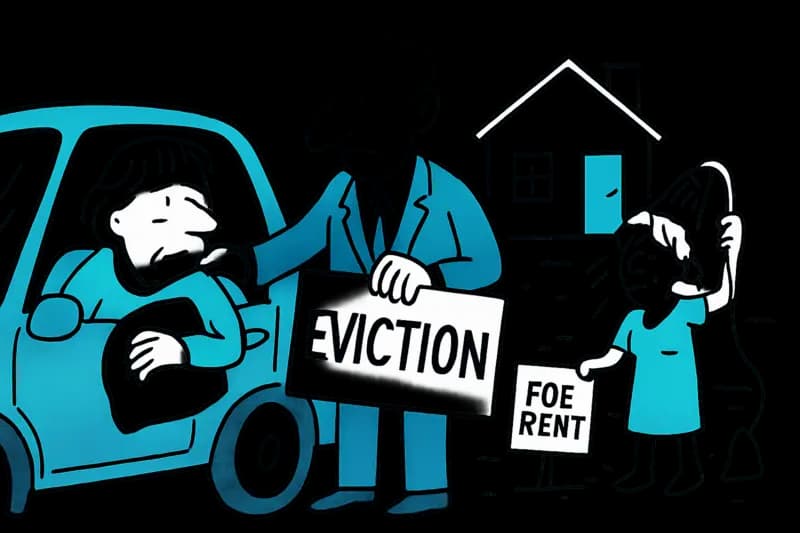
Forced eviction in Santa Catalina: When a 65-year-old slept in her car and showered on the beach — a question of responsibility
The story of Pilar López from Santa Catalina represents a problem affecting many Mallorcans: How can an island with a bo...
More to explore
Discover more interesting content

Can Cap de Bou

Townhouse Lleo 72
