
Serial offender in Palma's parking garages: 68 cases — how could this happen?
Serial offender in Palma's parking garages: 68 cases — how could this happen?
After a series of break-ins in garages and cellar units a suspect is in pre-trial detention. A reality check: Why did the series remain undiscovered for so long, and what must residents do differently now?
Serial offender in Palma's parking garages: 68 cases — how could this happen?
Key question: How could a single person apparently break into underground garages and cellar compartments across several Palma neighborhoods for weeks without the series being stopped sooner?
The facts are clear: a man was arrested at the end of August and investigators attribute a total of 68 alleged thefts to him. The tally resulting from the investigations reads concretely: 48 break-ins into vehicles, 18 thefts from cellar compartments, two cars reported stolen and one stolen motorcycle. The trail of the crimes ran through several districts of Palma, namely sa Teulera, Cas Capiscol, Son Rapinya, Son Damató and Alfonso el Magnánimo. According to authorities the series began in early August; in the middle of the month there was already an arrest in Manacor for similar offenses, before the man was finally re-arrested on August 28. A judge ordered pre-trial detention.
That is the sober chronology. But anyone who walks Palma's streets daily hears other signals: the click of a parking gate in the evening, a bicycle scraping against a building wall, neighbors murmuring about a pedestrian door left open. Such small observations add up — and this is exactly where the criticism begins.
Critical analysis: weaknesses and procedures
First: many private parking garages are only rudimentarily protected against people. An access for pedestrians that is constantly open, a gate that does not close properly, or faulty lighting quickly turn a secure parking spot into an invitation. Second: keys, remote controls or valuables visible in the car greatly lower a perpetrator’s inhibitions. Third: the linking of reports. Investigators had to merge numerous reports first to recognize a pattern — that took time.
Added to this is the suspect's mobility: indications suggest that he sometimes had no fixed residence and was at times active outside Palma and off the island. Someone who operates without a fixed location complicates manhunts because places, times and crime patterns vary.
What is missing from the public debate
The debate often focuses solely on arrest and detention. Too little is said about: the technical condition of parking garages, the responsibility of homeowners' associations, the routine neglect of small security defects and the question of how quickly individual reports are consolidated into a joint investigative case. Who is responsible when the access gate has been sticking for months — the property manager or the municipality?
There is also a lack of a clear breakdown of the times of day and the perpetrator’s exact methods. Such information would help residents recognize patterns of behavior and respond more deliberately.
Everyday scene from Palma
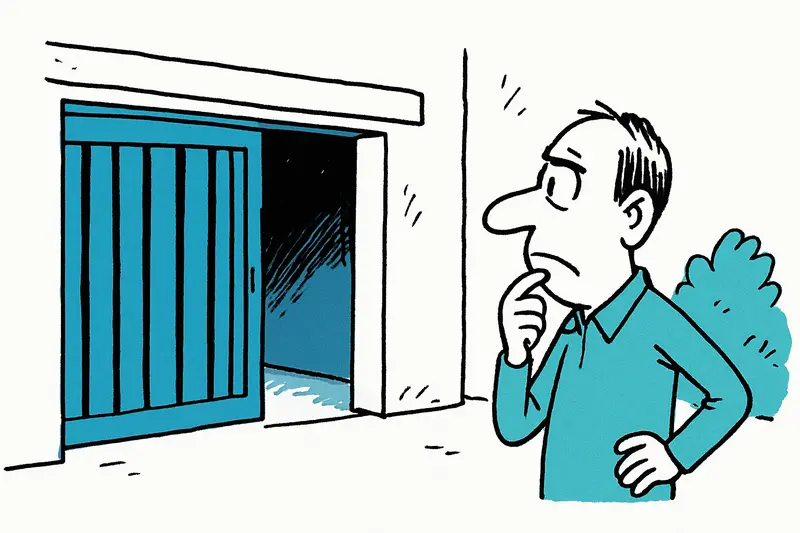
A picture: It is early evening in Son Rapinya, the air smells of grilled fish and freshly ground coffee. In front of the apartment block an older man stops and watches the automatic gate of the parking garage close slowly — not completely, a gap remains. He mutters the name of the property manager, the report he filed in his head a week ago. Such moments are everyday life on the island; hardly anyone thinks that this is exactly where a series begins.
Concrete approaches to solutions
1) Immediate measures for residents: When leaving the car, wait until the gate has fully closed; never leave keys, remotes or visible valuables in the vehicle; always lock pedestrian doors. If something seems suspicious: call 091.
2) For homeowners' associations and managers: Regular maintenance checks for gate systems and lighting; simple mechanical improvements such as additional locks on pedestrian doors; combined measures of lighting, solar cameras at entrances and clear access control. A shared list with vehicle and key descriptions relevant to the series can save investigators time later.
3) For local politics and police: Better interfaces for merging similar reports; temporary police patrols in affected neighborhoods during night hours; public information campaigns that specify concrete rules of conduct — not just general appeals. It would also be possible to consider subsidies for small technical security upgrades in older residential complexes with limited budgets.
What residents can do immediately
Check your garage tonight: Does the gate close properly? Does the light work? Put a short list with license plates and distinguishing features in your neighbor’s mailbox. Talk to each other — neighborhood networks are more practical and direct on Mallorca than almost anywhere else.
One last point: Pre-trial detention does not mean guilt, but it interrupts a possible continuation of the offenses and secures evidence. The police have thus sent a signal. Nevertheless, the question remains how many crimes could still have been avoided if technology, management and neighbors had cooperated earlier.
Conclusion: This series has shown that crime runs along many small weaknesses — an open gate, a visible key, too little exchange between residents and investigators. If we want to make the island safer, we must consistently plug these small gaps. Son Rapinya, Cas Capiscol or Alfonso el Magnánimo — it only takes one gap left open.
Frequently asked questions
What happened in Palma's parking garage theft case?
Why are Palma parking garages vulnerable to break-ins?
How can residents in Mallorca reduce the risk of car thefts in parking areas?
What can homeowners' associations do to improve parking security in Palma?
How should authorities respond to similar theft patterns in Mallorca?
Why is there a need for clearer timing and methods in Palma’s case?
Could similar garage thefts happen in other Mallorca neighborhoods?
What role does technology play in reducing parking thefts on Mallorca?
Similar News

Closing 2026 at Ballermann: Parties, Prices and the Quiet Questions Afterward
Megapark, Bierkönig and MK Arena have announced their closing dates. Good news for partygoers — but rising prices and th...
Phone on the lap? Mallorca and the new AI super-cameras — more control or less trust?
The new generation of traffic cameras detects roadside phone use and seatbelt violations in milliseconds. A technical op...

Pool Boom in Mallorca: 23 New Pools per Week — and What Now?
According to an environmental study, 10,680 new swimming pools were built in Mallorca between 2015 and 2024. What does t...
Money after death: How safe are seniors at home?
In Artà a 61-year-old caregiver is suspected of having withdrawn €600 twice from the account of an 87-year-old German wo...

"Fifth Season" in Port d'Andratx: A glass-bottom pool that makes passersby stop
An unusual superyacht with a dark hull and a partially glazed infinity pool is currently at the Yacht Club of Port d'And...
More to explore
Discover more interesting content

Boat Tour with BBQ along Es Trenc Beach
Private transfer from Mallorca Airport (PMI) to Pollensa
