
Shielded and Unnoticed: How Shielded Bags Burden Retail on Mallorca
Shielded and Unnoticed: How Shielded Bags Burden Retail on Mallorca
In Palma, people were again caught smuggling goods out of stores using special shielding bags. Key question: How should retailers, security and the judiciary respond? A reality check with solutions.
Shielded and Unnoticed: How Shielded Bags Burden Retail on Mallorca
Key question: Why are today's security systems no longer sufficient — and what can the island do about it?
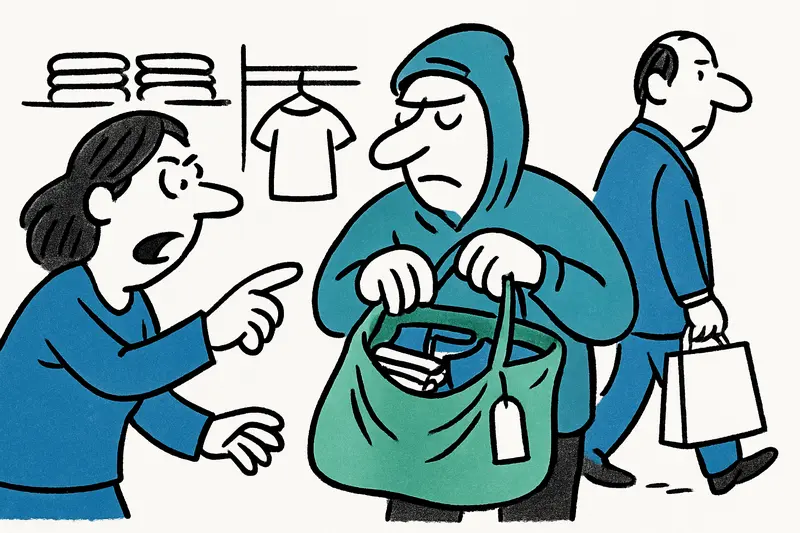
Late in the evening on Calle Cardenal Rossell, in front of the entrance to Fan Mallorca Shopping, there is usually the noise of kiosks and checkouts, children laughing and the rustle of plastic bags. It was there that security intervened: two women, aged 18 and 28, were stopped at the end of last week as they tried to leave a store with purchases without paying. Staff found clothing in their bags with price tags still attached. The bag itself was lined with a material that prevented the alarm systems from triggering when leaving. The value of the discovered goods was estimated at €161.87. The police opened an investigation; the bags were confiscated — similar large seizures were reported elsewhere, for example Packages Full of Counterfeits: Van with Over 700 Fakes Stopped in Palma.
This is not an isolated case: only days earlier similar raids using comparable methods became known, when two men aged 30 and 32 were caught. The tactic is simple: items remain on the body or in a so-called shielding bag that bypasses security scanners. For shop owners this means: stock is missing, inventory is distorted, and the atmosphere among staff and customers deteriorates. Authorities have also uncovered large caches in operations such as Five Containers, One Message: Raid at Palma's Cathedral Shows the Limits of Control.
Critical Analysis
The technology of store security is older than the shielding tricks. Sensors react to magnetic tags or other detectors. If the signal is shielded, alarm systems remain silent. Shops, especially smaller boutiques in the mall and in the old town, are particularly vulnerable to such organized methods because they have less staff or limited security infrastructure. Moreover, the damage goes beyond the mere value of the goods: sales assistants feel less safe, regular customers may lose trust, and operating costs rise — for example through additional measures or insurance premiums.
It is important to emphasize: the police pursue these cases and initiate proceedings. In the cases described, the bags were seized, reports were filed and records were sent to the competent investigating court; similar procedures followed the Palma: Van with 700 Counterfeits Seized — Controls in Focus case.
What Is Missing from the Public Debate
The debate often reduces to outraged headlines and shifting responsibility between shop owners, security services and the police. Preventive measures that do not further burden store staff, and systemic responses to organized petty crime, receive little attention. Also rarely discussed are the social backgrounds. Who is behind the acts — opportunistic offenders, organized groups, repeat offenders? Without more detailed figures and analyses much remains speculation.
Everyday Scene from the Island
Imagine the scene: Friday evening, the sun has just left the Passeig, someone is pushing a stroller in the mall, a sales assistant is advising a customer in front of a shop window. A sign with opening hours is clearly visible, next to it two security guards who pay more attention to lost property than to subtle manipulations. The sounds are suddenly interrupted by a brief exchange of words — “Stop, stay there” — and routine turns into an interrogation. Such moments leave traces: employees' nerves, suspicious looks from customers.
Concrete Approaches
1) Better mix of technologies: In addition to classic tags, stores can rely on several independent systems — RFID combined with optical recognition and gate monitoring. No technology is perfect, but a mix raises the barrier.
2) Training and staff reinforcement: Sales assistants and security services need clear rules of conduct and de-escalation training. Often there is no time for preventive action because staff are engaged in other tasks.
3) Cooperation instead of blame-shifting: mall management, shop associations and the police should hold regular situation meetings and systematically evaluate incidents to recognize patterns.
4) Deterrence through visible measures: well-placed cameras, clear notices in the shop, visible presence of security personnel at critical times often work preventively — without deterring customers if implemented sensitively.
5) Legal tightening and faster processing: When proceedings are handled promptly and fines or criminal proceedings have real consequences, the repeat rate decreases. However, this requires personnel in the judiciary and police, not media promises.
Conclusion
The incident on Calle Cardenal Rossell shows that shoplifting today is no longer just a matter of an individual offender. It's about technology, organization and prevention — and about the everyday feeling of safety that shoppers should experience. Shop owners, security services and authorities must work together differently. If the island takes the problem seriously, the holes in the safety net can be plugged. Not a quick magic solution, but a practical path: less finger-pointing, more coordinated practice.
Frequently asked questions
Why are shoplifting alarms sometimes not triggered in Mallorca stores?
Is shoplifting with shielding bags a growing problem in Mallorca?
What can Mallorca shop owners do to reduce shoplifting without affecting customers?
Why does shoplifting hurt Mallorca retailers beyond the value of the stolen goods?
What should staff in Mallorca stores do if they suspect someone is using a shielded bag?
Why are smaller boutiques in Mallorca especially vulnerable to this kind of theft?
Where in Mallorca did the recent shielded-bag incident happen?
How do Mallorca police deal with cases involving shielded bags and stolen goods?
Similar News

More water than last year: Mallorca's reservoirs breathe easier
September rain refilled the Tramuntana's reserves: overall fill around 35 percent, Cúber at 40.42 percent, Gorg Blau at ...

Three Luxury Hotels in Banyalbufar: Lots of Money, Many Questions
A Danish investor plans three exclusive accommodations in Banyalbufar — including the historic Son Valentí. The announce...
2.1 tonnes of cocaine on sailing yacht off Spain's coast – a reality check for the coastguard
A 14-metre yacht was seized with 2.1 tonnes of cocaine. Who monitors the ports, how does the international hunt succeed ...

Heat Bonus in Mallorca: 100 Euros Extra for Outdoor Staff at MarSenses
MarSenses pays employees who worked outdoors in August an extra €100 as recognition. Lighter uniforms, reduced hours for...

Renovating in Mallorca: What You Really Can Do Without Neighbour Consent
Many think they can do whatever they want in their apartment. That's partly true — but only as long as structural elemen...
More to explore
Discover more interesting content

Can Cap de Bou

Townhouse Lleo 72
