
Shock on the A8: Ballermann singer in serious rear-end crash — what remains besides the wreckage?
Shock on the A8: Ballermann singer in serious rear-end crash — what remains besides the wreckage?
Near Pforzheim, a Mercedes with Milla Pink (40) collided with a Daihatsu. No injuries — but the incident raises questions about safety and aftercare.
Shock on the A8: Ballermann singer in serious rear-end crash — what remains besides the wreckage?
Leading question: Is the fact that no one was injured in a highway crash sufficient, or should the accident prompt a more serious debate about driving behavior and emergency management?
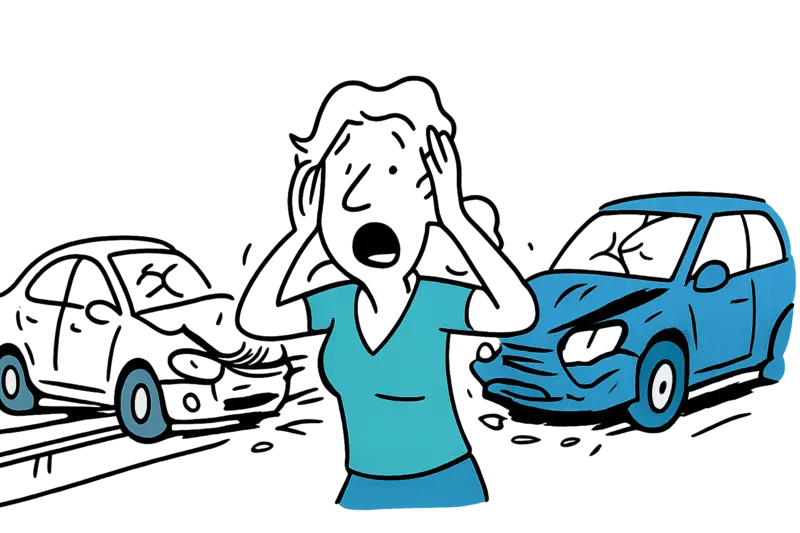
On Tuesday evening, around 8 p.m., a piece of everyday life on the A8 near Pforzheim changed abruptly: a Mercedes struck a Daihatsu that had braked due to traffic, the impact sending the smaller car into the guardrail. Both vehicles were severely damaged, the airbags deployed, fluids leaked — and yet the people involved remained physically unharmed. The Mercedes driver is 40-year-old schlager singer Milla Pink, known from the German party scene and regularly seen at Mega-Park in Mallorca.
Such reports quickly enter public debate, often accompanied by images of crushed bodywork and snap judgments. What is often missing are sober questions: How did the rear-end collision occur? What roles did following distance, speed or possible distraction play? According to police, the 30-year-old Daihatsu driver braked because of traffic; the Mercedes drove into her. The singer is now facing an administrative offense proceeding.
What most reports neglect is the traffic safety perspective: rear-end collisions are typical cascade accidents with a high risk of injuries, especially in dense highway traffic. Modern safety systems such as adaptive cruise control or automatic emergency braking (NHTSA overview) can reduce rear-end collisions — but they only work if activated and used correctly. The reported damage of around €30,000 shows: it ended relatively well, but it was close.
Another blind spot in the discussion is the behavior after the crash: on the A8 the left and middle lanes had to be cleaned due to leaked fluids, and closures lasted until shortly before midnight. Such operations burden emergency services, create additional hazards for other road users and lead to long traffic jams. We talk a lot about airbags and body damage, but rarely about the traffic incident management practices — from absorbents for oil to tow coordination and securing the scene with variable message signs.
As for Mallorca: routine after an accident is different there — on the Passeig Marítim one often sees how quickly an accident changes the rhythm of a street: bars close earlier, beachgoers stop, a police car flashes, the voice of an incident commander drifts along the promenade. The proximity to the party arena where acts like Milla Pink perform makes the topic feel more personal: many here know the singer from summer shows. When a familiar face is involved in such an accident, the debate on the island gets noticeably louder — and more personal.
Concrete solutions we should now push:
1) More education instead of outrage: Campaigns reminding drivers about the correct stopping distances on highways and the dangers of sudden lane changes.
2) Use technology correctly: The operation of assistance systems must be clearly communicated — in the manual, at the dealer and in driving schools.
3) Strengthen emergency organization: Equipment for the rapid handling of leaked fluids, mobile guidance systems and coordinated towing chains reduce closure times and secondary accidents.
4) Review sanctions: Administrative offenses are important, but preventive measures (points systems, mandatory refresher courses after serious rear-end collisions) could be more effective.
What is missing from the public debate is a sober weighing of the facts: yes, it is fortunate when everyone remains uninjured. But luck must not be the only safety strategy. The question of responsibility beyond personal explanations is missing — for example whether a driver should be particularly careful at night, after long performances or on stressful routes.
The singer herself briefly commented on the incident in her Instagram Story, writing that she had felt a guardian angel and needed time to process. That is human and deserves respect. Still, the feeling of relief must not erase the structural lessons to be learned from the incident.
Conclusion: The crash on the A8 was a loud warning shot without personal injury. It reminds us that road safety is not solely a matter of technology or chance. Distance, attention and well-organized emergency structures are not tabloid topics — they are the quiet guardian angels that really help us. If Mallorca takes anything from such experiences, it is the chance to drive a bit more cautiously on every trip home and to hold a sensible local debate.
A brief postscript: For those affected, like the musician, such an event also means support from RoadPeace for crash survivors. A broken light or a torn-off bumper heals, but getting used to driving again takes time. An appeal to everyone: if you have just experienced a shock, postpone driving and accept support.
Punchy conclusion: Good that no one was injured. Bad if we are satisfied with that and do not draw the right lessons.
Frequently asked questions
How can highway rear-end collisions be prevented on Mallorca's roads?
What steps should you take after a highway crash on Mallorca to help others and avoid more danger?
How do modern car safety features help prevent rear-end crashes, and how should drivers on Mallorca use them?
After a crash, what should the public debate on Mallorca focus on beyond injuries?
Why can a Mallorca-based performer being involved in a crash spark stronger local discussion about road safety?
What does effective on-site accident management involve to reduce closures on Mallorca’s roads?
Are there particular driving challenges on Mallorca’s popular routes or during events?
What mental and practical steps help someone recover after a road incident on Mallorca?
Similar News
Son Mayol in Establiments: Massive estate with winery for €34 million — what does it mean for the island?
Son Mayol, 97 hectares near Palma with a wine cellar, chapel and 25 hectares of vineyards is for sale for €34 million. A...
Dwarf palms, hands, ideas: Llata in Cala Rajada lives on
A workshop in Cala Rajada keeps the Llata weaving tradition alive: braided baskets, modern bags and courses bring plants...
Fire at the Son Hugo Parking Lot: Was it Arson — and Who Protects the Caravan Community?
A fire at the Son Hugo sports complex parking lot destroyed several caravans and traumatized residents. The National Pol...
When Help Takes Too Long: Fainting at the Airport and Gaps in the Emergency Network
A 19-year-old airport employee lost consciousness. An ambulance did not arrive until about 40 minutes later. Why does he...
Toilet Emergency over the Atlantic: What the Madrid–Dallas Incident Reveals About Flight Safety and Passenger Thinking
Six of eight toilets failed on a Madrid–Dallas flight; the crew made a precautionary landing in New York. A harrowing ex...
More to explore
Discover more interesting content

Can Cap de Bou

Townhouse Lleo 72
