
Shopping Like 60 Years Ago: The Esparteria C'an Toni Blancos in Inca Preserves Mallorcan Craftsmanship
Shopping Like 60 Years Ago: The Esparteria C'an Toni Blancos in Inca Preserves Mallorcan Craftsmanship
With 85 years of history, espadrilles, baskets and artisanal repairs, C'an Toni Blancos is more than a shop: it is a living piece of island culture in Inca. A visit is worthwhile — for tourists, restaurateurs and neighbors.
Shopping like 60 years ago: The Esparteria C'an Toni Blancos in Inca preserves Mallorcan craftsmanship
One shop, three floors, countless stories — and a stitch that still smells of handiwork
On a cool December morning, strolling through Inca with the sun low over the roofs, you first hear the clatter of wood and the soft metallic ring of a shop bell. Right there, not far from the market and the old cobbles of the old town, lies the Esparteria C'an Toni Blancos. The shop was founded in 1940 by Maria Martínez and Andreu Ramis and celebrated its 85th anniversary in 2025. When you open the door, you immediately breathe in that peculiar mix of dried grass, leather and work — a scent that has become rarer on the island.
The house does not feel like a museum, but like a business that has adapted to change without cutting off its roots. Three display floors are lovingly arranged; three sales counters structure the space where families buy shoes, restaurateurs collect special models and tourists pick up a pair of classic espadrilles. Toni, who joined the business as a teenager and later expanded the wholesale side, set the current premises in motion in 1989. Today the couple who run the shop work with an eye toward handing it over to the third generation.
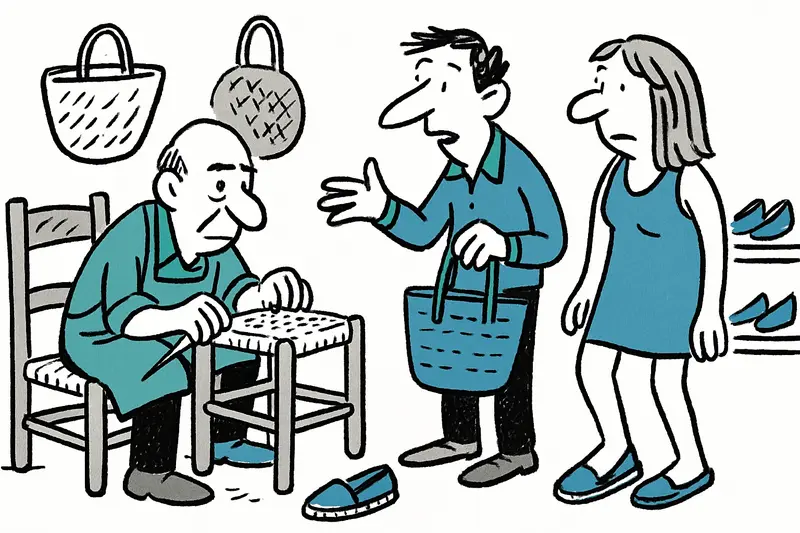
On the shelves are espadrilles in every size, handmade sandals, sturdy boots, shoes for sensitive feet and special models for hotels and restaurants. Basketry and woven goods also dominate: traditional Mallorcan baskets, chairs with reed seats, handcrafted wooden stair treads and even furniture like tables with integrated heaters — small things you don't find on every corner. If a seat is broken, people bring the chair by: traditional chair seating is part of everyday life here, as are bespoke pieces for private customers and businesses.
One scene repeats itself often here: longtime locals sit on the low bench in front of the shop, discussing the latest market prices, while a young woman in flip-flops tests whether the espadrilles are comfortable. Children hold up a bent little basket, and behind a counter a craftsman, with practiced movement, pulls new reed through a chair frame. That way craft remains visible and useful — not mere folklore.
This becomes especially noticeable during Dijous Bo in Inca: Market, Music and the Return of the Boats: the façade is regularly transformed into a small open-air exhibition showcasing techniques and products. At the 2024 edition more than 200,000 people visited the fair — a scale also reported in Dijous Bo in Inca: Eight kilometres of market, Ensaimada and rural warmth; many stopped at the esparteria's stand and listened to explanations about weaving and shoe making. For the island that means more than turnover: it is living proof that traditional arts are still in demand.
Why is that good for Mallorca? Such shops keep knowledge on the island, create work beyond large hotel chains and supply materials and repairs for the hospitality sector, which too often relies on disposable solutions, as seen at Two Autumn Moods: Porreres and Inca on the Last October Weekend. At the same time they are a point of contact for visitors looking for genuine handmade products — and for locals who prefer something repaired rather than replaced.
My tip if you visit: talk to the people behind the counter, ask them to show you how a sole is made or how a chair is re-seated. Don’t just buy souvenir espadrilles; consider commissioning a repair — it extends an item's life more than any discount. And if you run a business: ask about special shoes for your staff — the quality pays off.
In the end there is a small, unspectacular promise: as long as stitching, weaving and repairing continue here, a part of Mallorca remains tangible. That is more than nostalgia — it is everyday life worth preserving. If you are in Inca, put the Esparteria C'an Toni Blancos on your list. A few minutes, a few questions and maybe a pair of handmade shoes later, you leave with a piece of island history.
Frequently asked questions
What is the best time of year to visit Inca if you want to see traditional Mallorcan craft shops?
Can you still buy handmade espadrilles in Mallorca?
Is Inca worth visiting for shopping if you want something more traditional than the usual tourist stores?
What kind of crafts and products do traditional shops in Mallorca still offer?
Can you get chair seating or furniture repairs done in Inca, Mallorca?
What makes the Esparteria C'an Toni Blancos in Inca special?
Is Dijous Bo in Inca a good place to see Mallorcan crafts?
What should I look for if I want to buy useful handmade items in Mallorca rather than souvenirs?
Similar News

Palma Gets a Welcoming Park: Tirador Goes Greener — and a Café Is Coming
A new green project in Es Fortí/Camí de Jesús will transform the old Voltadora into a city park with an experience fores...
Why the End of "Los Últimos Mohicanos" Is More Than the Closing of a Bar
With squealing tires and one last glass, an icon on the Palma–Manacor expressway closes. Why the demise of this German b...

Protest camp on Plaza España: Who asks for solutions to the right to housing?
Around 30 activists set up a tent camp on Palma's Plaza España to push for stronger tenant rights. Our analysis asks: Ar...

In the Name of a Gang: Alleged Extortion in El Molinar and What It Reveals About the Protection of Sex Workers
A man is accused of posing as a member of the Hells Angels and extorting two women at accommodation in El Molinar. The s...
When Chile Meets the Mediterranean: A New Flavor at Can Bordoy
At Can Bordoy in Palma's old town, Chilean chef Jhonatan Maldonado combines Patagonian seafood with Mediterranean island...
More to explore
Discover more interesting content

Can Cap de Bou

Townhouse Lleo 72
