
Accident on the Carretera de Valldemossa: More Questions Than Answers After Collision with an Elderly Man
Accident on the Carretera de Valldemossa: More Questions Than Answers After Collision with an Elderly Man
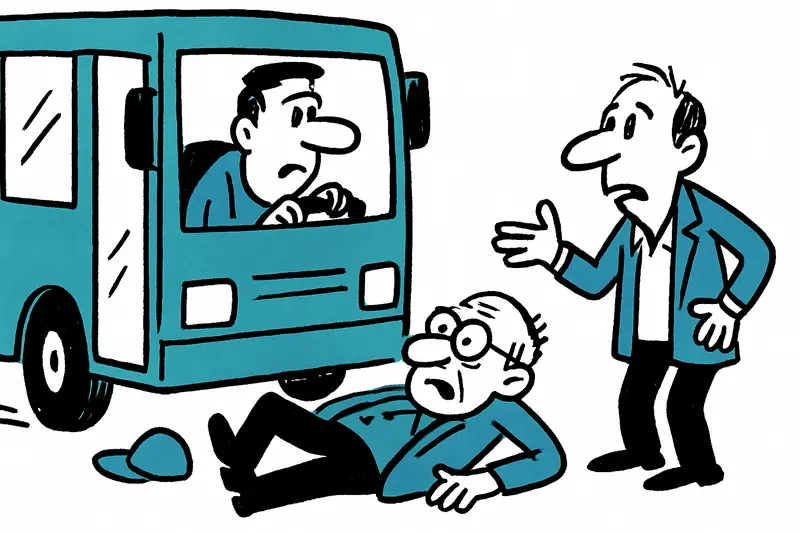
A city bus of the municipal transport company struck an approximately 70-year-old pedestrian at a zebra crossing in Palma on early Friday evening. What went wrong — and how can we better protect the most vulnerable road users?
Accident on the Carretera de Valldemossa: More Questions Than Answers After Collision with an Elderly Man
On Friday at around 7:15 p.m., as the city was still bathed in the golden light of late afternoon and the terraces on Carrer de Sant Miquel were slowly filling with voices, a serious accident occurred at the intersection of Carretera de Valldemossa and Miguel de Arcas street: a city bus of the municipal transport company struck a man of about 70, who was apparently crossing at a zebra crossing.
Clear guiding question
How can it happen that a pedestrian on a marked crossing is struck by a bus — despite witnesses, emergency services and a nurse who happened to be present and provided first aid?
Critical analysis
The accident raises several levels of safety issues. Zebra crossings are not shields; they are design elements that must be made visible and combined with traffic restrictions to work. At the mentioned junction, frequent bus traffic and flows of pedestrians meet; buses are tall, have large blind spots and can have more difficulty seeing pedestrians, especially during changes in light in the evening. According to local reports, the man was dragged several meters and was bleeding heavily, briefly losing consciousness — this shows the force of the impact was considerable. Witnesses said the driver was visibly shocked and stated he had not seen the pedestrian. Whether distraction, sightline problems, driving speed or technical defects played a role is the subject of police investigation.
What's missing in the public debate
Public debate often boils down to assigning blame to the driver or expressing sympathy for the victim. Three points are missing: first, solid data on accidents at pedestrian crossings in Palma; second, an honest discussion about visibility conditions for buses (headlights, mirrors, cameras); and third, the everyday life of older people in the city and their need for clearly safer crossing points. Too often it remains emotional headlines instead of discussing structural causes and prevention.
Everyday scene from Palma
Anyone standing at the junction now can hear the whistles of buses on the Carretera, the clatter of e-scooters and the tinkling of bar plates at the terraces. A woman with shopping bags waits at the edge for a free moment, an older gentleman feels his way along the railing. These small moments show how vulnerable pedestrians are in the traffic environment — and how quickly routine can turn into an emergency.
Concrete solutions
From a daily look at Palma's streets, pragmatic measures can be derived: 1) Improve visibility: additional lighting at zebra crossings, reflective markings and raised crossings that slow buses down. 2) Use technology: require buses to have modern 360° cameras and acoustic warning systems when turning; regular checks of mirrors and lights. 3) Reduce speed: 30 km/h limits in particularly pedestrian-heavy sections, especially in the evening hours. 4) Adapt infrastructure: more staging areas, semi-raised pavements, extended green phases at traffic lights for older people. 5) Staff and training: mandatory refresher courses for bus drivers on sight fields and hazard perception; psychological support after serious accidents. 6) Neighborhood prevention: awareness campaigns for seniors, local pedestrian checks by the municipality and the transport company.
Investigations and transparency
The police are carrying out the investigations. For public trust it would be helpful if the results of the analysis of driving data, vehicle technology and witness statements were communicated transparently — without premature judgement, but with clear steps to prevent similar cases.
Punchy conclusion
The accident is not an isolated event; it is a symptom that infrastructure, technology and everyday habits do not always fit together, as shown by After head-on crash in Palma: Fleeing and many questions – 31-year-old dies, Rollover at Playa de Palma: One Accident, Many Unanswered Questions and Fatality in Son Castelló Accident – Fleeing Car Occupants Raise Many Questions. Anyone living in Palma knows the trade-offs between space for cars and space for people — and notices: a zebra crossing is not enough when the framework conditions are missing. Concrete, visible measures are needed before the next dusk becomes the next tragedy.
Frequently asked questions
Why can pedestrian accidents still happen on zebra crossings in Mallorca?
Is it safe to cross busy roads in Palma at dusk?
What should I know about bus blind spots in Mallorca?
What makes the Carretera de Valldemossa a risky road for pedestrians?
What should I do if I witness a traffic accident in Palma?
What safety improvements could help pedestrians in Mallorca?
Are older people at higher risk when crossing streets in Palma?
How can Mallorca make zebra crossings safer at busy junctions?
Similar News
When the Wallet Becomes a Danger: Attack in Peguera and Lessons for Mallorca
In Peguera, two women are said to have stolen the wallet from a 75-year-old German couple. When the victim intervened, t...
Plata stays Plata: Young people take over, Llonguets remain
A small bar on Carrer de l'Argenteria will continue: Tolo Serra hands the place over to young Mallorcans at the end of t...
Unnoticed in the Luggage Compartment: How a Boy Traveled More Than 100 Kilometers in a Team Bus
A minor traveled in the undercarriage of a team bus for more than 100 kilometers until his cries for help were heard. A ...

Cap Vermell Grand: Second Michelin Key – a Gift for the East
The Cap Vermell Grand in Capdepera has been awarded its second Michelin key. For the region this elevates the luxury off...
Eurowings lets four aircraft carry names – a friendly idea that also reaches Mallorca
Eurowings is launching a campaign: four Airbus A320s are to carry the first names of people who help others in everyday ...
More to explore
Discover more interesting content

Can Cap de Bou

Townhouse Lleo 72
