
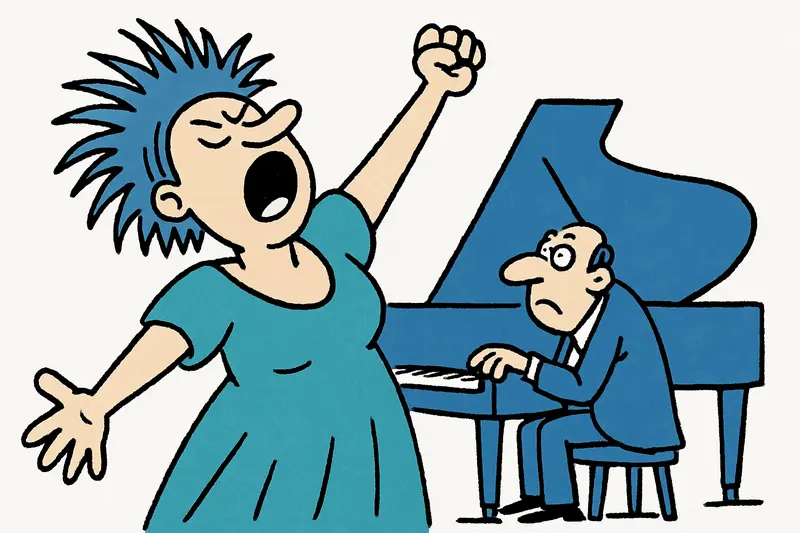
Simone Kermes: A classical evening that was anything but classical
In Sant Bartomeu, Simone Kermes turned a Sunday evening into a lively tour through Baroque, pop and personal stories — warm, a little punky and perfectly suited to Mallorca.
An evening that sounded different: Sant Bartomeu and a voice full of edges
The bells had just stopped when the door of the small church swung open. A warm breeze carried the scent of orange blossom across the Plaça, footsteps came from the lanes and the distant clatter of the tram — and then music filled the space. It was not a typical classical evening: Simone Kermes trae Barroco, Pop y una dosis de punk a Sóller took the stage and led the audience on a whimsical ramble through centuries.
Between Baroque and pop: a colourful programme
The concert titled ¡Viva! felt like an invitation to listen without a template. Monteverdi, Vivaldi, Purcell and Handel stood alongside Mendelssohn and Strauss, Rossini met Gershwin, and pop references flashed up in between. The order was less a chronological exhibition than a conversation between styles — lively, surprising and sometimes cheeky. This blend of references recalls other local programming such as Impressionistic Season Opening at the Auditorium: Color, Sound and Late Romanticism.
Particularly distinctive was Kermes’s own piece, which she calls “Dress of Light”. It recalls classical miniatures with playful motifs, but carries them to sunny beaches, raspberry ice cream and freckles: a small, charming estrangement that in the warm acoustics of Sant Bartomeu sounded almost like a summer anecdote.
Storytelling instead of lecturing
Between arias Kermes let stories flow: small anecdotes, surprising confessions, humour. The speaking pauses felt like breaths in which the audience laughed, reflected or simply savoured the voice. There was no pathos, more the stance of an artist who wants to explain why music moves — not to instruct, but to touch.
The fact that she once went through a phase with a punk haircut produced smiles; mentioning teachers like Dietrich Fischer-Dieskau gave pause for thought. This mix of rebellion and craftsmanship shapes her interpretation: unconventional, but never arbitrary.
The duo: a dialogue on equal terms
The pianist Suzanne Bradbury was more than an accompaniment. Her piano playing responded, commented and set accents that gave Kermes’s voice new colours. Sometimes stormy like agitated waves, sometimes shallow like pebbles washed on the beach — the interplay had the ease of a walk by the sea in which both companions take turns leading.
An evening with an afterglow
The church was well filled; many present seemed to experience a live classical evening for the first time after a long break. Tickets via ticketib.com, admission 30 euros, reduced 15 euros — but in the end only the moments that lingered in the ear mattered: laughter, quiet tears, memories flickering like street lamps on the Plaça.
What remained was less a list of arias than the feeling that someone here crosses boundaries not out of fear but out of curiosity. Kermes does not seek the purity of a style; she collects timbres and stories — and serves them with a good dose of wit.
Why this matters for Mallorca
Evenings like this do the island good — and so do season highlights such as Brilliant Season Opening: OSIB Between Intimacy and Storm – an Evening That Resonates: they bring culture to places that are more than postcard motifs and remind us that music creates community. In the cool evening air after the concert voices mixed on the Plaça, and the discussions were not only about technical brilliance but about experiences — exactly what keeps a local cultural life alive.
I admit: not a born classical fan, but on that Sunday in Sóller something caught me. The church let us out into the night, and on the way home a tone still lingered — not perfect, not stiff, but real. This is how a small, successful cultural event feels: local, surprising and a little like Mallorca to be rediscovered.
Frequently asked questions
What kind of concert did Simone Kermes give in Mallorca?
Is Simone Kermes a good choice if you do not usually go to classical concerts in Mallorca?
What is special about Sant Bartomeu as a concert venue in Sóller?
What kind of music did Simone Kermes perform in Sóller?
Why did Simone Kermes’s concert in Mallorca feel so different from a standard recital?
How much were tickets for Simone Kermes in Sóller?
Why do cultural events like this matter in Mallorca?
What can visitors expect from an evening concert in Sóller, Mallorca?
Similar News

When Palma Becomes a Zombie Zone: 'Mallorca Z', AI and the Thought Experiment with Side Effects
A Mallorcan lawyer built a strategy game over a weekend using AI that treats the island as the scene of a zombie crisis....
Learning to Wait: How Leisure Is Making Space Again on Mallorca
Waiting doesn't have to be lost time. A mild October day in Palma shows how small pauses slow down our lives — and what ...
Cala en Brut: Body in the Sea — a Fatal Autumn Day and What’s Missing
In Cala en Brut (Ciutadella) a man's body was recovered during storm Dana "Adam". Why do autumn storms in the Balearics ...

When the road is gone: Port de Valldemossa cut off after storm 'Adam'
After heavy rains a retaining wall gave way and two sections of mountain road MA-1131 became impassable. Why are rural p...

Crypto Promises, Ferry, Arrest: How Investors in Mallorca and the Neighboring Islands Fall into the Trap
A Swiss man wanted under a German arrest warrant was captured in Ciutadella. The case raises questions about cross-borde...
More to explore
Discover more interesting content

Can Cap de Bou

Townhouse Lleo 72
