
Sineu: The Half-Eaten Ham — When a Small Offense Raises Big Questions
Sineu: The Half-Eaten Ham — When a Small Offense Raises Big Questions
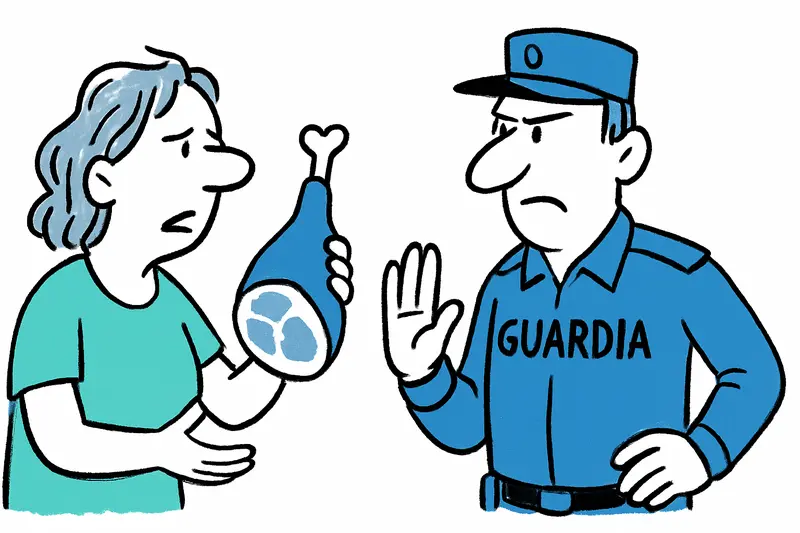
In Sineu, a 57-year-old woman stole a €420 Bellota ham from a supermarket and returned it days later partially eaten. Why does hunger so quickly become a case for the Guardia Civil — and what is missing in the local discourse?
Sineu: The Half-Eaten Ham — When a Small Offense Raises Big Questions
Curious theft with an open ending: police investigate, the town discusses in hushed tones
Key question: How can a single, surprisingly banal theft — a €420 Bellota ham hidden under a jacket — become a touchstone for prevention, social support and shop policy in our villages?
The bare facts are short: in a supermarket in Sineu a 57-year-old woman made an expensive ham disappear under her clothing. Surveillance cameras provided the clue; the Guardia Civil was able to identify the woman. Days later she brought the product back — but already bitten. An investigation is now underway against her.
The image many picture is almost filmic: a morning on the Plaça Major, the coffee roast mixes with the smell of freshly baked ensaimadas, vendors fill their stalls. At the same time a quiet incident on a shelf in a branch that, thanks to camera footage, did not go unnoticed. Such contrasts shape life in Mallorca: community and control often lie close together.
Critical analysis: At first glance the matter seems almost comical — a half-eaten ham as a police case. Behind it, however, several problems converge. First: the visibility of food as a target. High-priced products like Bellota ham are easy to grab in-store, have high resale value and quickly become objects of crime outside regular sales channels; Mallorca's taste for prized foods is visible in events such as the 76-kilogram sobrassada in Sant Joan.
Second: the role of surveillance. Cameras allow quick identification, but they do not automatically solve the root causes. The footage is evidence, not prevention. And third: the question of social support. That an adult apparently goes so far as to steal a luxury product and sample it on the way allows room for speculation — from financial need to an impulse offense. Public debates, however, often narrow to blaming instead of addressing the background.
What is missing in the public discourse: the local perspective on prevention and assistance. There is rarely talk of simple, practicable measures that shops, the municipality and neighbors could implement. Equally thin is the discussion about low-threshold offers for people in financial distress. In villages like Sineu there are networks — church communities, neighborhood groups, local associations — that could be more closely involved.
Everyday scene from Mallorca: on a cool morning in Sineu you see pensioners on the bench in front of the town hall, a delivery van beeps briefly, market women loudly haggle over fresh oranges. The supermarket clerk behind the counter tidies a pallet, hears the murmur and probably doesn't think about the ham until the Guardia Civil calls. Small towns are places where such stories spread quickly — as happened in other local incidents like the Can Pastilla hostel incident — with head-shaking, sometimes with mockery, more often with the feeling: "We could have handled that differently."
Concrete solutions: First, shops should protect their high-risk products organizationally — not with panic, but through pragmatic measures: clear placement, a friendly staff presence in sensitive areas, checkout systems that alert when goods leave without payment. Second: more local cooperation between supermarkets and social services. An anonymous contact point for people in need or a verbal hint instead of immediate confrontation can de-escalate. Third: municipal prevention programs that strengthen neighborhood organizations and provide information — for example workshops in community centers about rights, duties and available help.
Another model would be easier access to emergency aid: vouchers for basic foodstuffs managed by the municipality or charitable organizations that reduce shame. Training for shop staff on how to act calmly and legally in delicate situations would also be useful.
Conclusion: The case in Sineu is more than a curious headline. It exposes how closely everyday life, purchasing behavior and social issues are connected on the island. If we take the matter seriously, it's not only about punishment but about smart prevention, neighborhood work and clear store rules; this connects with wider discussions about why Mallorca's crisis runs deeper. Otherwise the punchline remains: a bitten ham and a gap in the social safety net.
On-site thought: At the next market visit in Sineu it's worth looking at the shelves — and at the people behind them.
Frequently asked questions
Why did a ham theft in Sineu become such a big local story?
How do supermarket cameras help with thefts in Mallorca?
What can shops in Mallorca do to reduce theft of expensive food products?
Could a theft like the one in Sineu be linked to financial hardship?
What help is available in Mallorca for people who cannot afford basic food?
Why do small-town incidents in Mallorca spread so quickly?
What is the atmosphere like around Plaça Major in Sineu on a normal morning?
What kind of prevention programs could help towns like Sineu in Mallorca?
Similar News
New trick at Palma Airport: suitcase stolen from the belt — a reality check
On September 28 a 36-year-old allegedly stole a suitcase from the baggage belt of a 51-year-old German passenger at Palm...

Urgent Clearing of Palma's Torrents: Flood Prevention or Symptom of Short-Sighted Planning?
The city of Palma is responding to storm forecasts and has cleared several torrents. We ask: Is the short-term clearing ...
Evaneos and Mexico: A Reality Check for Sustainable Travel
Travel advertising often reads like a promise: local, sustainable, unique. But how deep do these promises really go? A c...

From Megapark to the Altar: Party Singer Now Offers Weddings in Mallorca
A well-known party artist combines partying and marriage: instead of a traditional church there are ceremonies at the Me...

The Maricarmen Case: Why an Eviction Is Forcing Spain's Housing Debate
Images of an 87-year-old woman on a stretcher have sparked a debate in Spain that also runs deep in Mallorca. Who protec...
More to explore
Discover more interesting content

Can Cap de Bou

Townhouse Lleo 72
