
After the Rain Comes the Next Low: Why Mallorca's Warning System Hits Its Limits
After the Rain Comes the Next Low: Why Mallorca's Warning System Hits Its Limits
Aemet reports that from midnight the island centre will again be at orange alert, with yellow at the coast and at sea. A reality check: Are forecasts and local precautions enough to prevent flooding, fallen trees and closed roads?
After the Rain Comes the Next Low: Why Mallorca's Warning System Hits Its Limits
Aemet's warning is clear. What is missing for effective protection against follow-up damage?
From midnight the island centre is again under an orange alert, while the edges and the sea are under yellow, according to Aemet, as detailed in Orange Alert in Mallorca: What the AEMET Warning Means for the Island, Roads and Tourism. The snow line drops to around 1,000 metres, and meteorologists expect another low to move in on Tuesday and to add new moisture to the island by Wednesday and Thursday at the latest. These are the facts — and a good reason for a sober look at how prepared we really are.
Key question: Are short-term warnings enough to prevent damage such as fallen trees, flooded roads or stranded boats? Short answer: No, at least not automatically. Aemet's alert levels are important, but they are only the beginning, as noted in Storm Alert: Orange Warning for North and Northeast — What Mallorca Residents Should Know Now. In Mallorca it repeatedly becomes clear that the interface between meteorology and local response is where things break down.
Critical analysis: Aemet provides valid, timely information about wind, precipitation and the snow line. But many consequences arise locally — blocked drains in S'Arenal, streams that overflow at bottlenecks, construction sites without covers, private pine trees that topple across narrow roads. Responsibility is spread across several levels: municipalities, island administration, road operators, water suppliers and the people themselves. Coordination is often lacking, especially when a storm unexpectedly changes direction and brings gusts from unusual directions, a problem highlighted in Orange alert in Mallorca: Why the rain exposes our weaknesses.
What is missing in public debate: concrete priority lists for measures, clear lines of responsibility and simple, repeatable instructions for households. Technical debates about sewers and retention basins are important — but many Mallorcans want practical guidance: Where can you get sandbags? Which roads are always closed first? What are the phone numbers of local emergency services? These questions often remain theoretical in meetings.
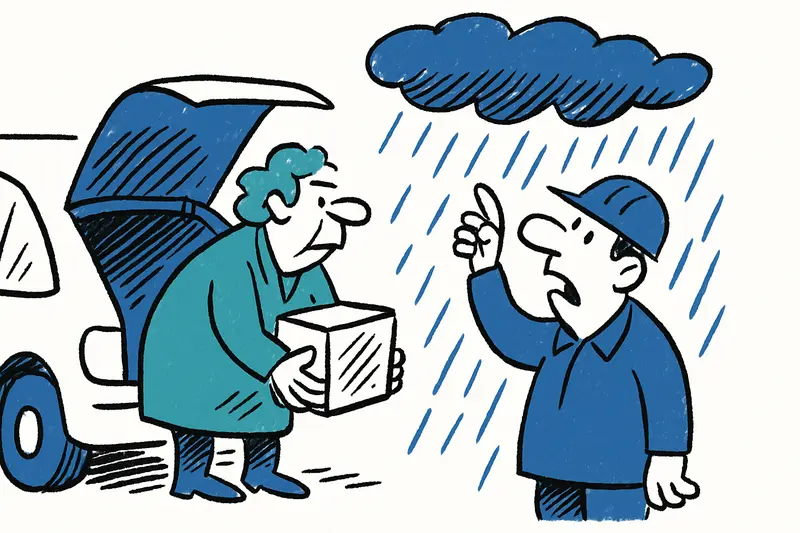
Everyday scene: On Passeig Mallorca the wind rustles the palms and rain taps on the roofs. In front of a supermarket in Portixol an elderly woman places two crates of water in her trunk; a construction worker in a site container pulls the tarpaulin tighter. In Port de Sóller fishermen double-knot their nets, not out of pessimism but out of experience. Such small actions often prevent bigger troubles — but they cannot replace public warning systems.
Concrete solutions: First, municipal checklists that are automatically distributed before every orange alert via SMS, WhatsApp groups and the Aemet app: secure windows, move wheelie bins next to walls, cover construction sites. Second, fixed schedules for drain cleaning in vulnerable valleys before the rainy season and after heavy rain events. Third, temporary parking bans on known flood routes (Playa de Palma, some access roads to the Tramuntana foothills) and clearly marked collection points for sandbags, measures also recommended in Orange Alert: Torrential Rains — Is Mallorca Prepared?. Fourth, boat operators and fishermen: mandatory notification to harbour control when boats are to be hauled ashore. And fifth, more transparency: a publicly accessible map of flood and wind hotspots, updated from municipality to municipality.
Some measures cost little: agreements with supermarkets to distribute emergency supplies more quickly; neighbourhood networks that call elderly people on the day of a warning; school lessons that explain how to pack a simple emergency bag. Larger investments relate to drainage and retention basins — here political pressure and prioritised budgets are needed.
Punchy conclusion: Warning levels are necessary, but they are not a magic bullet. Mallorca didn't invent the weather, but we have experience with it. Between an Aemet warning and concrete protection there are often weeks of inactivity or small-scale work. If the island feels water and wind again in the coming days, the outcome will depend on whether authorities and citizens take the few simple steps that can prevent real damage.
Therefore an appeal to municipalities and neighbours: Don't just look, act. An SMS with a clear checklist helps more than a statement at a council meeting. The next storm is certain — and this time we should not be surprised.
Frequently asked questions
What does an orange weather alert mean in Mallorca?
Is short-term weather warning enough to prevent storm damage in Mallorca?
What should households in Mallorca do before heavy rain or a storm?
When does Mallorca usually face the highest risk of flooding and storm damage?
Why are some roads in Mallorca closed first during heavy rain?
Is Playa de Palma especially at risk during heavy rain in Mallorca?
What should boat owners in Mallorca do when a storm warning is issued?
What is the best way to stay informed during bad weather in Mallorca?
Similar News
More water than last year: Mallorca's reservoirs breathe easier
September rain refilled the Tramuntana's reserves: overall fill around 35 percent, Cúber at 40.42 percent, Gorg Blau at ...
Three Luxury Hotels in Banyalbufar: Lots of Money, Many Questions
A Danish investor plans three exclusive accommodations in Banyalbufar — including the historic Son Valentí. The announce...
2.1 tonnes of cocaine on sailing yacht off Spain's coast – a reality check for the coastguard
A 14-metre yacht was seized with 2.1 tonnes of cocaine. Who monitors the ports, how does the international hunt succeed ...

Heat Bonus in Mallorca: 100 Euros Extra for Outdoor Staff at MarSenses
MarSenses pays employees who worked outdoors in August an extra €100 as recognition. Lighter uniforms, reduced hours for...
Renovating in Mallorca: What You Really Can Do Without Neighbour Consent
Many think they can do whatever they want in their apartment. That's partly true — but only as long as structural elemen...
More to explore
Discover more interesting content

Can Cap de Bou

Townhouse Lleo 72
