
Solar eclipse and Playa de Palma restricted zone: Who can actually drive in — and what gaps remain?
Solar eclipse and Playa de Palma restricted zone: Who can actually drive in — and what gaps remain?
On August 12, the city of Palma is restricting access to Playa de Palma and distributing digital QR permits to hotels and restaurants. A good idea — but who falls through the cracks? A reality check with everyday scenes, missing information and concrete solutions.
Solar eclipse and Playa de Palma restricted zone: Who can actually drive in — and what gaps remain?
The city is issuing QR codes to hotels and restaurants. For everyone else: on foot, by bicycle or by bus — that's the theory. In practice, questions and trouble loom.
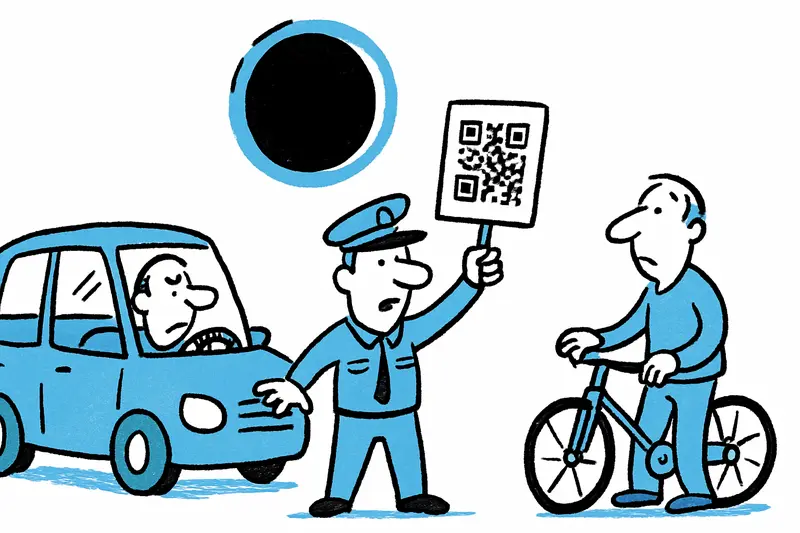
On August 12, Palma plans to largely seal off Playa de Palma between Balneario 4 and the Torrent des Jueus to motor traffic. From 8:00 a.m. until midnight, only residents, workers and selected guests with a digital access permit should be allowed into the restricted area. The permits, issued as QR codes, are distributed via registered hotels and businesses; each code allows a maximum of two entries. City authorities justify this with the aim of avoiding a traffic collapse — and considering the more than 70,000 expected visitors for the Total Solar Eclipse 2026, that is understandable.
The key question that arises, however, is simple: Who will actually be able to drive to Playa de Palma in the end, and who will be left outside?
The answer remains incomplete. On paper the QR system sounds bureaucratically tidy: hotels report parking spaces, civil protection checks, and then codes can be given to staff and selected customers. In reality, at least five problem areas arise that have so far received too little attention in public debate.
First: distribution fairness. Small apartment owners or hosts of holiday flats without official hotel registration stand next to large hotel chains with on-site parking. Who decides which guests receive a code — and according to what criteria? Without transparent allocation rules, unequal treatment is likely, as seen in Palma locks out holidaymakers: Low-emission zone with side effects.
Second: digital exclusion. The QR code assumes that guests have a working smartphone with internet access. Older visitors, families with children or tourists without mobile internet could be disadvantaged. Will there be an analogue alternative for people without smartphones?
Third: enforcement and queues at the borders of the restricted area. If all cars park outside the zone and queue at its edge, the congestion is only displaced. The city specifies the 8:00–24:00 timeframe but does not state how many checkpoints there will be, how quickly QR codes can be scanned, and what consequences there will be for illegal parking or blocking emergency routes. Past incidents underline the risk: for example Tumults at Playa de Palma: When Controls Threaten the Beach Scene.
Fourth: connection to the airport. The proximity of the airport and the expectation of a significantly higher traffic volume are realistic risk factors. Travelers arriving or departing that day need clear guidance on how much extra time to allow and which parking or drop-off zones for taxis and rental cars will be available.
Fifth: supply and safety on site. Bans such as grilling, glass bottles or loudspeakers are understandable. But who will check tents and canopies, or take responsibility for unattended emergency corridors? And how is medical care organised with so many people on a narrow stretch of coastline? It also raises questions about how beach concessions and surcharges will be handled, as discussed in Price shock at Playa de Palma: Who pays for the beach?.
A typical everyday scene helps to visualise the problem: early in the morning a delivery van winds its way along Avinguda de Gabriel Roca, taxi drivers wait on Passeig Marítim, hotel porters handle suitcases. Without clear signage and frequent shuttles, this morning logistics could stall at the restricted zone borders. Older residents in El Molinar might barely make it to their doctor appointments that day, and in Can Pastilla residents could face closed access points.
What is missing from the public debate? Multilingual information for international guests, concrete figures on the capacity of public transport (buses, tram), clear rules for people with reduced mobility, and plans for overflow parking outside the restricted area with shuttle connections. It also appears unclear how hotels with a large number of check-ins on the same day should cope.
Concrete proposals that can be implemented at short notice:
- Park-and-ride with increased frequency: Set up three to four temporary parking sites outside the restricted area (for example towards Llucmajor or at the MA-19 exit) and run scheduled shuttle buses to Playa de Palma every 10–15 minutes.
- Drop-off and accessibility rules: Short-term zones clearly marked for boarding and alighting, with separate permits for people with mobility impairments.
- Transparent QR allocation: Publish criteria (e.g. ratio of parking spaces to guests), set up a hotline for businesses and reinforce control points with staff so scans run smoothly.
- Information campaign: Flyers in multiple languages at airports, ferries, rental car stations and hotels, as well as more visible signs along access roads before August 12.
- Coordination with airport and police: A joint operations center for traffic control to prevent air travelers from getting caught in road closures.
My conclusion: The planned restricted zone is a bold approach to prevent a traffic collapse and increase public safety. However, without closing the gaps mentioned above, August 12 risks becoming a day of confusion, queues and frustration for many. The city can still save it — with clearer rules, more temporary services and practical on-site information. Otherwise the solar eclipse will turn into a logistical stress test for Palma's coast.
Frequently asked questions
What will happen to traffic around Playa de Palma during the solar eclipse?
Who can enter the restricted zone around Playa de Palma during the eclipse?
What about visitors who don’t have smartphones for the QR codes?
How will entry checkpoints and queues be managed on eclipse day?
How might residents of El Molinar be affected by the eclipse-day restrictions?
What might happen to Can Pastilla residents on eclipse day?
How are hotels and local businesses involved in the entry system for the restricted zone?
What short-term measures are proposed to ease travel around Mallorca during the eclipse day?
Similar News

When the Wallet Becomes a Danger: Attack in Peguera and Lessons for Mallorca
In Peguera, two women are said to have stolen the wallet from a 75-year-old German couple. When the victim intervened, t...
Plata stays Plata: Young people take over, Llonguets remain
A small bar on Carrer de l'Argenteria will continue: Tolo Serra hands the place over to young Mallorcans at the end of t...
Unnoticed in the Luggage Compartment: How a Boy Traveled More Than 100 Kilometers in a Team Bus
A minor traveled in the undercarriage of a team bus for more than 100 kilometers until his cries for help were heard. A ...

Cap Vermell Grand: Second Michelin Key – a Gift for the East
The Cap Vermell Grand in Capdepera has been awarded its second Michelin key. For the region this elevates the luxury off...
Eurowings lets four aircraft carry names – a friendly idea that also reaches Mallorca
Eurowings is launching a campaign: four Airbus A320s are to carry the first names of people who help others in everyday ...
More to explore
Discover more interesting content

Can Cap de Bou

Townhouse Lleo 72
