
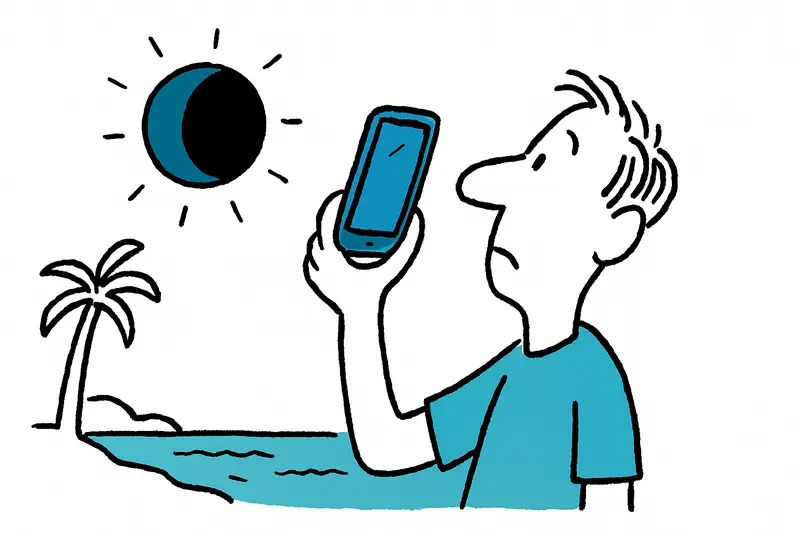
Solar eclipse: Can you safely photograph the sky spectacle in Mallorca with your smartphone?
In the evening the sky briefly darkens. Anyone who wants to capture the partial solar eclipse with their phone should protect their eyes and camera. A critical guide with everyday tips from Palma and concrete protective measures.
Solar eclipse: Can you safely photograph the sky spectacle in Mallorca with your smartphone?
Key question: Is a quick snapshot with your phone enough, or does it risk damage to your eyes and equipment?
Summary
In the evening the island will grow darker for a short period. The urge to document the spectacle immediately with your smartphone is strong. Still: simply pointing and shooting is not a good idea. Unfiltered sunlight can damage eyes and camera sensors. If you prepare, you may not automatically get a professional shot, but you will avoid lasting damage.
Critical analysis
Many assume that because part of the sun is covered the view is harmless. That is wrong. The remaining solar disc emits enough intense radiation to affect the retina or sensitive electronics. Smartphones concentrate light onto tiny sensor areas when using high zoom levels – this increases the risk of heat and light damage. Equally problematic: on the street or at the beach people pay more attention to their displays than to their surroundings, stumble on curbs, or step into bike lanes.
What is usually missing in public discussion
There are often brief warnings, but practical explanations of what to buy or do are rare. Questions like "Which filters are really safe?", "Where can I get certified film on Mallorca?", or "How do I organise a safe public viewing in my town?" remain unanswered. There is also usually no advice for tourists: in Palma, Cala Major or Port d'Andratx pharmacies and opticians are not always open around the clock.
Everyday scene in Mallorca
Imagine the Plaça Major in Palma: market stalls, vendors calling out, children running between the stalls, heat hanging in the air. Many people there will hold up their phones when the sky briefly darkens. The same picture on the promenade at the Passeig Marítim: joggers stop, an ice cream falls to the ground, someone bumps a scooter. These seemingly harmless distractions increase the risk of accidents while people look at the sun.
Concrete solutions
1) Preparation: Obtain a genuine solar eclipse film or a certified filter. Opticians in Palma and some camera shops carry suitable products; check for CE or ISO markings. A simple pair of sunglasses or improvised ND film is not sufficient.
2) Smartphone handling: Place the film so that the camera lens is completely covered. Use a tripod or a stable mount where possible. Tap the display and reduce exposure manually to avoid overexposure.
3) Choose alternative subjects: Instead of zooming in on the solar disc, photograph the changed lighting, silhouettes of people on the paseo, or the coastline under unusual light. Such images are often more interesting and gentler on equipment.
4) Professional setups: Those using mirrorless or DSLR cameras should work with telephoto lenses (300–500 mm) and a solid tripod. Always use a filter specifically approved for solar observation; not every neutral density filter is suitable.
5) Eye safety: Never look directly, even briefly, through an optical viewfinder. Use the rear display and look away at intervals to rest your eyes. Supervise children and people who wear glasses especially closely.
6) On-site planning: Avoid crowded bottlenecks like narrow alleys in old town districts. If you plan to watch with a group, choose a meeting point away from heavy pedestrian flows.
Practical checklist
• Certified solar eclipse film or filter • Tripod/mount • Spare battery and memory card • Test manual exposure settings in advance • Viewing location away from dense pedestrian zones
Concise conclusion
A good photo is no reason to put your eyes or camera at risk. For most people a mood-filled picture of landscape and people under the changed light is sufficient and safer. If you want the sun large in the frame, prepare in advance, buy a suitable filter and stay aware of your surroundings. That way you can enjoy the brief Mallorcan sky event without lasting damage or unnecessary drama.
Frequently asked questions
Is it safe to photograph a solar eclipse with my smartphone in Mallorca?
How can I protect my eyes during Mallorca's solar eclipse?
Where can I buy certified solar eclipse filters in Mallorca?
What filming setup works best for the eclipse when using a smartphone in Mallorca?
What are practical viewing tips for crowded public spaces in Mallorca during the eclipse?
Should I use a telephoto lens for a sun shot during Mallorca's eclipse?
What can I photograph besides the sun to capture the moment in Mallorca?
What should families in Mallorca know about safety during the eclipse?
Similar News
Sky over Palma: What 17 Hot Days Really Mean for Son Sant Joan
Eurocontrol warns: In August, Palma airport risks capacity bottlenecks on 17 days. What that means for passengers, taxi ...
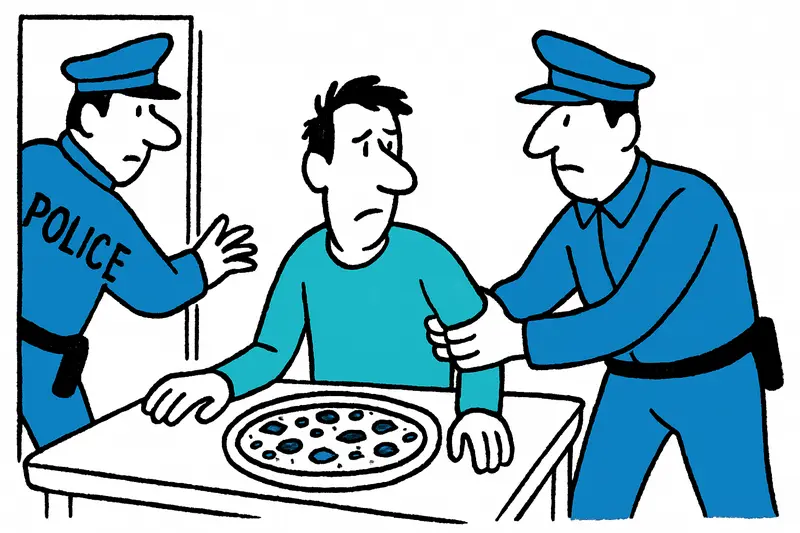
After Four Robberies: How a Suspect Could Stay Hidden for a Year — Arrest in Son Gotleu
After a series of four armed robberies in January 2025, the National Police arrested the last suspected perpetrator in a...

Champagne, Heat and Dance: A Summer Evening at the Mallorca Country Club
Around 250 guests celebrated in sweltering heat at the Country Club in Santa Ponça. Between the Champagne One premiere, ...
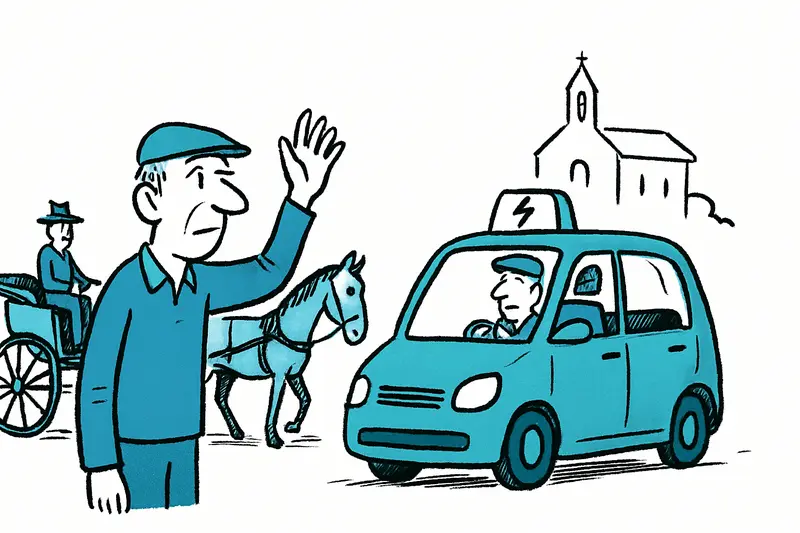
Sant Llorenç says 'Adiós' to horse-drawn carriages — room for quiet electric cabs
The municipality of Sant Llorenç is gradually replacing tourist horse-drawn carriages with electric vehicles. Two e-cabs...
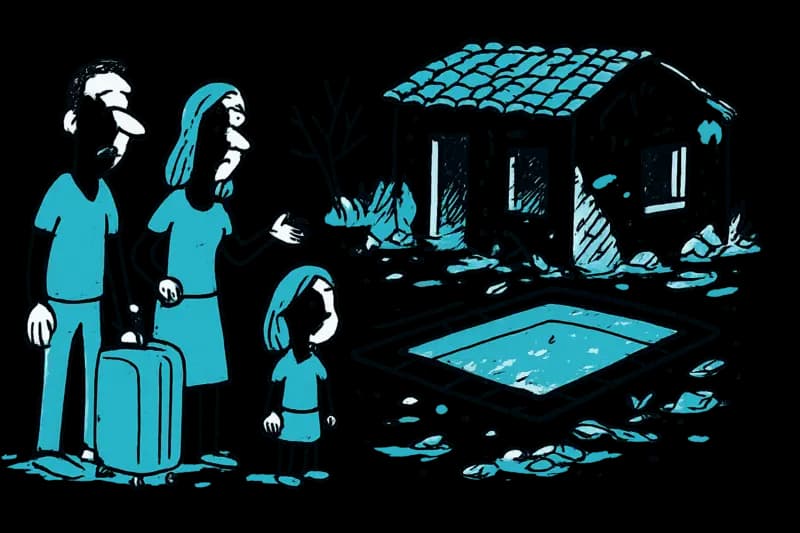
Dilapidated Finca, No Water, No Electricity: When Will the Vacation Rental Bubble on Mallorca Burst?
A German family from Hanover books a holiday finca in eastern Mallorca — and ends up in a dilapidated property without e...
More to explore
Discover more interesting content

Boat Tour with BBQ along Es Trenc Beach
Private transfer from Mallorca Airport (PMI) to Pollensa
