
New Finds at Son Fornés: Roman Household Items and Lead Balls Attract Attention
New Finds at Son Fornés: Roman Household Items and Lead Balls Attract Attention
In Son Fornés near Montuïri, excavations from the Imperial period uncovered personal care items and a rare assemblage of lead balls. Some pieces will be presented on International Museum Day.
New Finds at Son Fornés: Roman Household Items and Lead Balls Attract Attention
Small everyday objects, great significance: Insight into life on the island 2,000 years ago
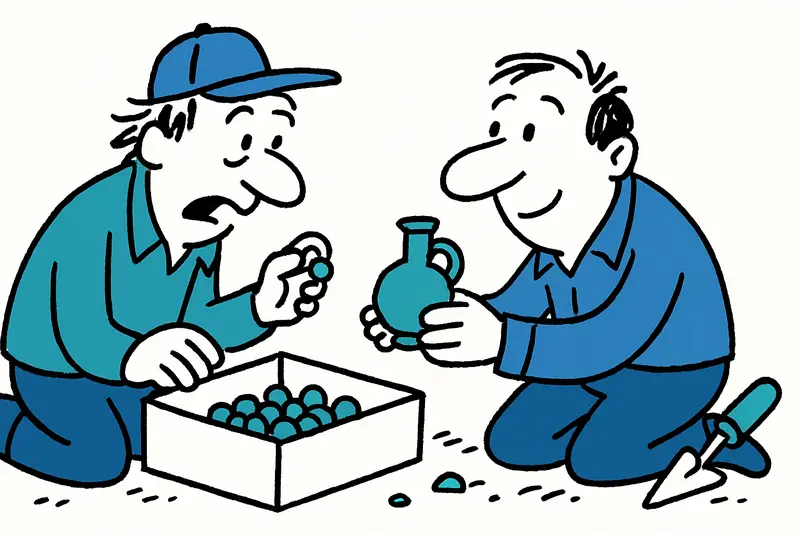
The excavations at Son Fornés near Montuïri have once again produced surprising finds. Archaeologists uncovered an area adjoining a residential building from the Roman Imperial period first discovered in 2024. During the excavation, numerous objects appeared that are directly related to personal care and hygiene, along with several metal items – most strikingly, dozens of lead balls in remarkably good condition.
Such groups of finds do not tell of great battles or magnificent temples, but of daily life: tools, containers and utensils with which people washed, applied makeup or carried out simple repairs. The excavation team's press release names the people involved: the project is led by archaeologists Vicente Llull and Cristina Riuete, and Beatriu Palomar is also part of the team examining the pieces.
A particularly curious element of the discovery is the series of lead balls – in one case 29 individual pieces were preserved. Such projectiles may have had different functions: from simple throwing projectiles to parts of toys or weights for fine mechanisms. Their unusually good preservation helps specialists narrow down production techniques and possible uses (For another unusual island discovery see Mysterious 'Heads' in Shallow Water at Son Caios — Police Follow Lead).
The finds will be shown to the public for a few hours next Sunday, International Museum Day, at the Museo Son Fornés in Montuïri. The presentation is a rare opportunity for residents or visitors to get close to objects from the Imperial period. Afterwards, the objects will be stored until the planned exhibition area at the Possessió de Son Fornés is completed; according to the statement, construction has been delayed by about two years.
If you stroll through Montuïri's market square on a May morning, you hear the clatter of coffee cups, see farmers with caps by loaded vans and do not immediately think of Roman households. That is exactly what makes the find so appealing: it links the familiar present with a distant past lying directly beneath our feet. For local restaurateurs, guides and small businesses, such a find also provides a new focal point for cultural offerings outside the high season (See similar local cultural developments in More Than Nostalgia? How Son Carrio Gains Lasting Momentum from the Railway Museum).
Why is this important for Mallorca? On the one hand, the finds expand our picture of the island in the Roman Imperial period and provide clues as to how settlements like Son Fornés were spatially organized. On the other hand, the short-term on-site presentation creates awareness among neighbours and can strengthen interest in archaeological research – a gain for both education and tourism. Small museums like Son Fornés are places where history can be experienced directly (Related coverage: Sencelles saves a piece of the past: Municipality buys prehistoric cave).
Looking ahead: further excavations will show whether the uncovered structures are related to the place names on Mallorca mentioned by Pliny the Elder. Regardless of a final attribution, the work on site remains worthwhile: every pottery sherd and every deformation of metal brings researchers one step closer to reconstructing everyday life from two thousand years ago.
So on Sunday: briefly visit the Museo Son Fornés, see the objects, perhaps sit with the guide on the bench by the doorway to talk about the piece – and then head back out, where the bell of Montuïri's church rings and a tractor passes across the plaza. Small things, big history.
Practical information: The objects will be presented on International Museum Day, 17 May, between 10 a.m. and 1 p.m. at the Museo Son Fornés. Afterwards they will be stored until the permanent exhibition area at the Possessió de Son Fornés can be opened.
Frequently asked questions
What is the weather usually like in Mallorca in spring?
Can you swim in Mallorca before summer?
What should I pack for Mallorca in the shoulder season?
Is Mallorca still good for outdoor activities in spring?
What is spring like in Palma de Mallorca?
Is Port de Pollença a good place to visit in spring?
What is the weather like in Alcúdia in Mallorca during spring?
When is the best time to visit Mallorca if you want warm but not too hot weather?
Similar News
Mueller continues expanding in Mallorca: Artà in 2026, Can Picafort in early summer 2027
The drugstore chain Mueller is opening two new stores in Mallorca: a 1,400 m² shop in Artà on 5 November 2026 and a bran...
The Painter Who Lived Mallorca: Franz Taussig and His Century-Old Secret
A hundred years ago a young Viennese arrived in El Terreno, sketched the island and called himself Francis Caron. Today ...

Airport dispute: Bridge, forecasts and the question of responsibility
A video by the Spanish transport minister has ignited the dispute over DORA figures, capacities and local governance pow...

The Painter Who Invented Himself: How a Young Viennese Drew Mallorca
A hundred years ago a 19-year-old draftsman arrived in El Terreno. His diary and sheets, long known under the pseudonym ...

Released with Conditions: The Plus Ultra Suspicion and a Mallorcan Finca as Residence
A Dutch entrepreneur, sought in connection with the Plus Ultra case, was extradited to Spain after his arrest in Germany...
More to explore
Discover more interesting content

Can Cap de Bou

Townhouse Lleo 72
